


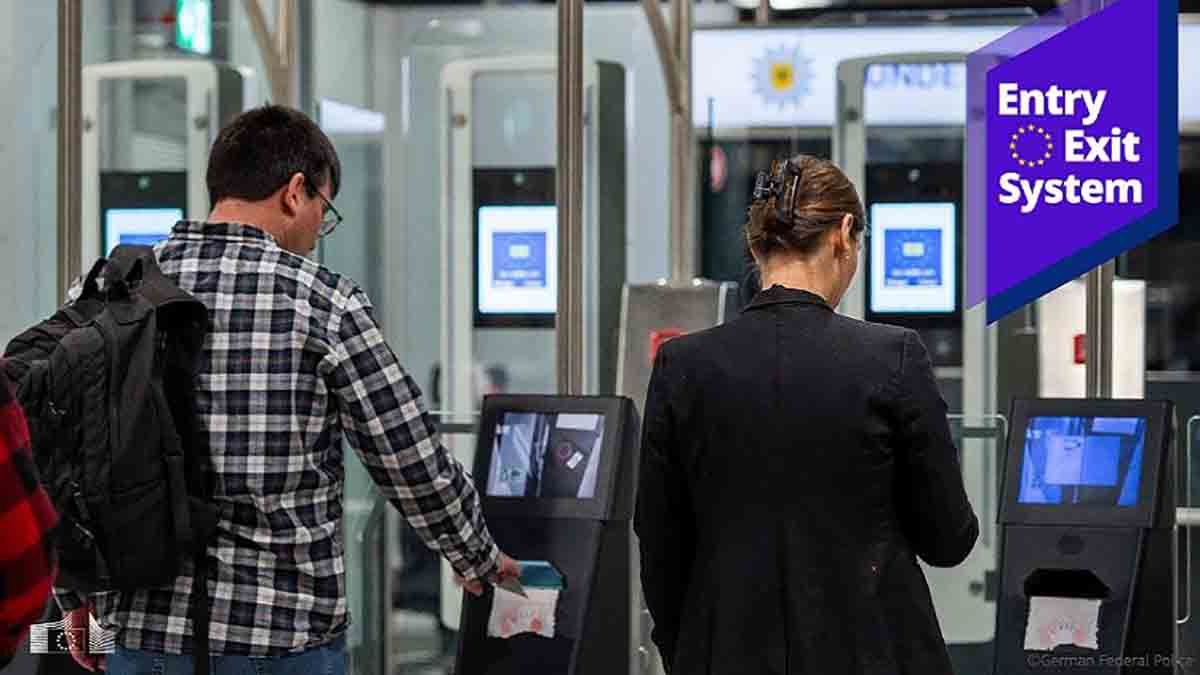
The postponement of the introduction of the new system comes after concerns that the EES could increase waiting times at European airports, as reported by The Portugal News.
The system was tested in Spain, as EuroWeeklyNews mentioned. The tests concluded that the EES was creating longer waiting times, which could become problematic during the holiday peak, namely during the Summer.
What travellers may see in airports until the system is fully established across Schengen Area airports is a mix of old and new border procedures, depending on the destination and how busy the airport is.
The purpose of EES
The EES is meant to modernise border controls in the Schengen Area. Therefore, passport stamps would no longer be required for non-EU travellers. The aim is to record the traveller's biometric data, including fingerprints and a facial image.
This measure aims to create a more accurate system that helps authorities detect overstays more easily.
However, what seemed to be a facilitating measure turned out to be more complicated and time-consuming. This was proven during system tests, which created long queues at airports, especially the busiest ones.
Airports pushing back the deadline
During the implementation of EES at Lisbon Airport, the issues encountered and reported by The Portugal News were so severe that the biometric kiosks were paused until further notice to avoid the queues the airport was experiencing, thereby reducing waiting times, as previously reported.
Authorities have said that long queues at airports, besides being inconvenient for travellers, can pose a risk to airport safety.








 Portugal Handbook
 English
 Nederlands
 Deutsch
 Français
 Español
 Italiano
 Svenska
 Pусский
 中文
中文 Türkçe
 Português
 Czech
Czech Hungarian
 Polski
 عربي
عربي Suomi
Suomi עִברִית
 Português (Brasil)
Follow us on social media