


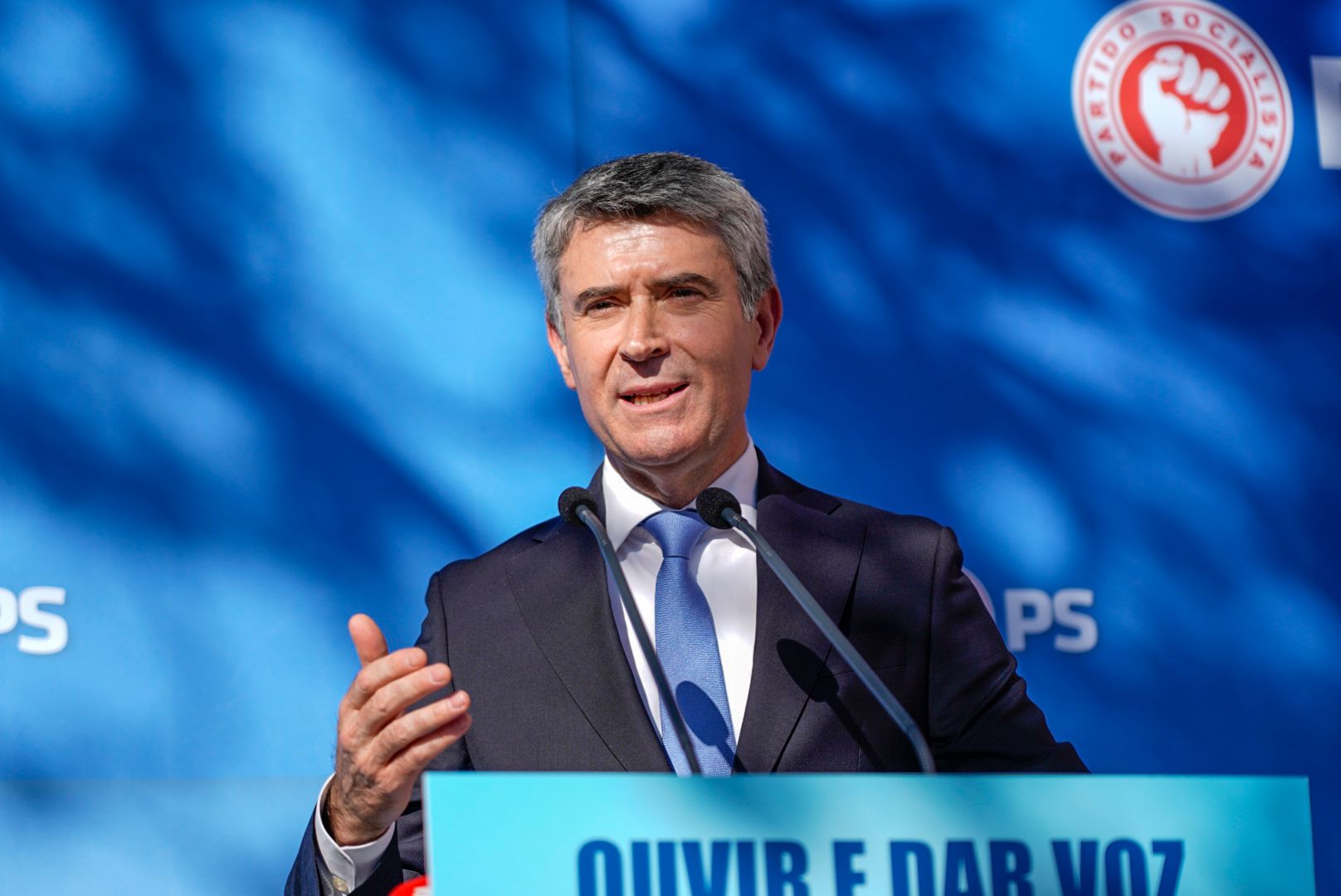
The Democratic Alliance (AD), led by Luís Montenegro, has recorded a slight increase in voting intentions but remains behind the Socialist Party (PS) and Chega. The coalition gained 0.4 percentage points over the past week, reaching 22.7%, while the PS continues to lead with 29.6%, followed by Chega at 27.3%, Executive Digest reports.
The figures come from the latest tracking poll conducted by Pitagórica for TVI, CNN Portugal and Nascer do Sol, as reported by CNN Portugal.
Both the Socialist Party (PS), led by José Luís Carneiro, and Chega, led by André Ventura, recorded no change in voting intentions compared with the previous week.
The Democratic Alliance (AD) remains 6.9 percentage points behind the PS. However, the poll’s reported margin of error of 3.5 percentage points applies to individual estimates and cannot be directly used to determine the statistical significance of the gap between the two parties.
Understanding the poll results
According to the Pew Research Center, polling results should be interpreted with caution, as margins of error reflect the uncertainty associated with survey estimates. When comparing political parties, small differences in voting intentions do not necessarily indicate a statistically significant lead. The margin of error for the difference between two parties may also be larger than the margin reported for individual results.
The Pitagórica poll, conducted for TVI, CNN Portugal and O SOL, forms part of a weekly study tracking public opinion in Portugal. Each edition is based on 804 interviews with a sample designed to represent the national electorate by gender, age and region.
Voting trends and party support
Among the smaller parties, the Liberal Initiative remains in fourth place with 5.1%, despite recording the week’s largest decline of 0.5 percentage points. Livre follows with 3.4%, ahead of the CDU at 2.3% and the Left Bloc at 2.1%. PAN recorded a slight increase to 1.3%, while undecided voters accounted for 12.9% of respondents surveyed between 12 October and 2 November.
Despite the slight increase, AD continues to struggle to retain voters who supported the coalition in the 2025 legislative elections. Of those who voted for AD, only 56.7% say they would vote for the coalition again, while 18.5% remain undecided. Meanwhile, 7.8% say they would switch their support to the PS, with an equal percentage indicating they would vote for Chega.
Government approval and public opinion
Public assessments of the government remain mixed, with both approval and disapproval ratings increasing by one percentage point. Government approval rose to 33%, while disapproval reached 62%. Prime Minister Luís Montenegro also recorded a slight improvement in his approval rating, rising from 30% to 31%, although 66% of respondents continue to view his performance negatively.
The poll also found that 62% of respondents believe Portugal is heading in the wrong direction, compared with 31% who think the country is on the right track. Nevertheless, 59% expect the government to complete its term in 2029, down three percentage points from the previous week, while 35% anticipate an early end to its mandate. Opinions are almost evenly divided on whether the government deserves to serve its full term, with 49% in favour and 48% opposed.
Ministers and president face declining ratings
Among government ministers, Joaquim Miranda Sarmento continues to hold the highest positive rating balance at 16.9%, followed by Maria da Graça Carvalho at 9.2% and Manuel Castro Almeida at 6.5%.
At the other end of the rankings, Minister of Internal Administration Luís Neves recorded a negative rating balance of 40.9%, worsening by 5.9 percentage points during a week marked by police interventions at housing protest camps in Lisbon and Porto. Health Minister Ana Paula Martins registered a negative balance of 32%, while Education Minister Fernando Alexandre saw his rating decline by 7.6 percentage points.
The poll also shows a decline in approval for President António José Seguro, whose rating fell by four percentage points over the past week to 62%. Meanwhile, his disapproval rating rose from 24% to 28%.
According to CNN Portugal, the decline comes amid growing protests over the housing crisis and increasing calls for the President to take a firmer stance.
Public opinion on political leaders
Regarding a potential return of Pedro Passos Coelho as leader of the PSD, 46.6% of respondents oppose the prospect, while 34.9% support it. The former prime minister’s recent remarks advocating cooperation with Chega and the Liberal Initiative, alongside his criticism of the government, have also influenced public perceptions. According to the poll, 38.2% say their opinion of him has worsened, 38.3% report no change, and 18.8% now view him more favourably.
André Ventura continues to be regarded as the main opposition leader by 58% of respondents, up 1.3 percentage points from the previous poll. José Luís Carneiro follows with 29.1%, representing a decline of one percentage point.
However, when asked which of the three main party leaders they would prefer as prime minister, respondents placed Socialist Party Secretary-General José Luís Carneiro first with 33.5%. Luís Montenegro followed with 27.2%, while André Ventura received 20.6%.
Carneiro also recorded the highest potential voter support, with 56.2% of respondents saying they would definitely or possibly vote for a party led by him. Montenegro followed with 46.3%, up 2.3 percentage points, while Mariana Leitão received 40.5% and André Ventura 32.5%.
Preferences for Parliamentary agreements
Regarding parliamentary negotiations, 46.3% of respondents favour the government continuing to reach agreements with different parties on a case-by-case basis, rather than establishing permanent alliances. Meanwhile, 27.7% prefer a stable agreement with the Socialist Party (PS), while 18.7% support cooperation with Chega and the Liberal Initiative.
Set The Portugal News as your preferred source for news on Google
 Add as a preferred source on Google







 Portugal Handbook
 English
 Nederlands
 Deutsch
 Français
 Español
 Italiano
 Svenska
 Pусский
 中文
 Türkçe
 Português
 Czech
 Hungarian
 Polski
 عربي
 Suomi
 עִברִית
 Português (Brasil)

Follow us on social media