


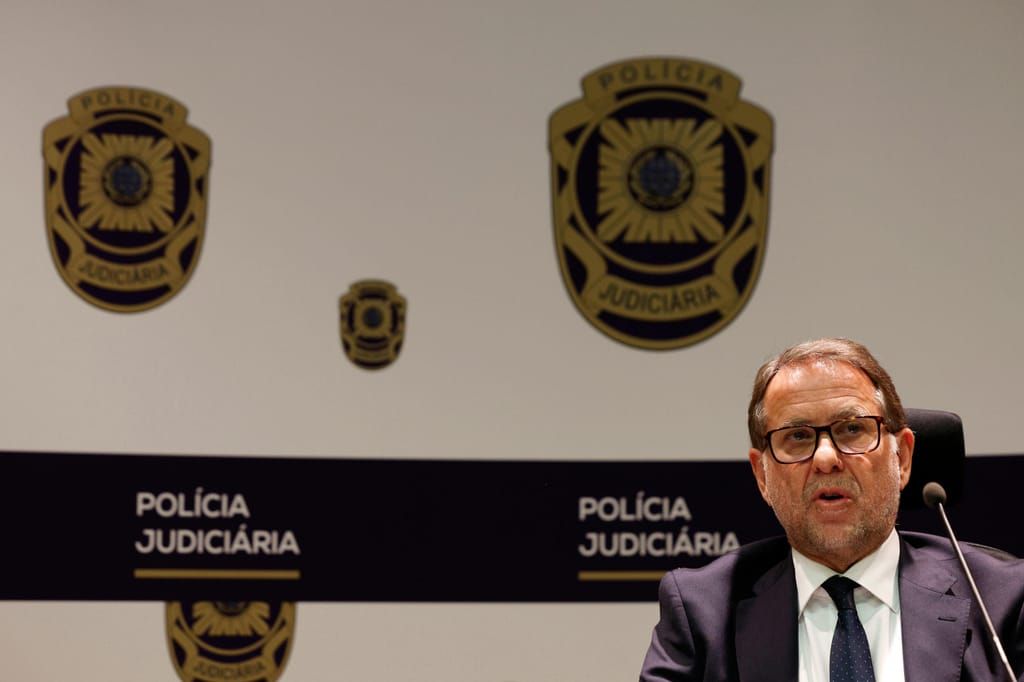
Speaking on Wednesday, 11 November, Luís Neves dismissed suggestions that the Government had gone too far with its preparations, even though weather conditions appeared less severe than initially forecast in several parts of the country.
As reported by Diário de Notícias, the minister said the priority had always been protecting the population, adding that the country should welcome a shift toward anticipating potential emergencies rather than responding only after damage occurs.
“We cannot just respond when there is a disaster”, he stressed, arguing that preventative action was necessary to protect lives, public safety and confidence in the country’s institutions.
Criticism rejected
These comments came after the Government declared a state of alert across mainland Portugal for Wednesday, introducing a series of restrictions intended to minimise the risks associated with Charles.
The measures included closing public, private and social sector schools, including nurseries, as well as non-essential public services. Outdoor activities were also suspended, while access to parks, gardens, forests and other potentially dangerous areas was restricted.
This decision followed warnings from the Portuguese Institute for the Sea and Atmosphere (IPMA), which forecast heavy rainfall and strong winds, with gusts potentially reaching 120km/h.
In the event of a particularly intense meteorological phenomenon known as a sting jet, wind speeds could exceed 150km/h.
According to the Government’s official announcement, the forecasts raised concerns about flooding, falling trees, damage to infrastructure and possible disruptions to electricity and communications networks.
The minister maintained that the response was justified, even if the eventual impact proved less severe than anticipated in some areas.
He also described the operation as an opportunity to test the country’s emergency response capabilities, reinforce cooperation between authorities, and identify weaknesses to address before future emergencies.
“These moments are also important for building confidence and team spirit, ensuring everyone knows what they can do and what they can expect from others”, Luís Neves explained.
Recorded incidents
Despite the more favourable developments in some regions, Charles still caused significant disruption across mainland Portugal.
According to the National Emergency and Civil Protection Authority (ANEPC), 1,630 incidents had been recorded by 6pm on Wednesday.
These included 881 flooding incidents, 312 road clearance operations, 203 fallen trees, 133 fallen structures and 100 cases of ground movement.
Lisbon, the Setúbal Peninsula and the Algarve were among the most affected areas.
The emergency response involved 6,669 personnel and 2,046 vehicles, reflecting the scale of the operation despite the Government’s initial concerns about potentially more severe conditions.
Prime Minister Luís Montenegro also defended the preventative response, acknowledging that the storm had not produced the impact on mainland Portugal originally anticipated.
However, he highlighted the importance of having emergency services and resources positioned in advance to respond quickly where needed.
State of alert
Luís Neves confirmed that the nationwide alert arrangements would remain in place until midnight on Wednesday, as originally scheduled.
The minister expressed confidence in the IPMA’s forecasts and said he expected the country to begin returning to normal on Thursday, 12 November, although some repair and recovery work would inevitably remain necessary.
The Government’s position is that the absence of a major disaster should not be interpreted as evidence that the precautions were unnecessary.
Set The Portugal News as your preferred source for news on Google
 Add as a preferred source on Google








 Portugal Handbook
 English
 Nederlands
 Deutsch
 Français
 Español
 Italiano
 Svenska
 Pусский
 中文
 Türkçe
 Português
 Czech
 Hungarian
 Polski
 عربي
 Suomi
 עִברִית
 Português (Brasil)

Follow us on social media