


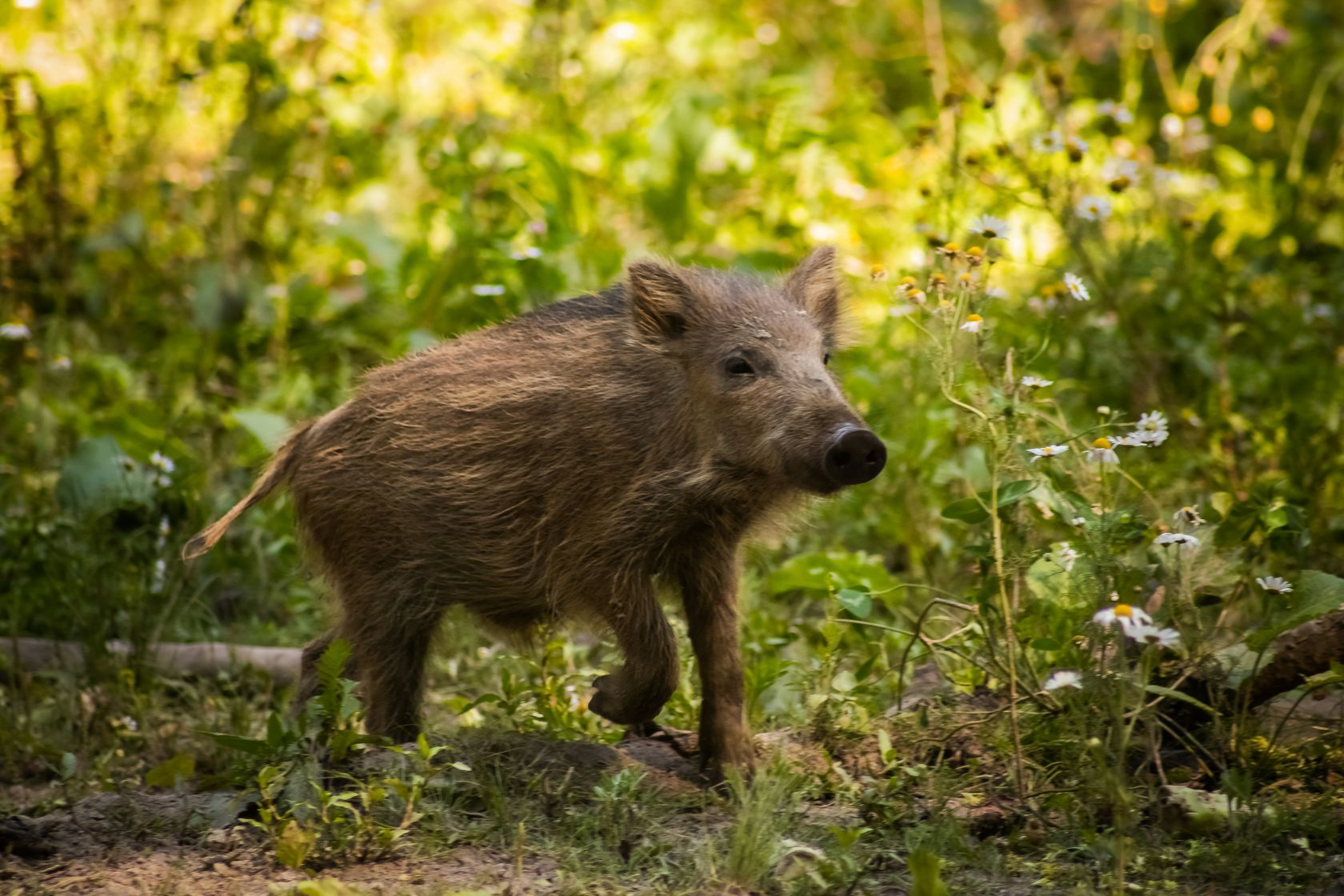
Recent videos shared on social media, filmed in June 2026, show the animals wandering across the sand at Portinho da Arrábida before helping themselves to food left unattended on beach towels.
Although encounters with wild boars are nothing new in the Arrábida Natural Park, local authorities warn that the animals have become increasingly visible in areas heavily used by visitors.
This underscores a growing issue during the busy summer season, as beaches offer an attractive food source, particularly when rubbish bins contain leftover meals or tourists leave snacks exposed while swimming.
Common sightings
The beaches of Portinho da Arrábida, Creiro and Galapinhos, all in Portugal’s Setúbal district, are among the locations where sightings are most common.
Named Europe’s most beautiful beach in 2017, Galapinhos attracts large numbers of international tourists each year, but is especially prone to visits from the animals because of its proximity to their natural habitat, nestled deep within the Arrábida hills.
Beachgoers are advised not to leave food unattended, to secure rubbish bags properly and to maintain a safe distance if they encounter a wild boar, while feeding or approaching the animals is strongly discouraged, as it can encourage them to return to crowded areas.
Control measures
Furthermore, efforts to control the wild boar population in the Arrábida hills have intensified.
According to Portugal’s Institute for Nature Conservation and Forests (ICNF), authorities have authorised 85 capture operations this year, including controlled hunting and night-time trapping, which are typically placed near farmland, beaches and other locations where the animals are known to forage.
The ICNF says the wild boar population within Arrábida Natural Park remains both large and stable, although there has been a slight increase in the number of animals culled, with between 600 and 700 wild boars being removed from within the park’s boundaries each year.
Conservation experts argue that population control measures should be accompanied by continuous monitoring to ensure ecological balance is maintained while addressing the growing number of animals.
In addition to frequent appearances on local beaches, the animals are increasingly venturing into nearby urban areas around Setúbal as they search for food, reflecting one of the region’s main environmental challenges in managing the wild boar population.
 Add as a preferred source on Google







 Portugal Handbook
 English
 Nederlands
 Deutsch
 Français
 Español
 Italiano
 Svenska
 Pусский
 中文
中文 Türkçe
 Português
 Czech
Czech Hungarian
 Polski
 عربي
عربي Suomi
Suomi עִברִית
 Português (Brasil)
Follow us on social media