


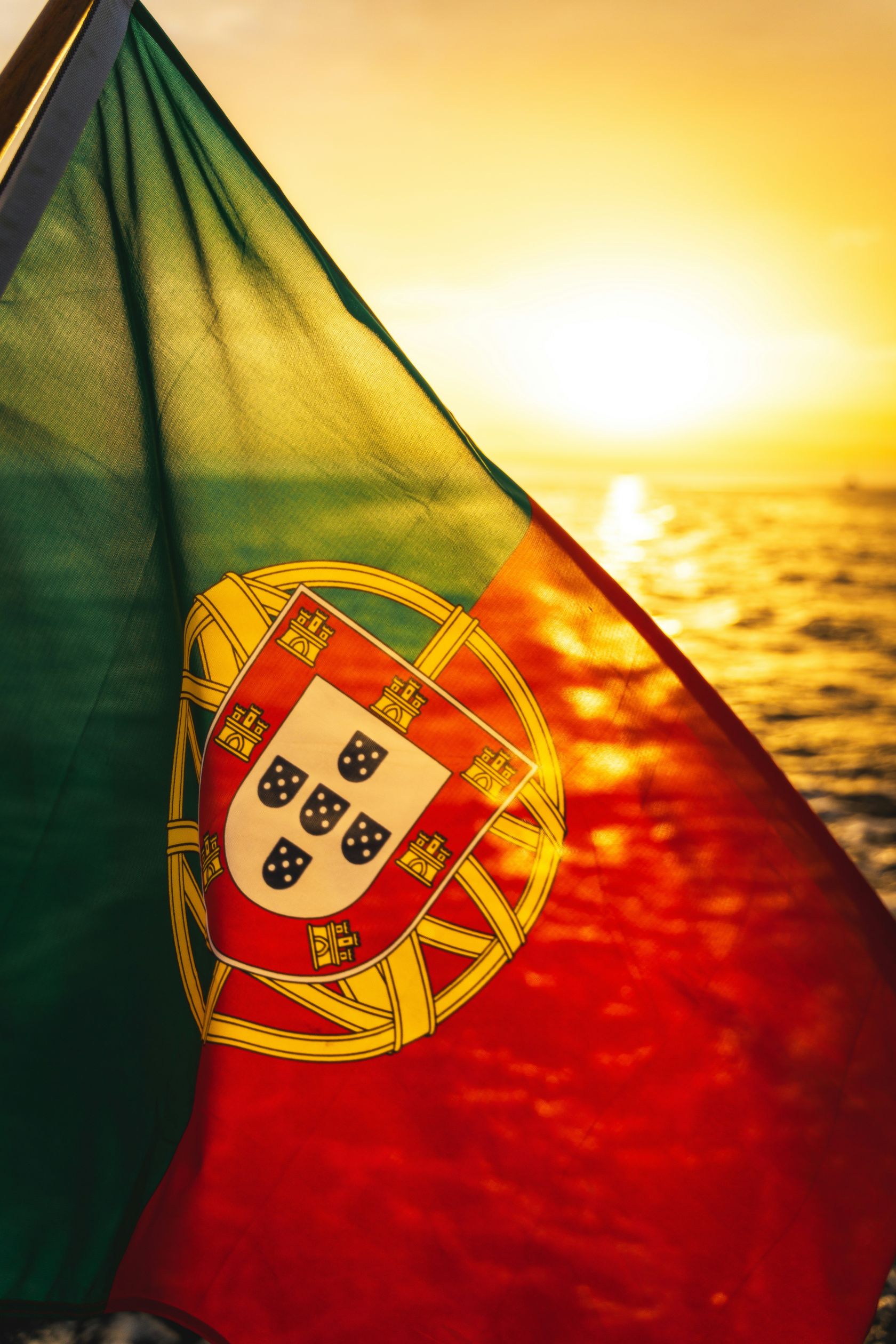
The 2026 Democracy Report, however, placed the country—for the first time—on a watchlist for possible processes of autocratisation, alongside countries like Bulgaria, Cyprus, and Vanuatu.
As Executive Digest has pointed out, inclusion in this group shows that Portugal has already covered about three-quarters of the way, according to the statistical models, toward being officially regarded as experiencing democratic backsliding.
Political landscape
Portugal’s performance varies across the dimensions examined by the international database. In the Electoral Democracy Index, which focuses on electoral transparency and political competitiveness, the country does very well and ranks 23rd.
Yet its position deteriorates in other key aspects of institutional quality: it drops to 33rd in the liberal element—this one assesses checks on executive power and the rule of law—and falls to 37th in the deliberative aspect, while achieving its worst rankings in the egalitarian component (61st) and the participatory one (62nd).
The report includes a research section on the Portuguese situation, prepared by Tiago Fernandes of Iscte and Sara Pina of the Universidade Lusófona, which connects changes in the political landscape to Chega’s rapid rise in popularity.
This analysis sets out the party’s electoral path, starting with the election of one member of parliament in 2019 and ending with 60 seats being won in the May 2025 general elections, which made Chega the second-largest group in the Assembly of the Republic and thus the official leader of the opposition to the Democratic Alliance.
The study also examines how the party’s base of support has expanded beyond its original followers, gaining support from the middle class, women, and southern constituencies that have in the past been linked to the Left.
Party system
The authors see this realignment of the party system as a factor which has led to greater political polarisation and to the rise of pro-autocratic mobilisation.
This measure reflects public challenges to the fundamental principles of the rule of law and civil liberties. At the same time, the deliberative element of political debate has declined, showing that elites are less willing than before to consider opposing arguments.
The study also points to pressure on the centre-right to build a governing majority capable of altering the Constitution, citing specific cases of legislative convergence, such as the amendment of the nationality law in April 2026.
Institutional resilience
Despite some weaknesses, the V-Dem report states that Portuguese democracy still has considerable institutional resilience.
The total representative influence of the PSD and the PS, who together make up more than half of the electorate, still provides a stable base for the party system, the two leaders having excluded constitutional reform from their immediate objectives.
At the same time, the vitality of the associative environment, the activities of the trade union movement, and the growing number of demonstrations defending democratic institutions are seen as forces that offset the risks of deterioration and maintain the country’s balance between those risks and civil society’s ability to respond.
 Add as a preferred source on Google







 Portugal Handbook
 English
 Nederlands
 Deutsch
 Français
 Español
 Italiano
 Svenska
 Pусский
 中文
中文 Türkçe
 Português
 Czech
Czech Hungarian
 Polski
 عربي
عربي Suomi
Suomi עִברִית
 Português (Brasil)
This is a ridiculous and biased report in that it implicitly assumes that Chega is a possible cause of "backsliding" even though it functions totally within the parliamentary system. The authors of course are leftists and the curious thing about leftists is that "democracy" is defined as what conforms to leftist positions. Leftists, who want MORE government control and regulation of the economy and private life, are touted mistakenly as heroes of democracy. Yet, conservative parties, who militate for LESS government are strangely seen as enemies of democracy. The issue of "equality", a favorite leftist position, is also completely ridiculous. Discrete inequality is a function of biology and relative talent and achievement and should not be disparaged or used as a marker against "democracy". Politically, everyone is "equal" in Portugal in that everyone has access to the rule of law. But in terms of private civil society, the rules of democracy do not apply. Once private civil society is democratized and "equalized", one no longer has a democracy but rather a totalitarian nightmare leftist state. The legitimate operating principle in civil society can only be freedom - as in the free market and a confederation of free individuals. The old saying applies here: equal men are not free and free men are not equal. The problem with Portuguese political pedagogy is the same as general European political pedagogy - it sees no distinction between the state and civil society and conflates the two improperly.
By Tony from USA on 20 Aug 2026, 22:26
I agree 100% with Tony. Very one sided report!
By Adrienne Kotze from Other on 21 Aug 2026, 11:32
I totally agree with Tony. He has written a great piece here. There is still an underlying communist/socialist mentality here. There is also a lot of “old boys” corruption. The journalism / press is mostly paid for by Govt.
By Lauree Lennon from Lisbon on 21 Aug 2026, 15:03