


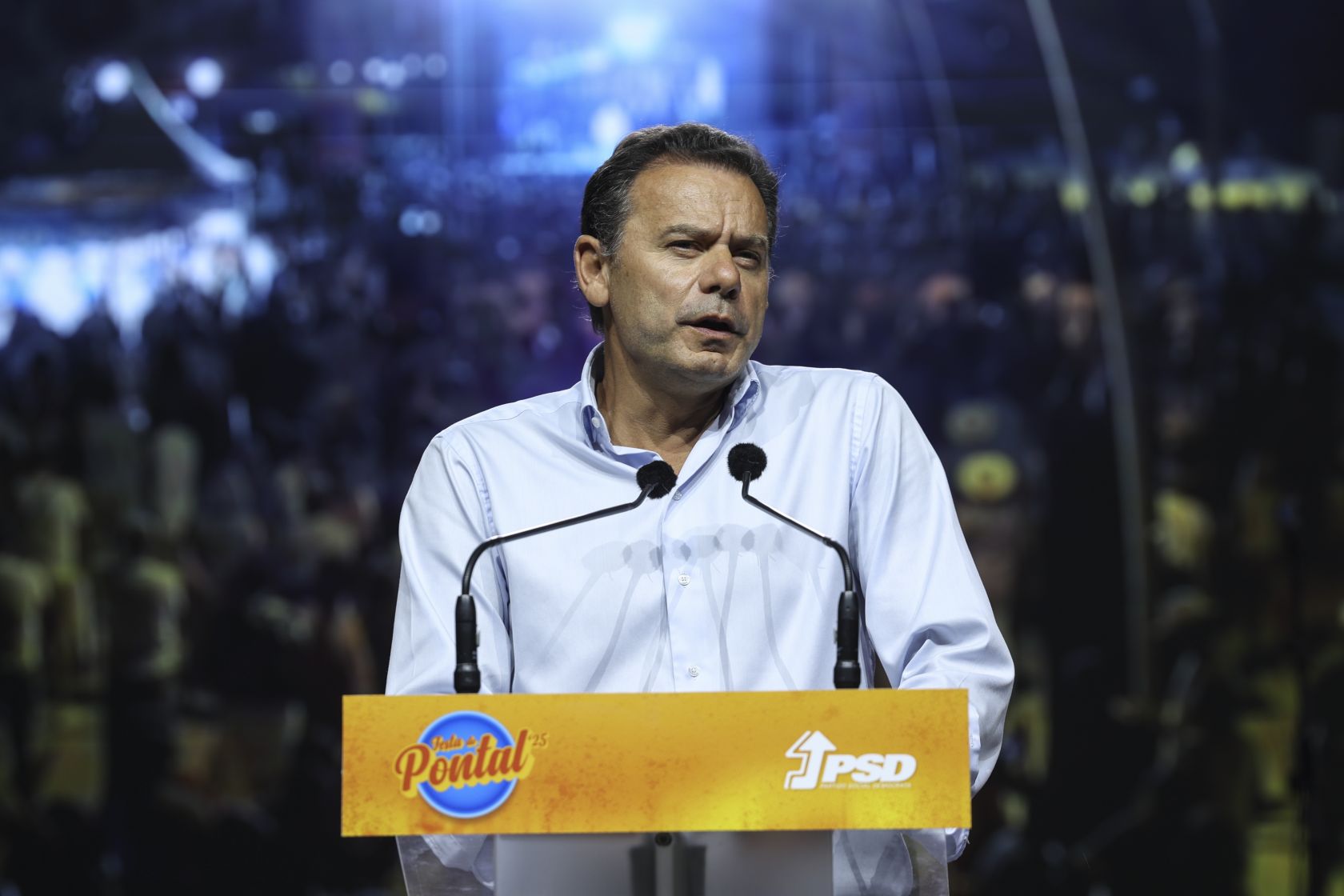
Recognising the difficulties the population faces and the general sense of disenchantment with the state of the housing market, he was keen to put confidence directly in the people.
He said: “We have a €10 billion investment plan for public housing and for the stimulation of private housing in Portugal. I know people are sceptical, but believe me, we are going to do it. I know rents are very high almost everywhere, and many people can’t afford to buy a home, but we are going to do it. Why? Because we are going to deliver on the housing plan we have for Portugal.”
The PM has identified close co-operation with local authorities and municipal governments as the key to the strategy.
Building houses
The plan is to build 133,000 homes as part of the Local Housing Strategies, which municipalities have approved but currently lack the financing to proceed. On the financing side, Luís Montenegro confirmed that “the financing is in place, from the PRR, from the State Budget and from the agreements we already have with the EIB”.
He stressed that the Government’s role is not simply to build and supply the homes itself; it is to actively engage the private sector by introducing faster, more streamlined administrative procedures.
The measures he is referring to include accelerating and simplifying the licensing process, amending the RJUE (Legal Framework for Urbanisation and Building), changing the rules on public procurement, and reducing the VAT rate for the construction sector to 6%. He says “all of these measures are now in force at the same time and we expect to see the results of them”.
Rental market
On the rental market and social support, the official spoke of strengthening incentive mechanisms, with particular reference to the “Porta 65” scheme.
He noted that these are “being used to a far greater extent today than they were three or four years ago” and that they are providing rental assistance as well as targeted support to certain professions (teachers, members of the security forces).
Reform legislation
The PM underlined the need to reform the legislative framework to achieve a “fair balance” which would provide legal certainty and make the market attractive to property owners without leaving the most vulnerable families behind.
His approach, he said, is to put in place “rules that ensure no one is left behind, rules which will protect the most vulnerable (the people on the lowest incomes, the people at the end of life, the people who are in the most difficult position to get on in a more dynamic, more open market).
"We have to protect them, but at the same time we have to have a market which tells the property owner that it is worth putting their property up for rent.”
Achieving a fair balance
Speaking to the audience in Sátão, he reiterated his belief that “achieving a fair balance requires courage, requires change and reform. That is exactly what we are doing. And I want to say here in Sátão my belief that when these new rules are fully in place and fully operational, they will be more effective in helping people to find solutions to their housing problems.”
A large part of his speech focused on the younger generation (those under 35). He outlined a package of measures for this group, including a very favourable personal income tax (IRS) regime, exemption from the Municipal Property Transfer Tax (IMT) and from stamp duty on the purchase of a first, permanent primary residence, and a public state guarantee to back bank financing.
On the impact of these youth support measures, the PM provided specific figures on how many young people had accessed the scheme: “130, 130,000 young people have already accessed the scheme, 40, 40,000 of whom specifically required the public guarantee.”
Set The Portugal News as your preferred source for news on Google
 Add as a preferred source on Google








 Portugal Handbook
 English
 Nederlands
 Deutsch
 Français
 Español
 Italiano
 Svenska
 Pусский
 中文
 Türkçe
 Português
 Czech
 Hungarian
 Polski
 عربي
 Suomi
 עִברִית
 Português (Brasil)

Follow us on social media