


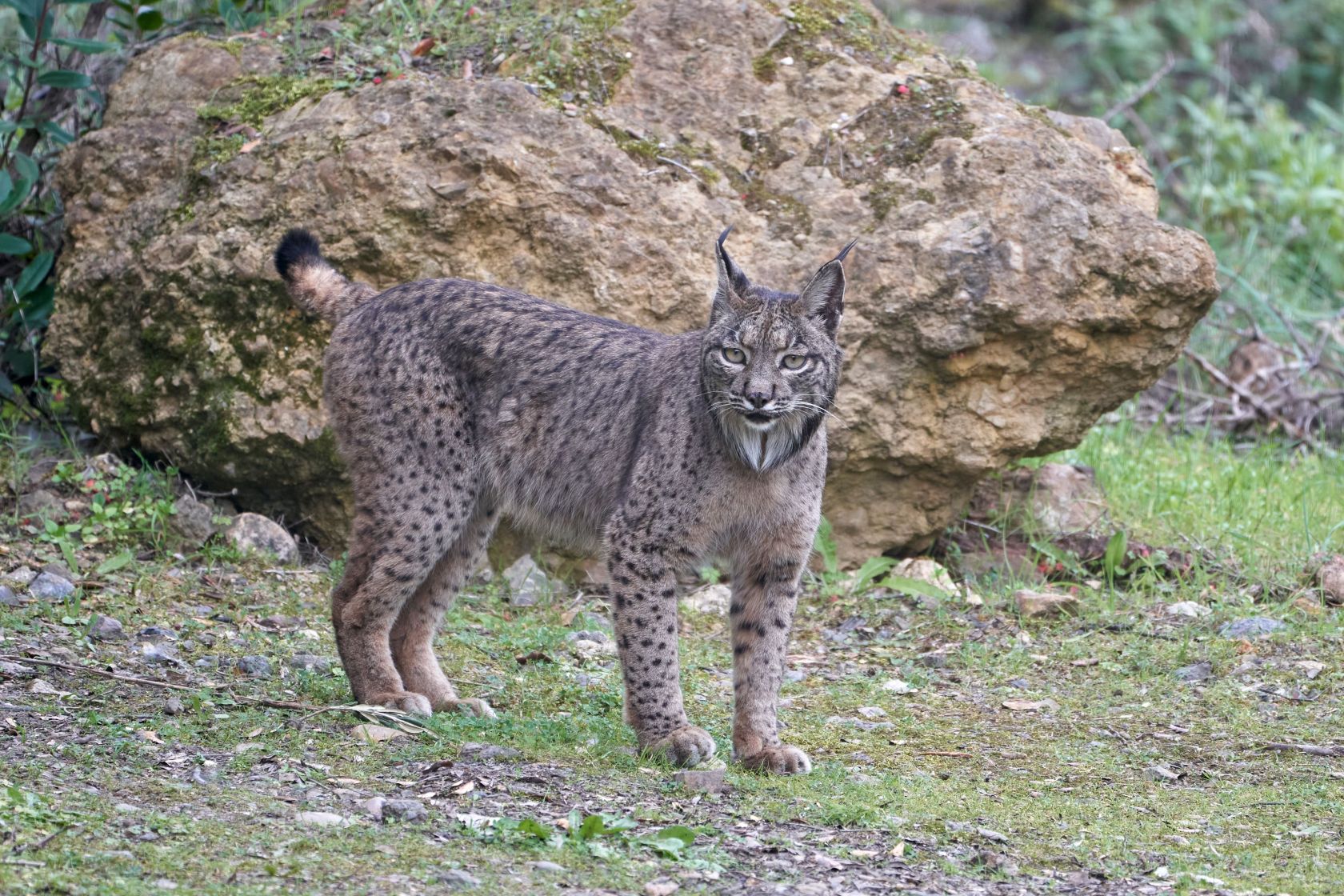
The plan is aimed at strengthening the existing populations, improving the quality of suitable habitat and assisting the species in its continued recovery.
The money will come from two sources. The Environmental Fund will provide €650,000 a year, while a cooperation agreement between the Institute for Nature Conservation and Forests (ICNF) and Águas do Algarve will contribute €350,000 annually to conservation work outside the lynx’s natural habitat. Together, that amounts to €1 million a year, or €5 million over the plan’s five-year period, the official order says.
The Algarve is one of the main areas covered, alongside the Baixo Alentejo, where Portugal’s lynx population is already established. The plan also looks towards places where the animals could spread in the future, including the Serra da Malcata.
Much of the work is practical: monitoring the population, protecting and reconnecting habitats, and reducing deaths that can be avoided, especially those caused by traffic. The plan also includes efforts to increase wild rabbit numbers. Rabbits are the lynx’s main prey, so their availability affects whether an area can support the cats.
Living alongside lynxes can bring concerns for people who own land or keep livestock. The Government has asked the ICNF to prepare a proposal by 31 December for a support and compensation scheme for damage associated with the animals. The aim is to help prevent those concerns from turning into conflicts.
The ICNF will report on progress every six months, and the plan is due to receive a mid-term review in 2028, according to the Diário da República.
Portugal counted 394 Iberian lynxes in 2025, up from 354 the year before. The increase comes as the Government approves a €5 million plan to support the species’ recovery over the next five years.
The numbers were published in June by Spain's Ministry for the Ecological Transition (the body which carries out the census in conjunction with Portugal's Institute for Nature Conservation and Forests (ICNF)). The total across the Iberian Peninsula in 2025 was 2,663 lynx (2,269 in Spain), representing a 10.9% increase on the 2024 total.
The species’ status improved from “Endangered” to “Vulnerable” on the International Union for Conservation of Nature’s Red List in 2024. Silves is also part of the story: the National Iberian Lynx Breeding Centre there has played a role in efforts to save the species.
The new funding is intended to build on that work, as Portugal tries to make sure the lynx’s return can last.
Set The Portugal News as your preferred source for news on Google
 Add as a preferred source on Google


 Portugal Handbook
 English
 Nederlands
 Deutsch
 Français
 Español
 Italiano
 Svenska
 Pусский
 中文
 Türkçe
 Português
 Czech
 Hungarian
 Polski
 عربي
 Suomi
 עִברִית
 Português (Brasil)

Follow us on social media