


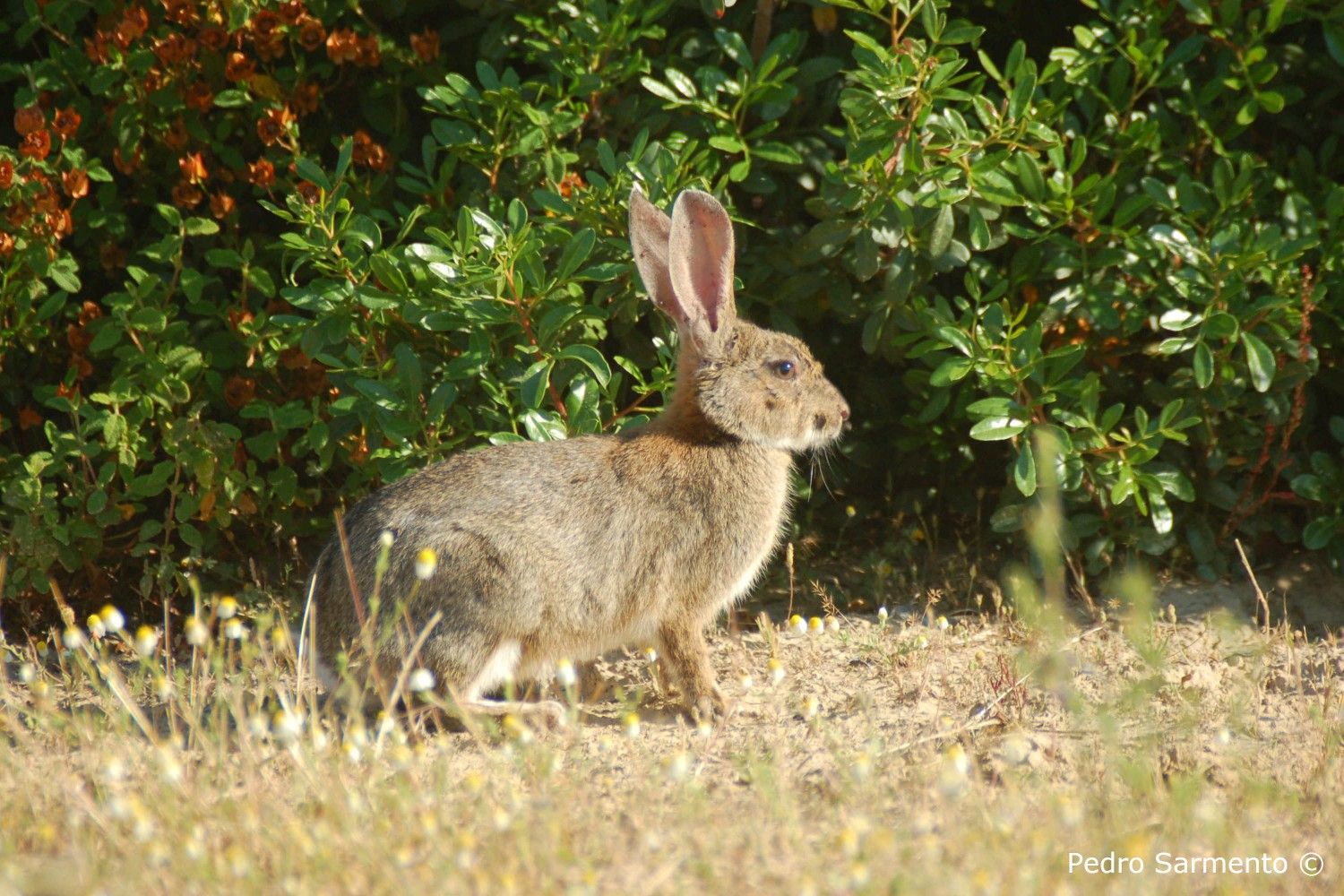
"Elevating this lineage to the status of a distinct species will allow us to curb inappropriate repopulation," improving "the conservation and management of a two-million-year-old heritage" that is in decline, explains BIOPOLIS/CIBIO - Research Centre in Biodiversity and Genetic Resources/InBIO Associated Laboratory, which participated in the study, in a statement.
Recognizing diversity
The scientists argue that recognising this diversity "does not mean discovering a new and unknown animal, but rather correctly classifying an already identified lineage, granting it the appropriate status to halt its extinction by replacement."
“It is no longer possible to manage rabbit populations in the Iberian Peninsula as if they constituted a single biological entity. Recognising these two species is fundamental to developing appropriate conservation measures and preventing a single evolutionary lineage from continuing its decline,” emphasises Nuno Ferrand, director and researcher at CIBIO and one of the authors of the study.
Two different species
The study, published in the scientific journal Biological Conservation, “reveals that the Iberian Peninsula is home to two rabbit species, and not just one, as previously thought,” demonstrating the existence of “two deeply differentiated lineages, which diverged about two million years ago and remain reproductively isolated.”
BIOPOLIS/CIBIO clarifies that, currently, the rabbit in the Iberian Peninsula is classified into two subspecies of the same species: the common European rabbit and the Iberian rabbit.
“While the common European rabbit, in the north and east of the peninsula, remains stable or expanding, the Iberian rabbit, restricted to Portugal and southwestern Spain, is in sharp decline,” he notes.
Thus, placing the two lineages in a single species means “camouflaging the catastrophic decline of an ancient evolutionary lineage.”
Hence the proposal to elevate it to the status of a distinct species, he summarises.
Data analysis
In the study, genomic, morphological, reproductive, and ecological data collected over the past decades throughout the Iberian Peninsula were analysed.
“The researchers developed an evolutionary and conservation framework to assess how current biodiversity management frameworks, hunting regulations, and translocation programs affect these distinct biological entities,” he describes.
The scientists will conclude that the two lineages have remained “reproductively isolated throughout their evolutionary history” and that the Iberian rabbit “would meet the criteria to be considered ‘Endangered’ due to its continued decline.”
Biological differences
On the other hand, researchers observed that the Iberian rabbit “presents profound biological differences: in addition to genetics, it is a smaller, darker, less social animal, with lower population densities, earlier sexual development, and smaller litters than the common rabbit.”
“As a keystone species that sustains many predators in the Mediterranean ecosystem, including the Iberian lynx and the Iberian imperial eagle, the collapse of the Iberian rabbit threatens regional biodiversity,” they warn.
Urgent review
According to the researchers, “these results require an urgent review of decisions regarding wildlife management in the Iberian Peninsula and, in particular, in Portugal.”
“The study justifies the need for transformations, such as adjusting hunting periods and quotas, recognising that the slower demographic dynamics of the Iberian rabbit make it vulnerable to overexploitation,” they state.
Scientists hope that these findings will "raise awareness among hunting communities, environmental managers, and policymakers about the urgency of designing specific recovery plans for the Iberian rabbit."






 Portugal Handbook
 English
 Nederlands
 Deutsch
 Français
 Español
 Italiano
 Svenska
 Pусский
 中文
中文 Türkçe
 Português
 Czech
Czech Hungarian
 Polski
 عربي
عربي Suomi
Suomi עִברִית
 Português (Brasil)
They can legislate and pontificate all they like but until they stop the irresponsible hunters there is no chance of saving the rabbits. Those people need stopping completely. They nearly shot me once. They are just idiots.
By Martin Wootton from Lisbon on 14 Jul 2026, 17:24