


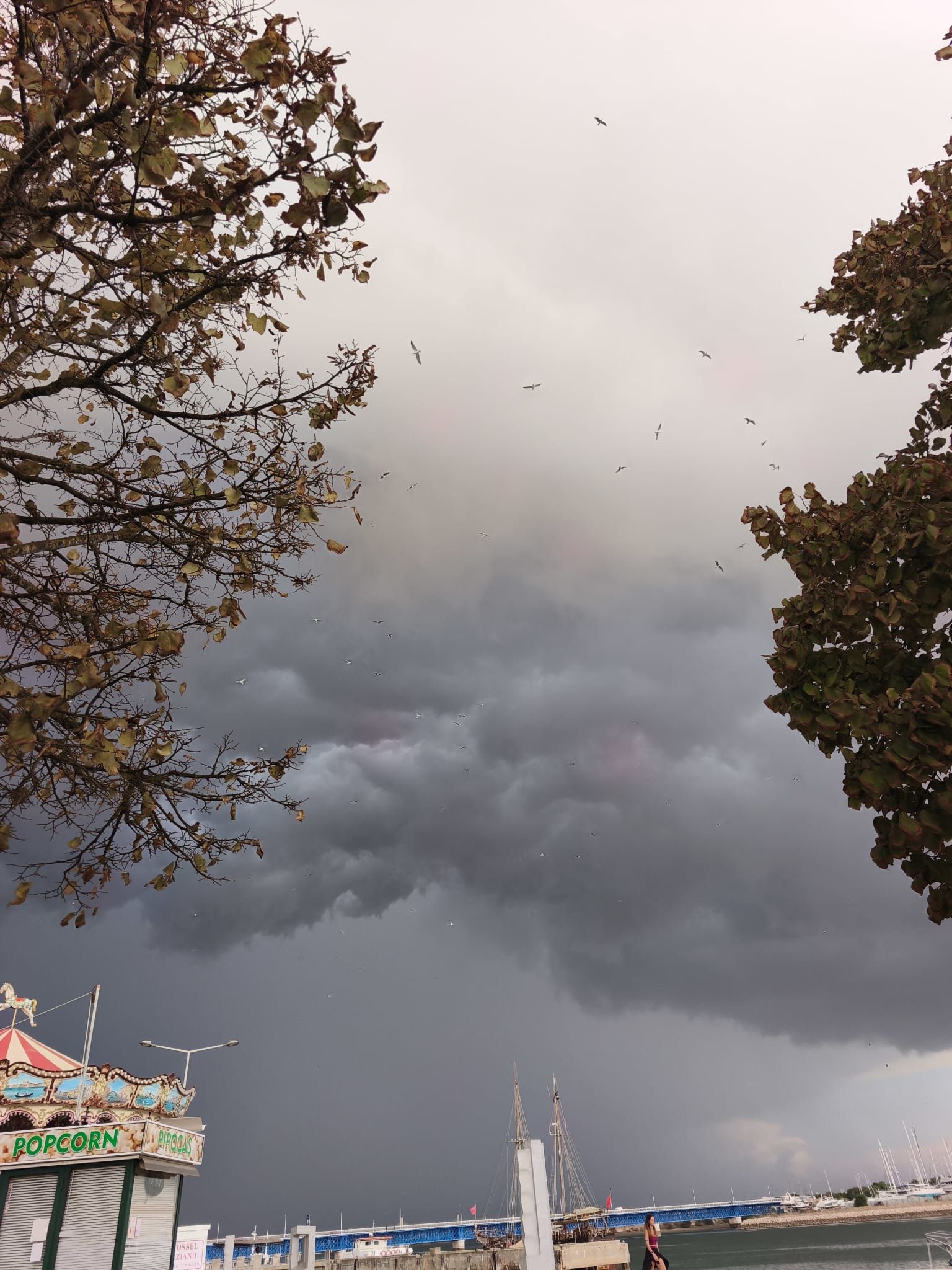
SIC Notícias in Lagos reported that the winds were very strong indeed and that several of the harbour entrances along the entire Algarve coast had to be closed as a result of the deteriorating sea conditions.
The IPMA stated that depression "Charles" had split into two separate low-pressure areas, one of which was moving towards the Lisbon area. The other was travelling along the southern part of the country from west to east (Sagres to Vila Real de Santo António) and that period was the worst for the Algarve.
Despite the ferocity of the storm, the experts said the key factor in avoiding a far worse scenario was the splitting of the atmospheric system.
The system had split, and that had effectively dispersed the energy, the moisture and the wind speeds across two separate systems. The initial forecasts had suggested very severe gales of up to 160km/h, but the subsequent models suggested a somewhat less severe situation, though still very dangerous. In the south, the winds were significant, particularly in the most exposed coastal areas and in the Serra de Monchique, where gusts of over 120km/h were recorded.
The change in track has left the southern mainland more exposed than the initial scenarios would have suggested. An alert remains in place for the risk of gales of up to 110km/h along the Algarve coast, and there is a potential for more intense, localised gales.
To SIC Notícias, climate change expert and commentator Duarte Costa said that the high levels of atmospheric turbulence, worsened by the warmer sea surface temperatures in the south, are creating the conditions for very violent, localised weather.
He ruled out a "sting jet" and instead pointed to the Algarve's vulnerability to downbursts, which are a sudden downdraft of air which hits the ground and produces very strong winds, small tornadoes and hail. He stressed the need for increased vigilance along the coast and in the more exposed areas.
Set The Portugal News as your preferred source for news on Google
 Add as a preferred source on Google


 Portugal Handbook
 English
 Nederlands
 Deutsch
 Français
 Español
 Italiano
 Svenska
 Pусский
 中文
 Türkçe
 Português
 Czech
 Hungarian
 Polski
 عربي
 Suomi
 עִברִית
 Português (Brasil)

Follow us on social media