


We started by discussing the lack of housing, house prices, licensing and the difficulty in building. Like so many other conversations that take place today all over the country.
But as the discussion evolved, it became apparent that the real problem was not just in the construction. The real problem is that Portugal no longer speaks the same language.
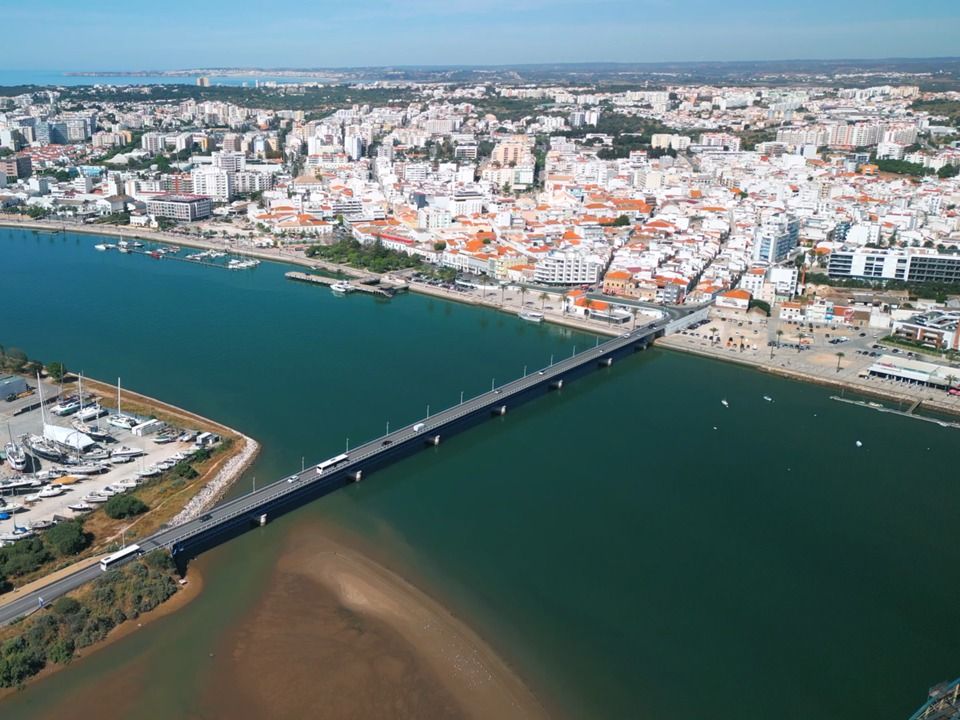
The Algarve is perhaps the best example of this reality. We are talking about a region with sixteen municipalities. Sixteen different ways of interpreting development. Sixteen Municipal Master Plans that, despite obeying the same legal framework, have evolved differently and respond to different priorities. In many cases, what can be done in a municipality is no longer a few kilometres away.
Now, investors do not look at administrative boundaries. Neither do companies. People much less. Because those looking to set up a company, develop a housing project or create jobs look at the Algarve as a region. It does not distinguish where one municipality ends and another begins. However, it continues to encounter different processes, different interpretations and completely different decision times.
To this is added another problem that is rarely discussed. Many municipalities today do not have the human resources or the technological tools necessary to keep up with the speed at which the market has changed. The challenges are greater, the projects more complex and the legal requirements more demanding. Despite the enormous effort of municipal technicians, the truth is that municipalities have lagged behind in relation to current needs.
Then comes the institutional complexity. A process depends on the city council, but also on the CCDR, the APA and other sectoral entities. Each opinion conditions the next, each decision depends on another decision and, often, no one has the capacity to assume effective leadership of the process. The result is known to all: delay, uncertainty and loss of opportunities.
Nor can we ignore another factor that continues to have effects. For several years, the national spatial planning policy favoured an extremely restrictive view of the expansion of Municipal Master Plans. The intention to protect the territory was legitimate, but its application ended up limiting the ability of many municipalities to respond to population growth, investment and new economic needs. Today we feel the consequences of these options.
In my opinion, perhaps the time has come to think differently.
If we discuss mobility on a regional scale, if we plan energy networks on a regional scale, and if we promote economic development strategies for entire regions, why do we continue to plan housing, industrial land, and essential infrastructure almost exclusively within the administrative boundaries of each municipality?
Perhaps Portugal needs to take a step that other countries have already taken a long time ago: to create true Regional Development Agencies, with the capacity to coordinate economic, housing and territorial strategies between the municipalities of each region. Not to take away autonomy from municipalities, but to create a common vision of what really matters.
Because talent, companies and investment do not choose municipalities. They choose regions where there is quality of life, mobility, housing, infrastructure, energy and decision-making capacity. Basically, they choose territories where everyone works towards the same goal.
That was perhaps the main conclusion of that conversation in the Algarve. Portugal does not only suffer from a lack of housing. He suffers from a lack of coordination. And as long as each entity continues to speak a different language, it will be difficult for us to build the cities and territories that the country needs.
The day we all speak the same language again, we may find that many of the solutions were already in front of us. We just never had the ability to build them together.








 Portugal Handbook
 English
 Nederlands
 Deutsch
 Français
 Español
 Italiano
 Svenska
 Pусский
 中文
中文 Türkçe
 Português
 Czech
Czech Hungarian
 Polski
 عربي
عربي Suomi
Suomi עִברִית
 Português (Brasil)
This article can not be more relevant and hits the nail on the head. No clear guidelines, rules open to interpretation depending on what mood the person reviewing the submission is........ a total F-up. Submissions disappear into the vortex of an non-responsive, non-reachable town planning (?!) organisation and one just has to wait....and wait..... and wait. Regret the day I decided to move here.
By Rudolph Eksteen from Porto on 12 Jul 2026, 23:01
This article barely touches the Fact why there's this Housing crisis so much so in Portugal. What hilariously ignorant argument it presented about language being different as a cause is not only childish but an escape button. If Experts have such views definitely normal people are out of Ideas.
By Sanjaya Sharma from Algarve on 13 Jul 2026, 07:21
The larger issue is the concentration of ministries and Govt Departments in and around Lisbon. If 50% moved to capitals of district then it would relieve pressure on Lisbon and add to the development of the interior
By Luis Coimbra from Beiras on 13 Jul 2026, 07:54
@ Sanjaya Sharma.. do you not understand that the author is not referring to language in the sense of Portuguese, Spanish, English etc., but in the sense that the different levels of administration and bureaucracy all have different standards/ requirements, and none of these use common terminology?
By Diane v from Porto on 13 Jul 2026, 15:21
The delay in building, or answers per how to change building plans, or to get all the permits, is definitely municipality based, but most municipalities and cities are a total disaster.
We have friends 8 years in the waiting in Albufeirae, other friends 7 years in Guia. A person could be 65, retire, start to build their home, and die before it even gets approved, 8+ years later. Who starts building their retirement dream home 10 years before retirement?
In the US, every single municipality has different building regulations, limitations, environmental, planning and other considerations. We call these terms, collectively, "zoning". No municipalities/cities are linked together, are dependent on each other in any way. And while things don't run fast by US standards, 3-6 months is a normal wait for a permit (approval) to build in most of the US, 12-18 months in the most extreme situations. It can be done, Portugal just does not have the mentality and speed of work to do so.
I was recently talking to a friend who worked in a local camara. A month into his new job there, he was processing 12-15 property approvals per week. After a month, the boss called him in and told him he was making every one of the other processors look slow, and he had to slow down. Only 5 per week, one per day, he wass told Logic like this is why it takes so long. And my friend? He's Portuguese. My neighbor, same issues. 5 years in so far, ground not even broken.
Worth ethic and speed needs to improve, far before unifying processes between cities.
Mark
By Mark Dahncke from Algarve on 13 Jul 2026, 18:59
Menos estado, mais liberdade.
By Quentin Ferreira from Lisbon on 14 Jul 2026, 07:39
The problem is systemic. Each agency works within it's own silo completely unaware of the overall map. If an issue comes up that does not clearly fall within the scope of that department then it's lost forever. Keep in mind that civil servents are incentivized to find mistakes and ommissins not help to move the project along as the are personally liable financially if they make a mistake. This is something that is not going to get fixed anytime soon so yes it's a self inflicted problem.
By E from Lisbon on 14 Jul 2026, 09:21