


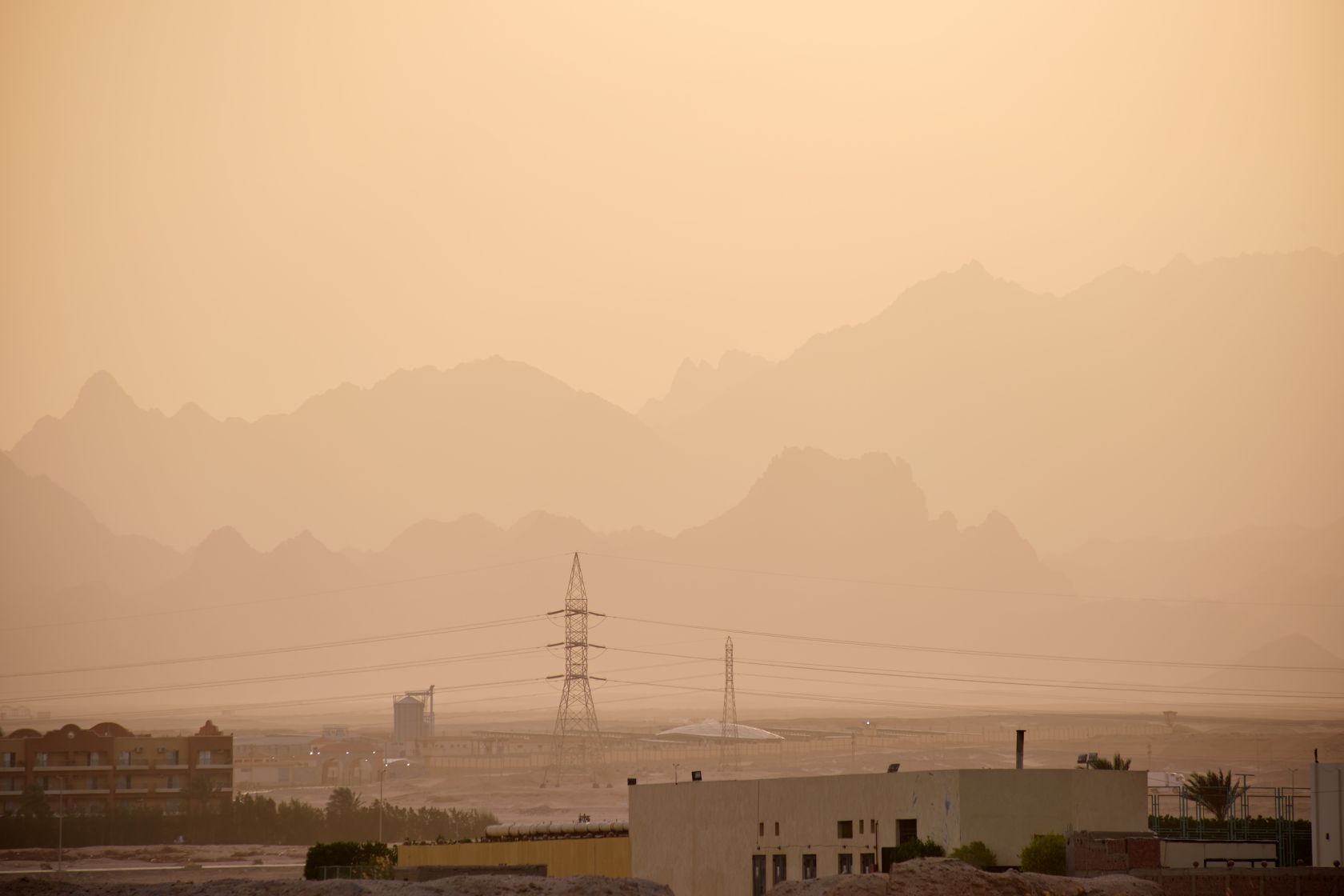
The Directorate-General of Health (DGS) said in a statement that an air mass from the deserts of North Africa, carrying suspended dust, is expected to cross mainland Portugal over those two days, affecting most of the southern zone, mainly Lisbon and the Tagus Valley, Alentejo and Algarve.
According to the health authority, poor air quality is expected on the mainland, with increased concentrations of inhalable particles of natural origin in the air.
"This pollutant (inhalable particles – PM10) has effects on human health, especially on the most sensitive population, children and the elderly, whose health care should be redoubled during the occurrence of these situations," it warns.
While this phenomenon continues, the Directorate-General of Health recommends that the general population avoid prolonged exertion, limit outdoor physical activity, and avoid exposure to risk factors such as tobacco smoke and contact with irritants.
As for children, the elderly with chronic respiratory problems, particularly asthma, and cardiovascular patients, the DGS recommends that, "due to their greater vulnerability to the effects of this phenomenon," they should comply with the recommendations for the general population and, whenever feasible, remain indoors, preferably with the windows closed.
Chronic patients should maintain their ongoing medical treatments, it says, stressing that if symptoms worsen, they should contact the Linha Saúde 24 (808 24 24 24) or seek medical attention.
For additional information on air quality and the values measured at monitoring stations, you can consult the APA website or the QualAr App.
 Add as a preferred source on Google





 Portugal Handbook
 English
 Nederlands
 Deutsch
 Français
 Español
 Italiano
 Svenska
 Pусский
 中文
中文 Türkçe
 Português
 Czech
Czech Hungarian
 Polski
 عربي
عربي Suomi
Suomi עִברִית
 Português (Brasil)
Follow us on social media