


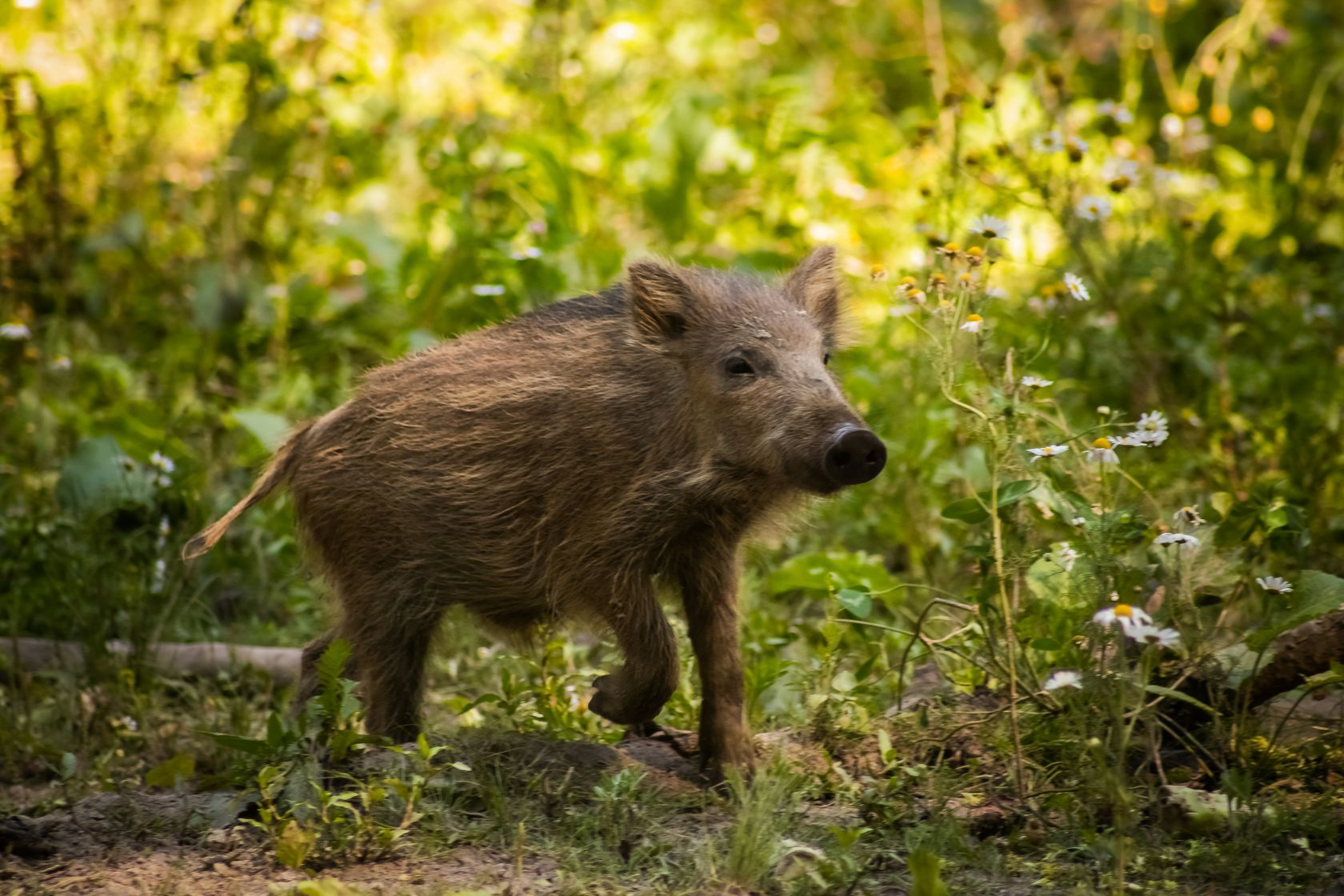
"There are municipalities that have a more serious situation than others, however, it is a general concern within the Médio Tejo region," Manuel Jorge Valamatos told Lusa, adding that the Intermunicipal Community (CIM) of Médio Tejo expressed to the Government its willingness to join the pilot project.
The 11 municipalities that make up the CIM of Médio Tejo, in the district of Santarém, have taken a joint position after learning of the government's intention to launch pilot projects to regulate the species' density.
Different problems
According to Valamatos, who is also the mayor of Abrantes, the municipalities, although with problems of different dimensions, are available to participate in the measures that may be developed.
"We are making ourselves available to the Government so that Médio Paraíba can join these pilot programs," he said.
The president of the CIM said he was still unaware of the specific measures, the territories to be covered, and the program rules.
When Lusa asked whether the Médio Tejo region is available to act as a pilot territory and collaborate in building a model that can be applied in other regions, Valamatos confirmed the municipalities' openness to participate in this process.
"We have shown our willingness to participate, to be part of the solution, and that is what we have expressed to the Government and, obviously, to the 11 municipalities that are available to collaborate in this action," he said.
Pilot project
The Minister of Agriculture and Sea, José Manuel Fernandes, recently announced that the government is preparing a pilot project that provides for financial compensation for each wild boar killed in areas where an excessive population is identified, and the amount, the territories covered, and the rules have not yet been disclosed.
Lusa questioned the Ministry of Agriculture and Sea about the measure's implementation and CIM of Médio Tejo's claim, and is awaiting a response.
In Mação, the City Council and hunting associations decided on Thursday to prepare a plan to reduce the wild boar population, with the municipality admitting it would finance measures such as support for hunting packs and licenses, and solutions for storing and disposing of slaughtered animals.
In Sardoal, the City Council scheduled a meeting of the Municipal Hunting Council with the Institute for Nature Conservation and Forests (ICNF) and hunting associations for 29 September, citing what the mayor, Pedro Rosa (PSD), described as an "exponential" increase in the wild boar population.
In the municipality of Abrantes, Valamatos said that the situation remains the same, with occasional sightings of the animals in urban areas.
"The same concerns remain. Sightings, even in urban areas, are occasional, it's true, but we always raise this concern," he said.
The mayor explained that the municipality has been working closely with hunting associations under the ICNF's jurisdiction to help control the species.
Difficulties in urban areas
Regarding the difficulties of intervening in urban areas, where hunting is not simply an option, Valamatos said that it is necessary to know the specific measures and strategies planned by the Government.
“We don’t know the specific measures to be implemented, but we know that the Government […] wants to launch pilot programs to control wild boar populations, and we are available,” he stated.
The problem of wild boars has been highlighted for several years in the Médio Paraíba region, with damage to agricultural crops, the animals approaching villages, and road accidents reported in several municipalities.
The ICNF (Institute for Nature Conservation and Forests) estimates that the wild boar population currently numbers around 300,000 animals in mainland Portugal.
 Add as a preferred source on Google





 Portugal Handbook
 English
 Nederlands
 Deutsch
 Français
 Español
 Italiano
 Svenska
 Pусский
 中文
中文 Türkçe
 Português
 Czech
Czech Hungarian
 Polski
 عربي
عربي Suomi
Suomi עִברִית
 Português (Brasil)
Follow us on social media