


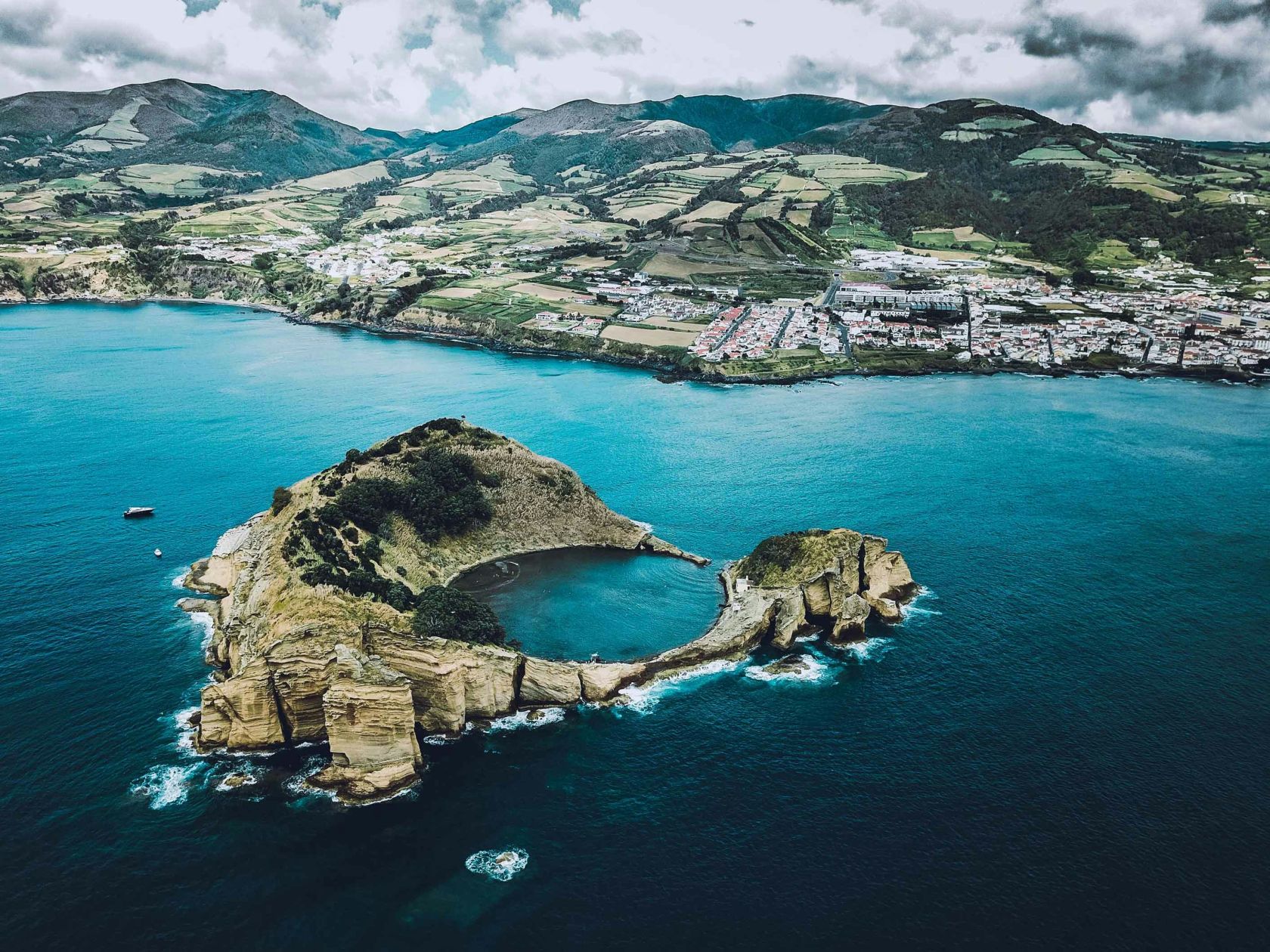
The archipelago is in an extraordinary position between Europe and the Americas and relatively close to the routes that also connect Africa. Perhaps it is time to start looking at this geography through a new perspective: that of the digital economy.
It was another of the reflections I brought with me from Atlantic Convergence 2026. Throughout the discussions on submarine cables, connectivity, data centres, security and digital sovereignty, it became evident that territories that for decades we considered peripheral can acquire a different importance when we start to look at the world through the networks that carry data.
The Azores are well aware of this reality. Their Atlantic position has always had strategic value. Throughout history, they have served as a support point for sea and air routes, communications and security in the Atlantic. Digital transformation does not eliminate this geographical importance. It adds a new dimension to it.
Submarine cables are today essential infrastructure for the functioning of modern economies. The greater our dependence on the cloud, artificial intelligence and digital services, the greater the importance of security, redundancy and diversity of routes through which information circulates.
It is precisely here that the position of the Azores deserves to be thought of strategically.
It does not mean that the archipelago should become a huge park of data centres. It would be a simplification of a much more interesting issue. It means understanding how its location can contribute to a more resilient Atlantic infrastructure and, at the same time, create new economic opportunities for the region.
If we add energy, technological capacity, research, monitoring of maritime infrastructures, cybersecurity and specialised services to connectivity, we start talking about something much bigger than a place where a cable passes.
We have begun to talk about a possible node of the digital Atlantic.
Of course, there are challenges. Insularity, the size of the market, energy needs and environmental protection require us to evaluate any investment with great care. But strategy does not mean building everything. It means understanding in advance what a territory can represent and deciding where we want to position it.
Perhaps this is also a good example of how we need to update the way we think about Portugal. The national territory does not end on the continent and our Atlantic position is not limited to the coast between Viana do Castelo and the Algarve.
The Azores place Portugal in the middle of the Atlantic.
For centuries this position was important for ships and planes. In the twenty-first century it may also have it for data. What we have long called the periphery may be much closer to the centre than we imagined.
Set The Portugal News as your preferred source for news on Google
 Add as a preferred source on Google


 Portugal Handbook
 English
 Nederlands
 Deutsch
 Français
 Español
 Italiano
 Svenska
 Pусский
 中文
 Türkçe
 Português
 Czech
 Hungarian
 Polski
 عربي
 Suomi
 עִברִית
 Português (Brasil)

Follow us on social media