


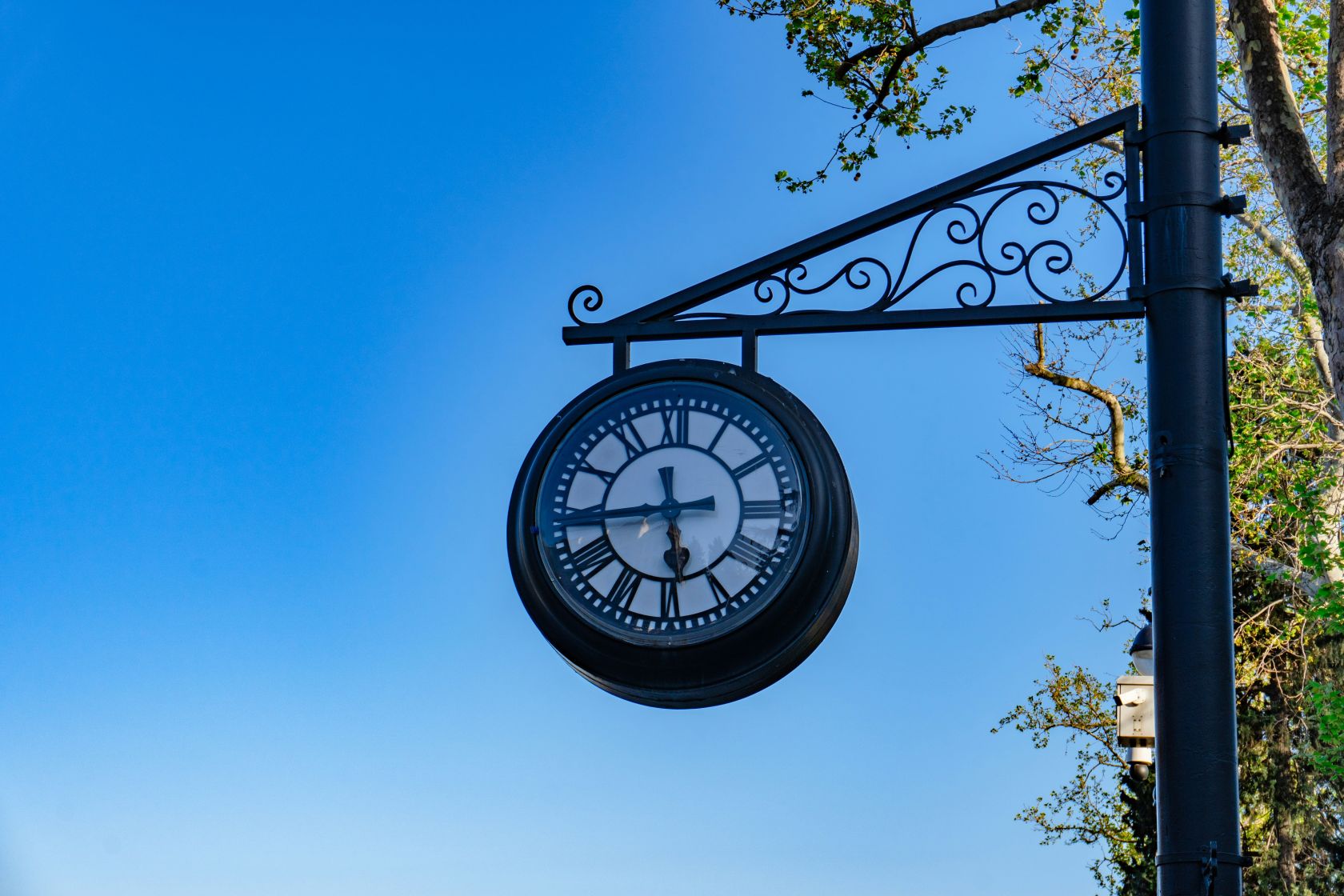
It's worth noting that this has not always been the case. There was a period when the clocks stayed fixed and mainland Portugal was on the same time as Madrid and Paris for four years.
This is a shift that goes back to 27 September 1992 when the Cavaco Silva government (rather than going back on the clocks for winter) decided to make summer time the new winter time. It was formalised by decree-law on 2 July 1992 and was purely an economic decision. The government claimed that the Portuguese working day starting later than that of the other EEC countries created a fundamental misalignment. From that point on, mainland Portugal used UTC+1 in winter and UTC+2 in summer. The seasonal changes remained, but daily life (the start of the school day, the start of the working day, etc.) was now earlier in the day relative to the sun.
The regime remained in force until 1996, though. On 8 March that year the Guterres government issued a new decree law to repeal the measure, citing a number of negative effects which had been observed over the four years. The main problems were with the children's sleep (and the impact this had on their learning) and the environmental issues which arose from the fact that the period of highest road traffic coincided with the period of highest temperature.
The official assessment also concluded that the expected energy savings were not all that significant and that Portugal’s position on the map made it unsuited to remain on Central European Time. So on 31 March
1996 the clocks were not moved forward for the summer time change. They were then set back by one hour on 27 October of that year to bring them back into line with UTC. Thirty years on, Portugal is once again in the process of preparing for a time change. On 25 October at 2 am the clocks will be set back by one hour.
Set The Portugal News as your preferred source for news on Google
 Add as a preferred source on Google








 Portugal Handbook
 English
 Nederlands
 Deutsch
 Français
 Español
 Italiano
 Svenska
 Pусский
 中文
 Türkçe
 Português
 Czech
 Hungarian
 Polski
 عربي
 Suomi
 עִברִית
 Português (Brasil)

Follow us on social media