


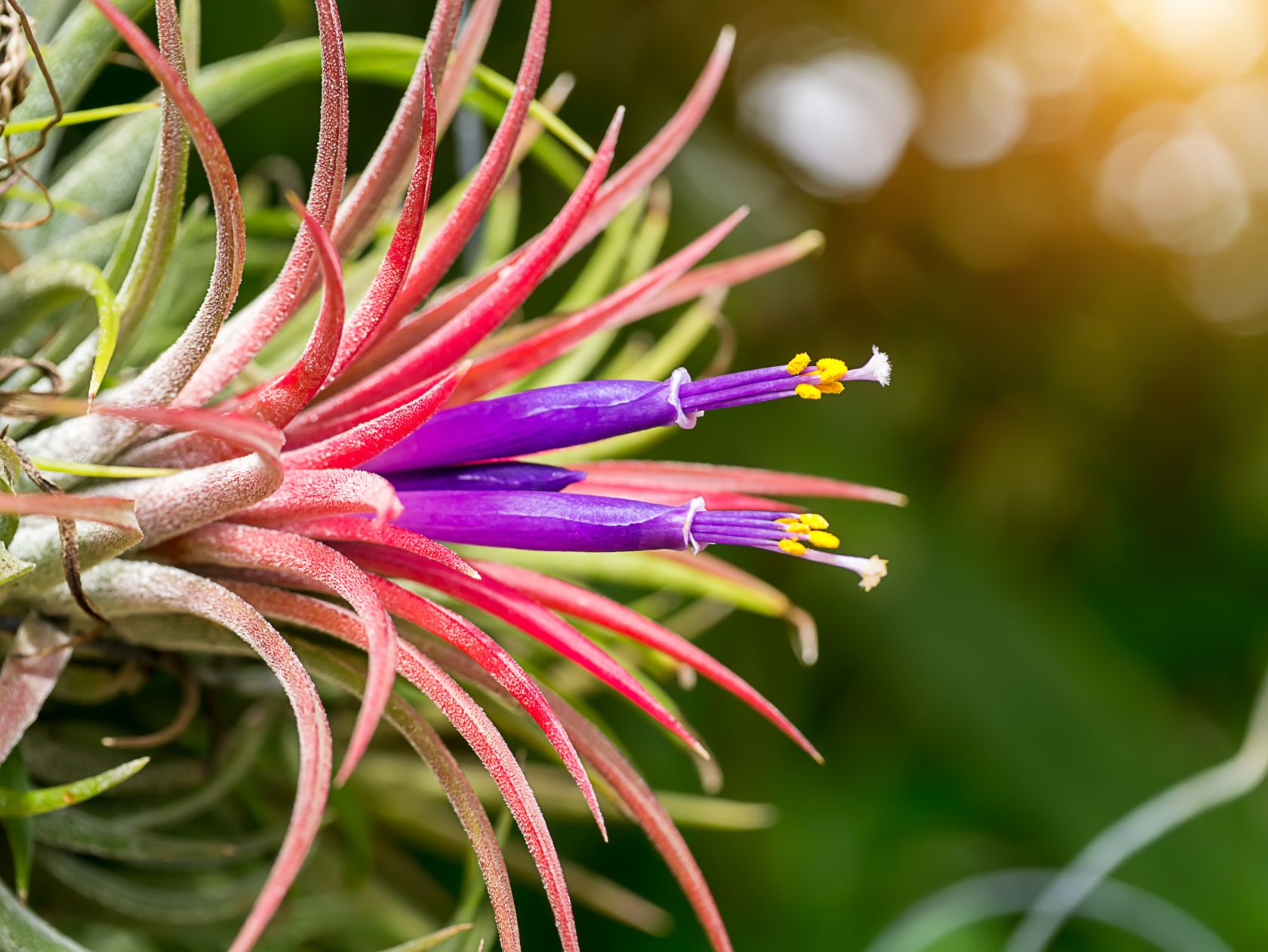
How can a plant not need soil? Most plants need at least four things to survive: light, water, nutrients and somewhere to grow. We would assume that ‘somewhere to grow’ will mean a pot filled with soil or out in the ground – but some plants can thrive exclusively in water alone.
You can take cuttings from various plants, and start them rooting in water alone, but eventually they will need to be put into soil once the growing process has been jump-started. But airplants never need soil at all.
Airplants - Tillandsia
In their natural state due to their specialised leaf scales called trichomes, they absorb everything they need from the air, and are typically green, silvery-green, or grayish-white. The appeal of air plants is easy to see – they require minimal care, can survive well in harsh environments, and make unique and exotic accessories for any indoor space.
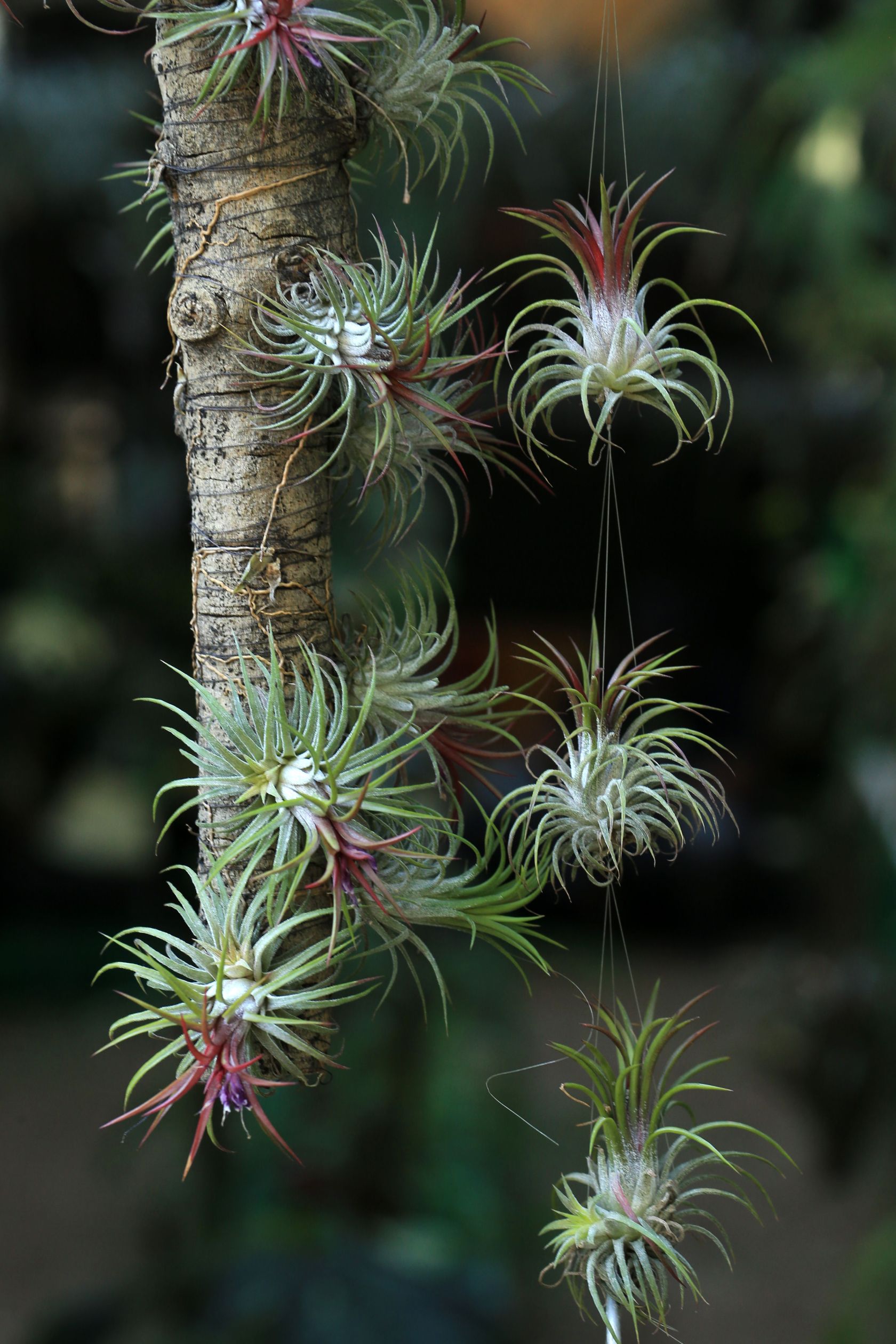
They are a genus of around 650 species of evergreen, perennial flowering plants in the family Bromeliaceae, and they can be found high in the forest canopy of tropical rainforests, where they absorb food and water directly from the atmosphere. They are known for their resilience and ability to thrive in nutrient-poor environments, making them a popular choice for indoor gardening, sometimes even seen set into fridge magnets as kitchen décor.
These little beauties can be displayed on driftwood, rocks, or in hanging globes without messy dirt. With a low maintenance routine, they do not need daily attention, just a deep water ‘dunking’ once every couple of weeks, after which they should be gently shaken free of moisture water and placed upside down to dry completely. This is important, as if water sits at the base, the plant will rot. They will need misting for a little extra moisture if you notice that its leaves are looking a little dry or the leaves are starting to curl inwards, or if you live in a drier climate with low humidity. Airflow is important too - they need good air circulation, so avoid sealing them inside closed glass terrariums where they can’t feel the breeze.
Lifespan and flowering
The typical lifespan of an individual air plant is 2 to 5 years, though some larger species like Tillandsia xerographica can live up to 10 to 20 years with proper care. They bloom just once in their lifetime, with the flowering phase marking the beginning of the end for the plant.
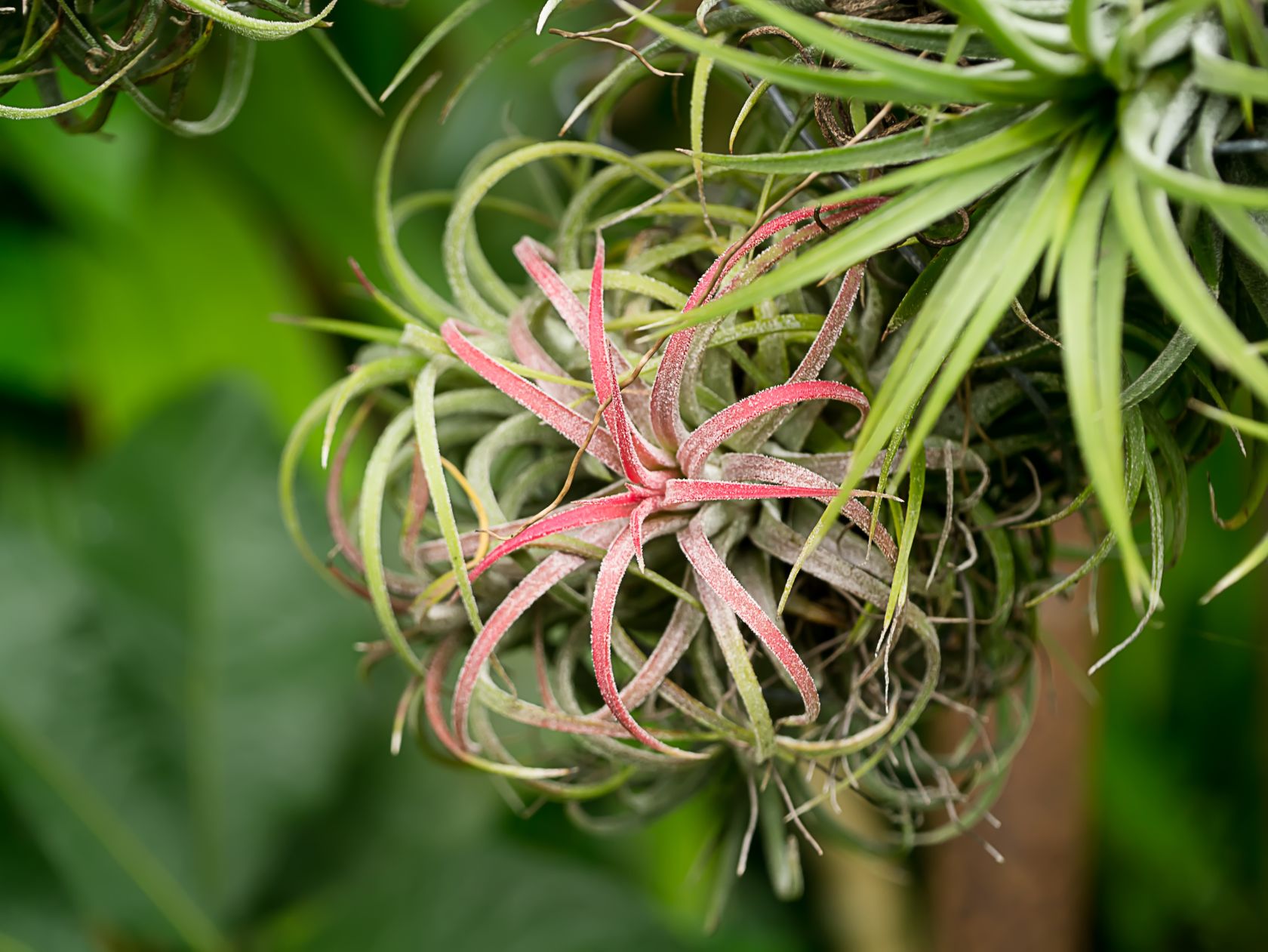
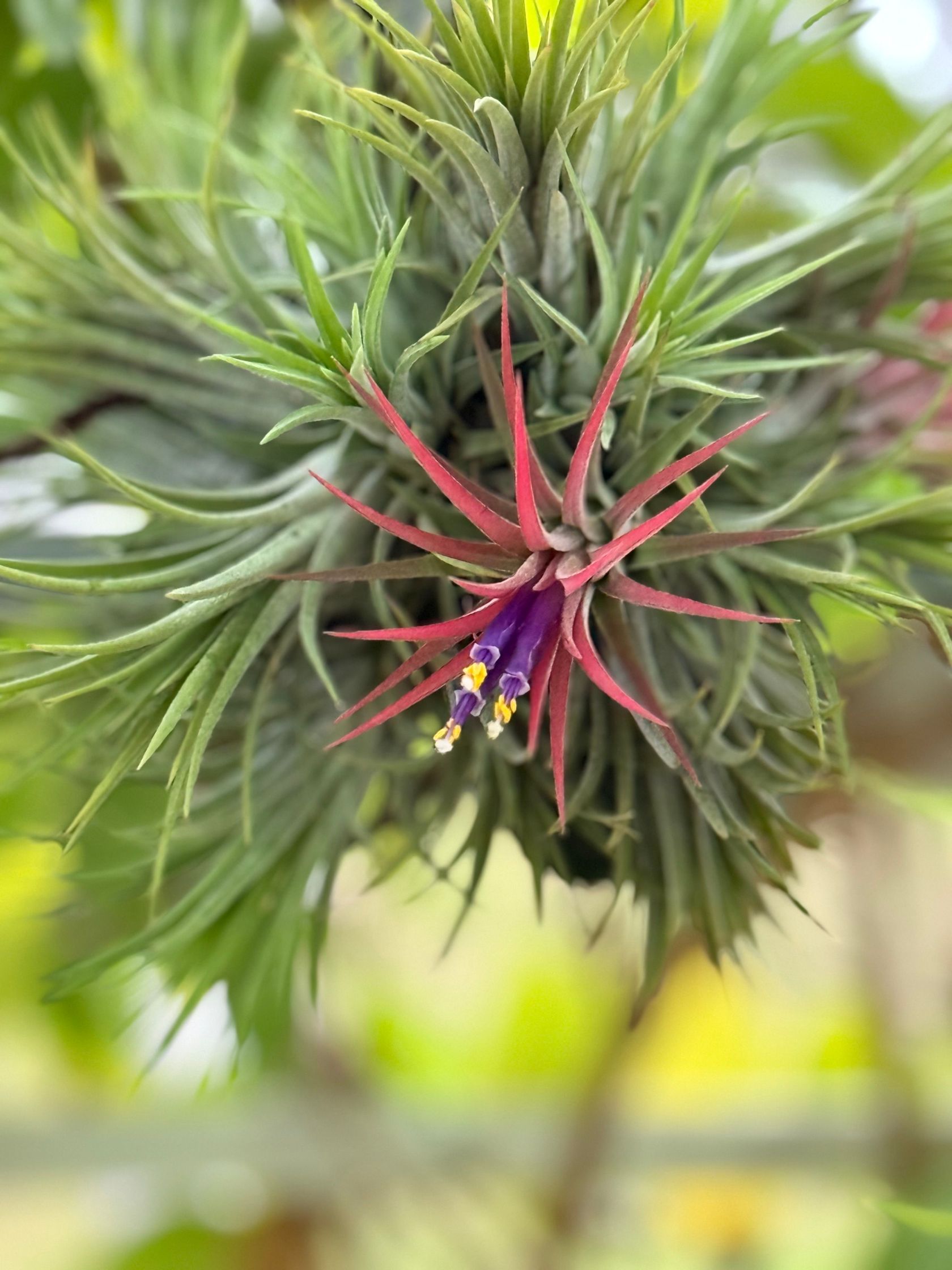
Though the colourful bloom can last from several weeks to a few months, a sign of their demise is when the plant ‘blushes’—turning bright shades of red, pink, purple, or orange—right before and during the blooming cycle, to attract pollinators. The flowers produced will vary depending on the genus, sometimes producing a single bloom, while others produce clusters of flowers known as bloom spikes or inflorescence - a cluster or group of flowers arranged on a main plant stem or a branch system. The mother plant slowly declines after flowering and puts all energy into producing baby offsets (pups) at its base, root system, or lower leaf nodes. In turn, these pups eventually grow into mature plants on their own that will go on to bloom in the future.
Tillandsias are tough plants. They can survive in any growing conditions except their need for light and special watering techniques. However, with some patience and study, growers can master the air plants' watering and care management, just be cautious of overwatering your air plants, as they will succumb to fungus rot and fall apart.
You can remove the pups once they reach about one-third to one-half the size of the parent plant by gently twisting or cutting them off at the base, then placing them on a new surface like wood or wire to grow independently.
A good starter plant is Tillandsia funckiana (try saying that after a few drinks!), a small plant that consists of silvery green needle-like leaves growing along a stem. While often sold as a single graceful stem, it looks equally remarkable when grown long enough to develop into a clump.
Set The Portugal News as your preferred source for news on Google
 Add as a preferred source on Google


 Portugal Handbook
 English
 Nederlands
 Deutsch
 Français
 Español
 Italiano
 Svenska
 Pусский
 中文
 Türkçe
 Português
 Czech
 Hungarian
 Polski
 عربي
 Suomi
 עִברִית
 Português (Brasil)

Follow us on social media