


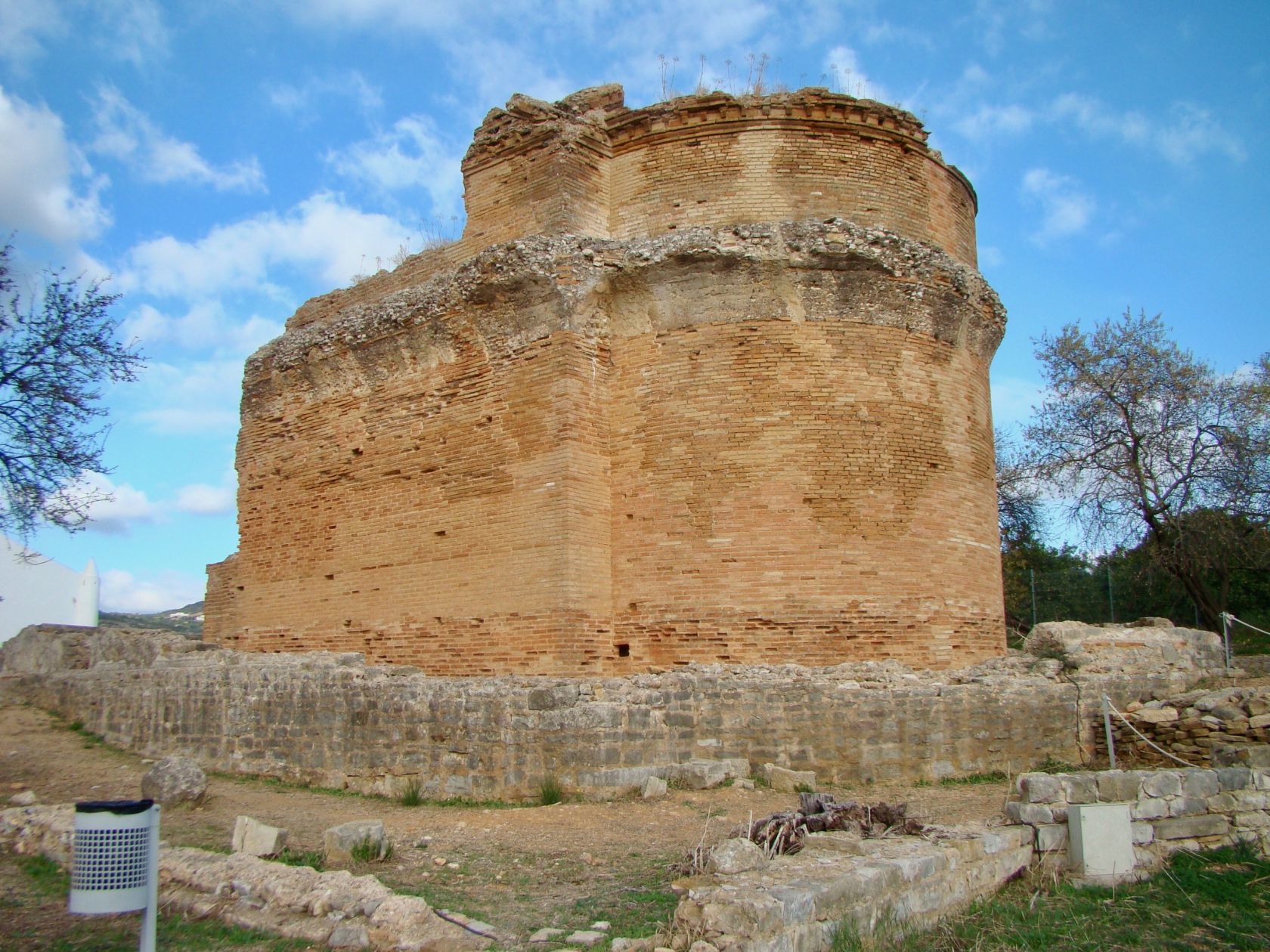
The Algarve archaeological site has been closed since April, when the cultural heritage authority announced a four-month closure for site upgrades. The project is budgeted at approximately one million euros and funded by the Recovery and Resilience Plan (PRR).
On 29 July, UAlg announced its participation in the project—titled “Accessible Visitor Route and Landscape Integration”—coordinated by landscape architects and Faculty of Science and Technology lecturers Ana Paula Gomes da Silva and Sónia Talhé Azambuja. The initiative aims to create a continuous visitor route that is accessible to people with reduced mobility.
Protective barrier
“Once implemented, the new route will serve as a protective barrier for the archaeological structures, guiding visitor flow and preventing them from walking on—and potentially damaging—mosaics, flooring, walls, and other sensitive areas of the monument, issues that have arisen due to the lack of a clearly defined path,” the university stated.
The institution highlighted that the project will create “a route adjacent to the ruins, areas for approaching the archaeological zones, and a new entrance to the interpretation centre,” making the visit “clearer, more inclusive, and circular.”
Delicate aspects
However, UAlg noted that the project involves “more delicate aspects,” such as moving “large architectural blocks from the Roman temple” to “a new location, after they had spent some 40 years in their previous spot.”
“The operation entails a three-dimensional survey, conservation and restoration work, securing the pieces with protective straps, and the use of a high-capacity crane; this allows for the clearing of the new exhibition route while simultaneously enhancing the visibility and understanding of these architectural elements,” the spokesperson noted.
UAlg explained that the blocks in question “originated from the collapse of the temple’s original structure” and will be “repositioned to facilitate public interpretation,” enabling visitors to see which parts of the building the blocks belonged to and “observe specialised construction details without needing to enter the most sensitive archaeological areas.”
The project, carried out by UAlg landscape architects, will also take into account the materials used to build the Roman temple—specifically “the use of *opus caementicium* (a type of Roman concrete) and mortars incorporating pozzolan-related elements (a silica- and alumina-rich material of volcanic or, at times, artificial origin),” the university stated.
These materials “highlight the temple’s technical and construction quality” and demonstrate the “circulation of materials and technical knowledge within the Roman world,” evidenced by the “presence of volcanic stone, which does not occur naturally in the Faro area.”
Additionally, ramps, new paving, rest and viewing points, and benches will be installed along the route, which features a “gradient suitable for wheelchair access,” the university noted.
 Add as a preferred source on Google





 Portugal Handbook
 English
 Nederlands
 Deutsch
 Français
 Español
 Italiano
 Svenska
 Pусский
 中文
中文 Türkçe
 Português
 Czech
Czech Hungarian
 Polski
 عربي
عربي Suomi
Suomi עִברִית
 Português (Brasil)
Follow us on social media