


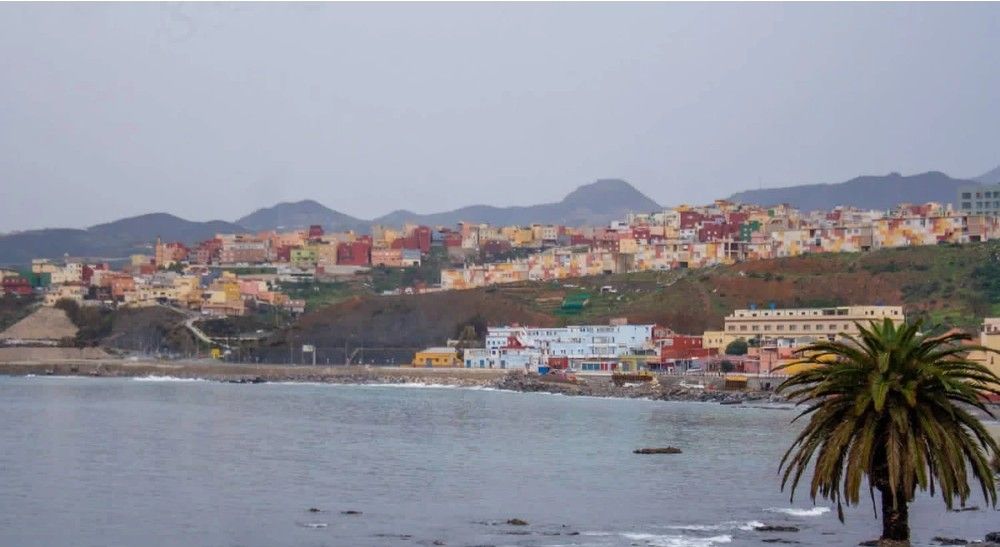
As reported by POLITICO, Italian Prime Minister Giorgia Meloni warned that her government was prepared to adopt “extraordinary measures” to reinforce border security after thousands of migrants reportedly entered Ceuta from neighbouring Morocco.
This incident, which quickly gained traction across social media, prompted some of Italy’s most senior government figures to argue that Spain’s migration policies are undermining the EU’s external borders. Meloni. Deputy Prime Minister Matteo Salvini and Foreign Minister Antonio Tajani have all called for a review of Spain’s role within the Schengen Area, with some suggesting the country should face suspension from the passport-free zone.
Migration management
The Schengen Agreement allows passport-free travel across 29 European countries, although member states may temporarily restore border controls in exceptional circumstances.
Italy has already maintained checks along its border with Slovenia, citing concerns over irregular migration, organised crime and terrorism.
Tajani intensified the dispute by directly criticising Spanish Prime Minister Pedro Sánchez’s immigration strategy, arguing that Madrid’s plans to regularise hundreds of thousands of undocumented migrants send the wrong signal and could encourage people-smuggling networks.
His remarks prompted an immediate response from Spain, as Foreign Minister José Manuel Albares summoned Italy’s ambassador in Madrid in a formal diplomatic protest, describing Tajani’s comments as inappropriate for the representative of a partner nation. Albares said Spain expected European solidarity rather than what he characterised as politically motivated criticism.
Sánchez’s government has defended its regularisation proposal as a practical response to labour shortages and the reality of undocumented residents already contributing to Spain’s economy. However, conservative governments, including Italy’s, argue that such measures risk encouraging further irregular migration.
According to the European Commission, officials remain in close contact with the Spanish authorities as they respond to the developments in Ceuta.
Border controls
Magnus Brunner, European Commissioner for Internal Affairs and Migration, confirmed Brussels has been working alongside Spain to reinforce the protection of the EU’s external frontier and is monitoring the situation closely.
The Commission also praised the continued cooperation between Spain and Morocco, noting that both countries have worked together to manage migration flows and facilitate the return of people who entered Ceuta illegally, in accordance with European and international law.
These events have also reignited calls within the European Parliament for stricter implementation of the EU’s recently adopted Migration and Asylum Pact. As reported by POLITICO, European People’s Party President Manfred Weber argued that the developments in Ceuta demonstrate the need to fully enforce both the Migration Pact and new return rules without delay.
Operational cooperation
Ceuta and neighbouring Melilla, Spain’s two autonomous cities on the North African coast, have long represented one of Europe’s most sensitive migration frontiers.
Surrounded by Morocco but forming part of both Spain and the European Union, the territories frequently experience attempts by migrants to enter European soil, whether by scaling border fences or swimming around coastal barriers.
The Spanish authorities have repeatedly stressed that maintaining control of Ceuta’s border requires close operational cooperation with Morocco.
In recent years, the EU has increased financial and logistical support for border management initiatives in North Africa, while also pursuing broader agreements aimed at reducing irregular migration through investment, security partnerships and anti-trafficking measures.
 Add as a preferred source on Google







 Portugal Handbook
 English
 Nederlands
 Deutsch
 Français
 Español
 Italiano
 Svenska
 Pусский
 中文
中文 Türkçe
 Português
 Czech
Czech Hungarian
 Polski
 عربي
عربي Suomi
Suomi עִברִית
 Português (Brasil)
Spain ought to be thrown out of the EU and the EU needs to be thrown out of Europe. Otherwise, you can kiss Europe goodbye in a decade or two.
By Tony from USA on 31 Jul 2026, 22:56
Let's just pretend for a minute that these 'migrants' (all men, not one woman or child) are all doctors and engineers, fleeing dangerous warzones (Morocco), and definitely not an army of invaders, nobody knows anything about.... The audacity of Spain to dictate to Italy what Italians should or should not do with their own borders, is astonishing!
But it's very on par with everything in the leftist ideology: telling others what is and isn't acceptable, and if they don't do what is being ordered, smearing them.
Ironically, Spain is also extremely supportive in Ukraine having tight borders and flourishing nationalism. But in Italy it's VERBOTEN!
This is what you get when you vote for socialists: history repeating itself. But instead of National Socialists, today we get International Socialists. Every European who votes for this, should be forced to take in one 'migrant'!!
I certainly hope that Portugal is going to fortify their own borders, because if Spain wants this, let them have it. Morocco and Algeria are stable and prosperous countries by the standards of the region - and yet their inhabitants rampage like a medieval army.
Directly south of them lie Mauritania (largest slave markets in the world), Mali, Burkina Faso (child armies), Ivory Coast, Benin etc etc - whose inhabitants (when they arrive, which is a matter of time) will make these arrivals look like models of civilised restraint at a teddy bear picnic.
By Hart from Lisbon on 01 Aug 2026, 05:06