


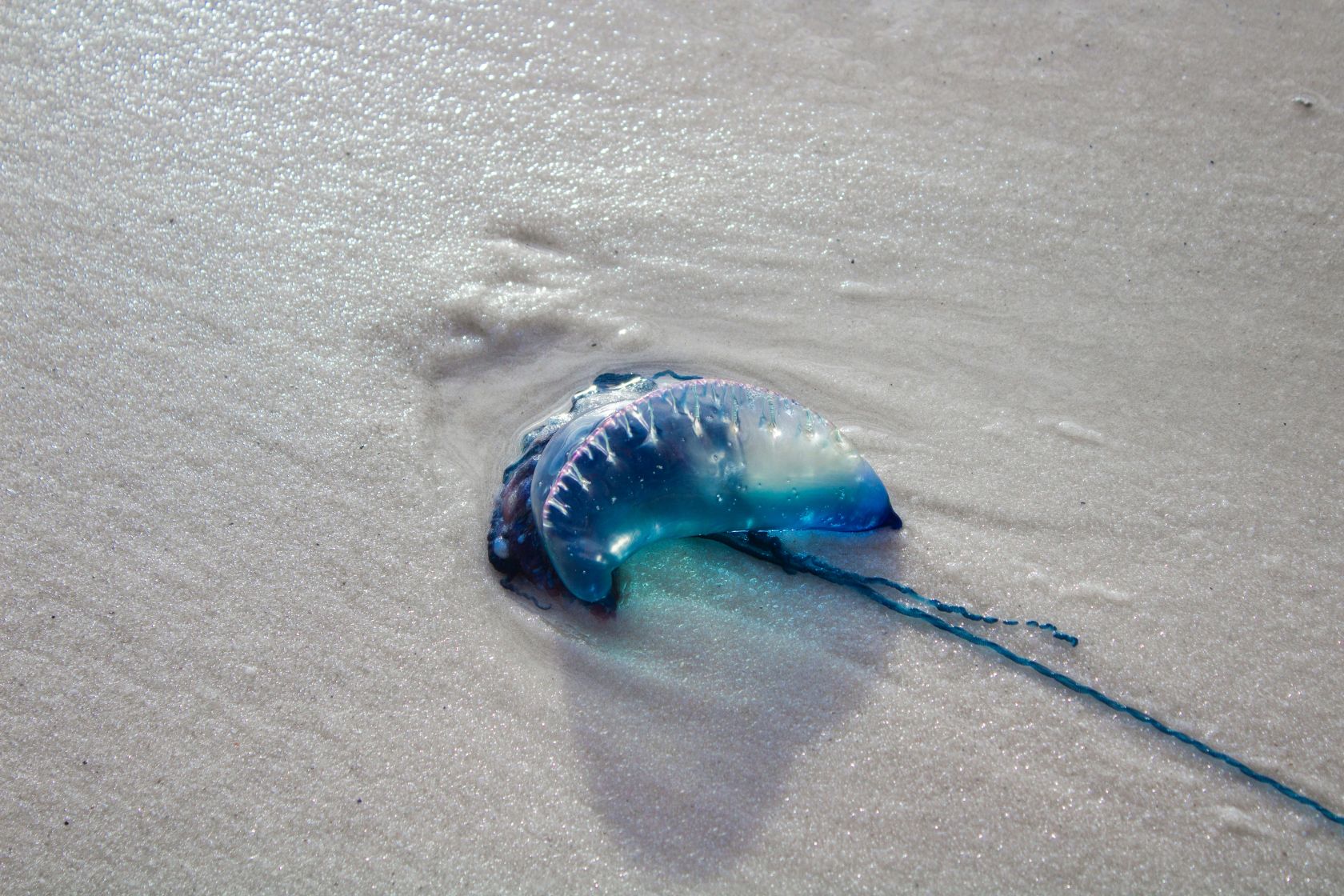
The phenomenon hit the coast of the Gipuzkoa province particularly hard, forcing lifeguards to fly the red flag and ban swimming in areas popular with tourists.
The city of San Sebastián was one of the areas most affected by the wave of these marine organisms—often mistaken for jellyfish but far more dangerous.
On Tuesday, 4 August, rescue teams recorded approximately 120 cases requiring assistance for stings at the city’s beaches, although local authorities noted that most cases were minor. Nevertheless, more severe incidents occurred earlier in the week, including a swimmer in Getaria being hospitalised after multiple stings and a woman requiring ambulance assistance at Zarautz beach. Emergency teams also provided aid at the Zurriola, Mutriku, and Zumaia beaches, with most treatments administered on-site.
Due to the heightened risk, entering the water was temporarily prohibited at iconic regional beaches such as La Concha, Ondarreta, and Zurriola. Local authorities explained that restrictions were managed dynamically and adjusted throughout the day based on the size, number, and location of the sighted specimens, allowing for the rapid reopening of the beaches once safety conditions were restored.
Experts say that the unusual appearance of these floating colonies along the coastline stems from a combination of persistent northeasterly winds and seawater temperatures that are unusually high for the region, hovering around 24.8ºC.
The alert has been heightened in recent days due to the arrival of larger specimens, whose longer tentacles have an increased capacity to release toxins and cause painful injuries. Health authorities remind the public that these organisms retain active venom even after washing ashore and appearing dead on the sand; they advise beachgoers to wash affected areas exclusively with seawater and to seek immediate assistance at lifeguard stations.
Set The Portugal News as your preferred source for news on Google
 Add as a preferred source on Google








 Portugal Handbook
 English
 Nederlands
 Deutsch
 Français
 Español
 Italiano
 Svenska
 Pусский
 中文
中文 Türkçe
 Português
 Czech
Czech Hungarian
 Polski
 عربي
عربي Suomi
Suomi עִברִית
 Português (Brasil)
Follow us on social media