


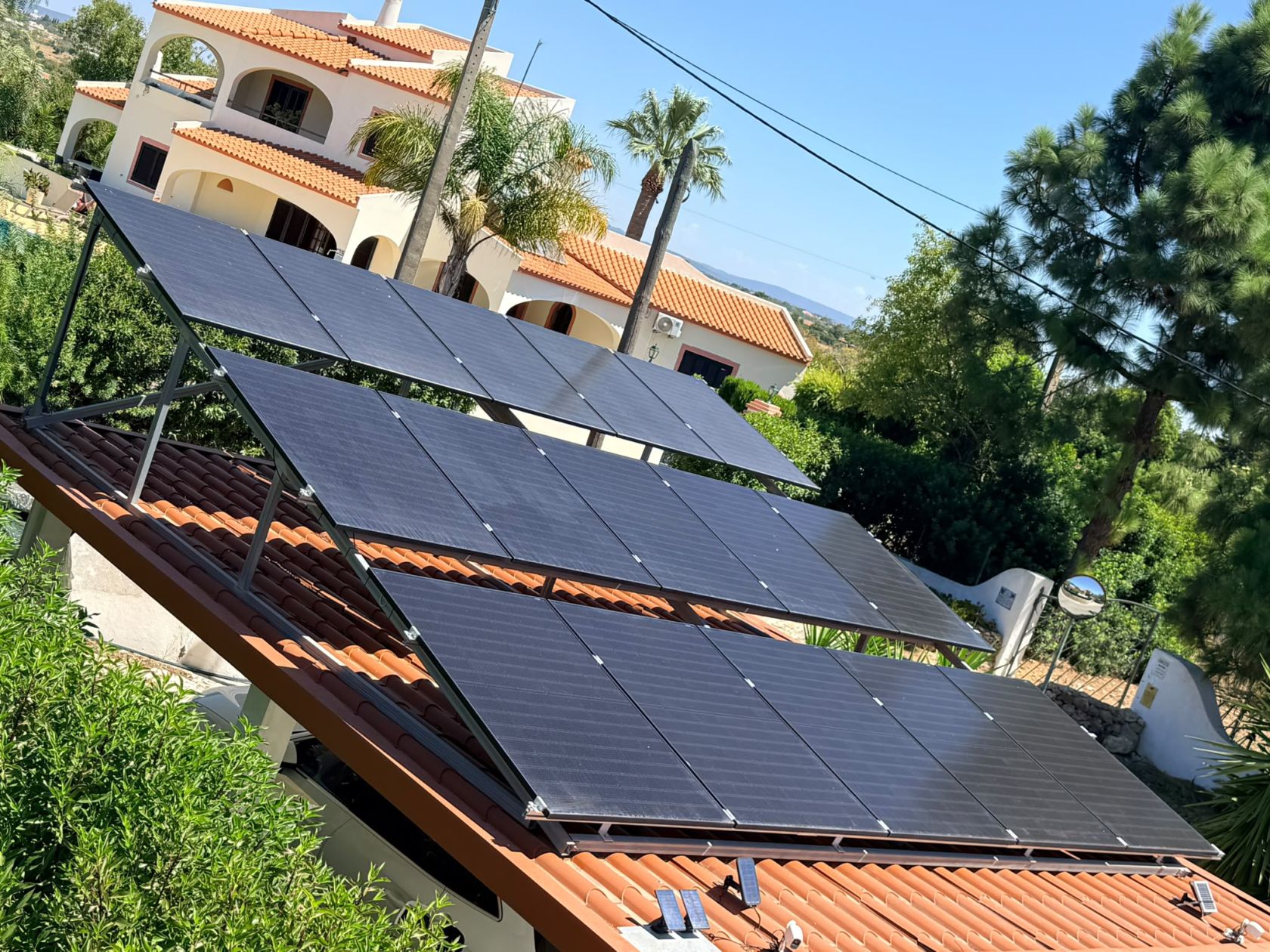
When we were first contacted by the owner of this property near Guia, it was immediately clear that this would not be a standard solar installation.
The electricity bills and property information provided in advance allowed us to prepare carefully for the first visit. Every project starts with one simple question:
“How do you use your energy?”
That question changes everything. We found a modern 350 m² home with a swimming pool, heat pump, air conditioning and an electric vehicle. Like many homeowners, the client was facing electricity bills of around €600 per month.
Installing as many solar panels as possible was never our objective. Instead, we focused on understanding how the family used energy and designing a solution around their lifestyle.
The property itself presented several challenges, including different installation areas. Rather than choosing the easiest solution, we continued refining the design until we were confident it met the homeowner’s real needs.
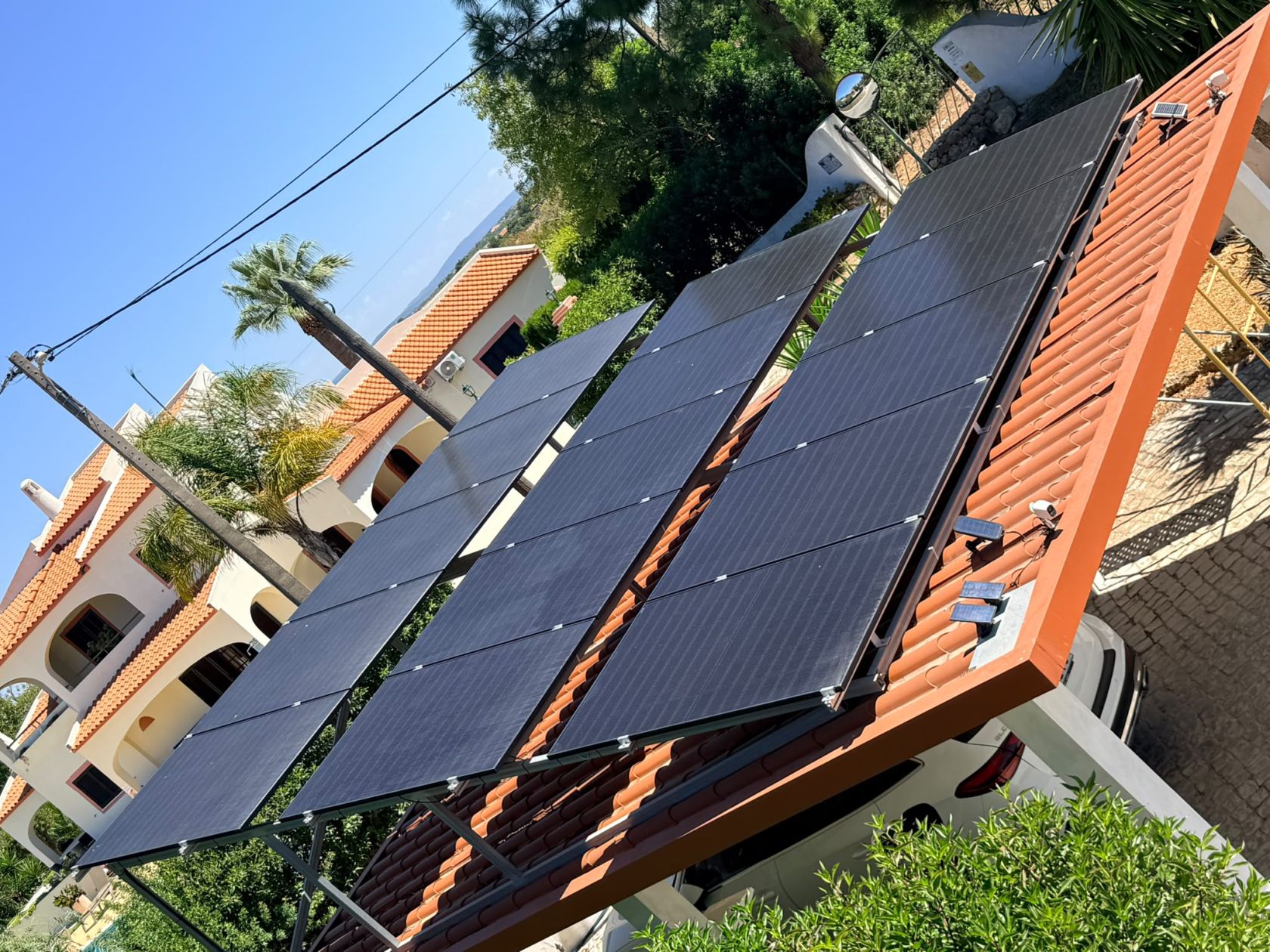
The final solution included 30 photovoltaic panels, installed on two bespoke structures—one on the carport and the other near the swimming pool. Their different orientations were carefully designed to maximise energy production throughout the day, matching the homeowner’s consumption profile.
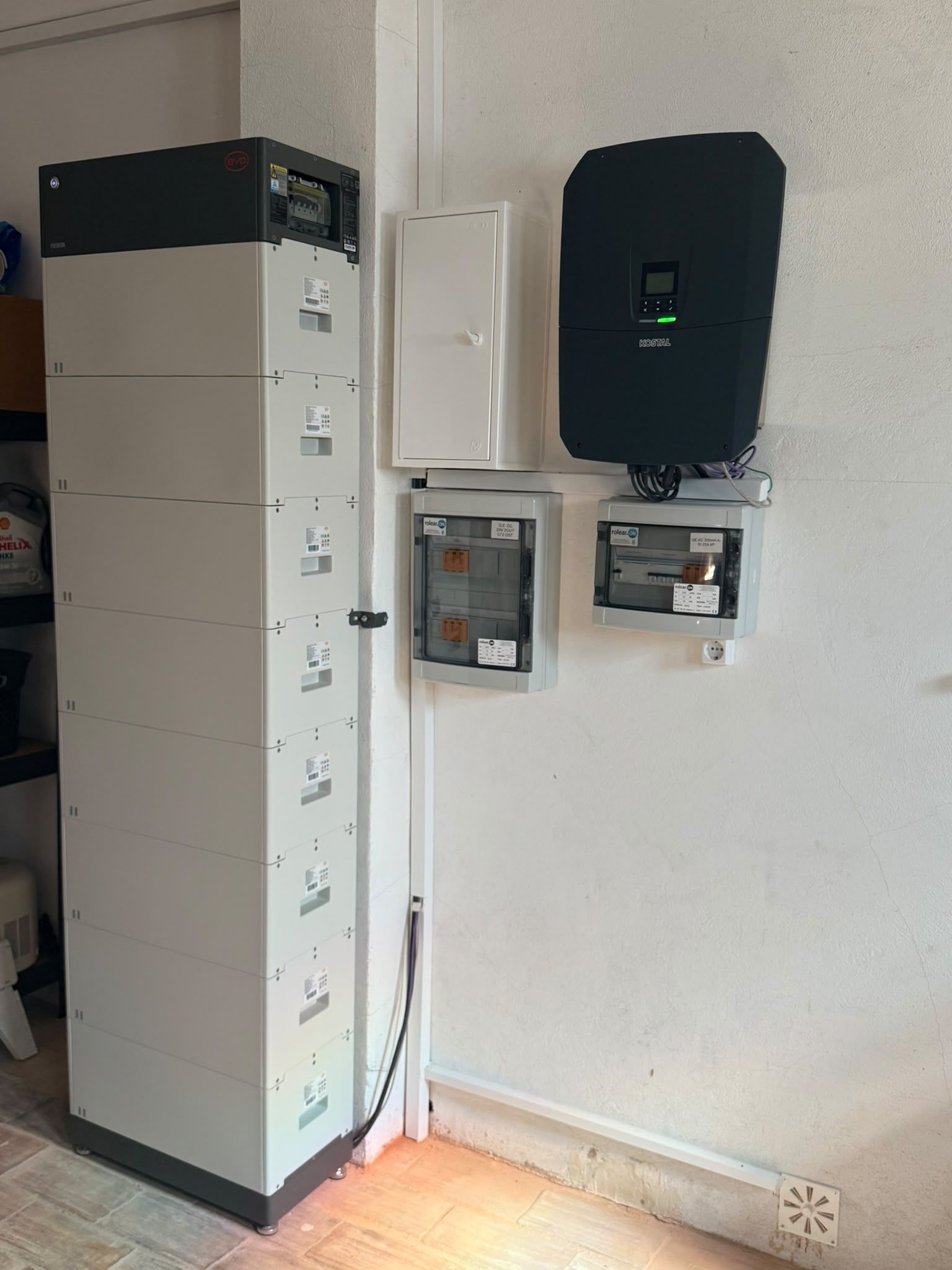
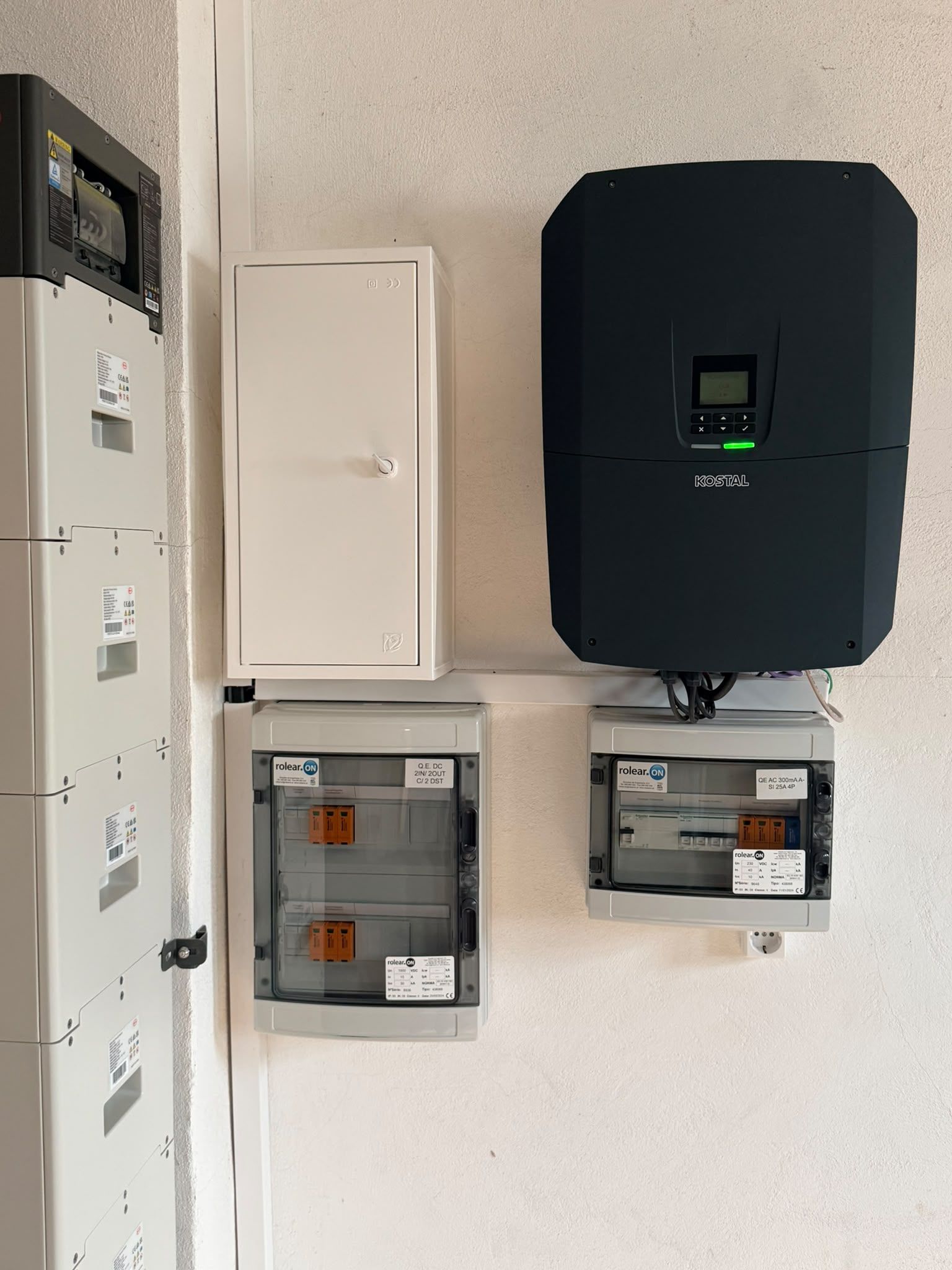
The cabling was optimised to minimise electrical losses, while all technical equipment was installed in the garage with a direct connection to the property’s main electrical distribution board
At the heart of the system, we installed a 15 kW Kostal hybrid inverter with six BYD HVM battery modules, designed from the outset to allow future expansion.
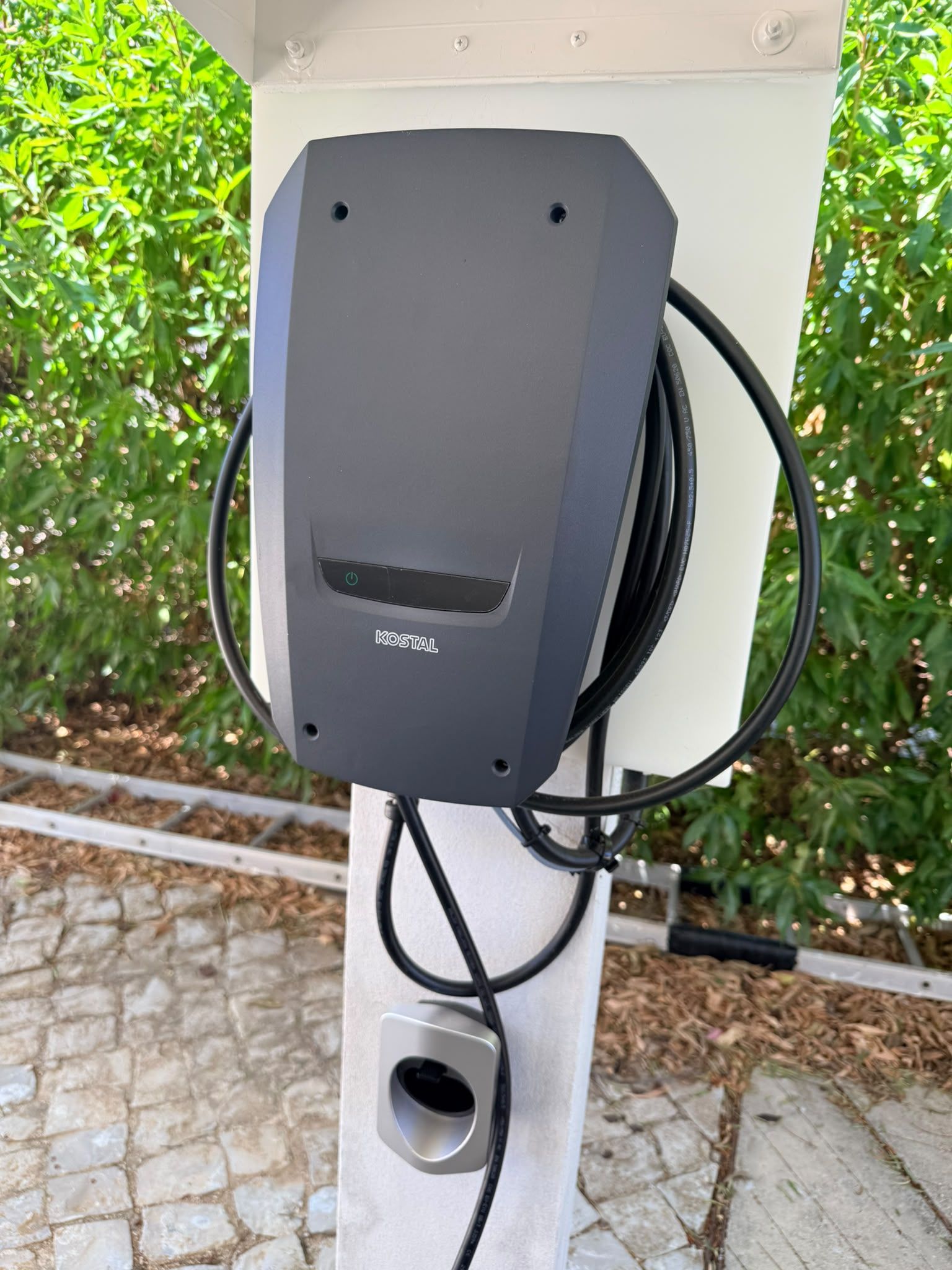
After monitoring the system for two months, the data confirmed that increasing the battery capacity would further improve the home’s energy independence. We therefore expanded the system to eight BYD HVM battery modules, providing approximately 22 kWh of energy storage, and added an integrated 11 kW electric vehicle charger with Fast Charging, PV Charging and PV + Battery Charging modes.
The results speak for themselves.
Today, on most days, the property operates without importing electricity from the grid, while the electric vehicle is charged predominantly using surplus solar energy.
Even during the winter months, electricity bills have fallen from approximately €600 to between €60 and €100 per month, with an expected return on investment of less than four years.
The homeowner is also expected to receive around €400 per year from surplus electricity exported, effectively covering the system’s annual maintenance costs.
For us, however, this project is about much more than the numbers.
It proves that the best renewable energy systems are not those with the most equipment, but those designed around the way people live.
That is why we believe renewable energy should never begin with the question: “How many solar panels do I need?” It should begin with a much simpler one:“How do you use your energy?”
When we understand how a family uses energy, we can design much more than a photovoltaic system. We can design energy independence. This project wasn’t about installing more equipment. It was about giving one family the confidence to stop worrying about electricity.
Today, on most days, they do.
This article is based on a real Soren Renewable Energy Consulting project. To protect our client’s privacy, the homeowner’s identity and the exact location of the property have not been disclosed.
Isa Conceição - Founder & CEO
Soren – Renewable Energy Consulting
+351 917 770 107
Email: info@soren.pt
Transforming Energy into Real Value
 Add as a preferred source on Google





 Portugal Handbook
 English
 Nederlands
 Deutsch
 Français
 Español
 Italiano
 Svenska
 Pусский
 中文
中文 Türkçe
 Português
 Czech
Czech Hungarian
 Polski
 عربي
عربي Suomi
Suomi עִברִית
 Português (Brasil)
A question to be asked is how exactly does one burn through about $700 a month of electricity. The answer is solar as long as the sun shines but the level of profligacy is alarming.
By Tony from USA on 08 Aug 2026, 21:28
I note there is no mention of exactly how much they spent for the system.
Secondly after my own research,it would appear much of the inferred montly saving is wildly optimistic.My av elec yr round is 120 euros.To install a 5.5kw system with a coupld of batteries would costs me around 13,000 euros.
Makes little economic sense as will take 9 years to breakeven by which time systems will be much more efficient and if giant screen tvs are anything to go by will also be much cheaper.
I remain unconvinced
By James from Algarve on 10 Aug 2026, 04:04