


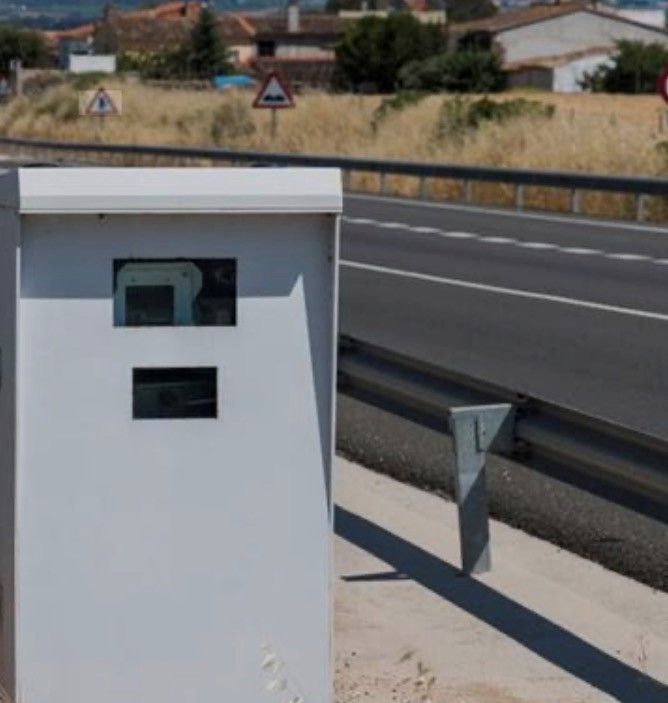
The camera is located at kilometre 102 of the EN125, in the parish of São Pedro, and monitors vehicles travelling from west to east.
For anyone driving along this stretch, the speed limit is 70 km/h.
According to Portugal’s National Road Safety Authority (ANSR), the Faro camera was among five locations responsible for a particularly high number of speeding offences when the figures were recorded.
Road safety
Together, those five cameras accounted for approximately one-third of all offences detected across the 61 monitoring locations operating at the time.
The other cameras were located on the A1 in Coimbra, A4 in Matosinhos, A29 in Vila Nova de Gaia and A23 in Vila Nova da Barquinha.
The Algarve’s speed camera network has since expanded, with fixed cameras also operating along the EN125 in Lagoa, Guia and Ferreiras, as well as on the EN125-10 in Montenegro and the A2 in Paderne.
Speed limits vary between locations, ranging from 70 to 80 km/h at the monitored points on the EN125, while the A2 camera monitors a 120 km/h limit.
Although speed cameras aren’t always popular with motorists, the ANSR says they have contributed to significant improvements in road safety.
At the first locations equipped with the national SINCRO monitoring system, accidents involving injuries fell by 36%, fatalities by 74% and serious injuries by 44%, compared with the periods before the cameras were installed.
For drivers using the EN125, the reminder is straightforward: the speed limit on this particular stretch in Faro is 70 km/h.
Set The Portugal News as your preferred source for news on Google
 Add as a preferred source on Google


 Portugal Handbook
 English
 Nederlands
 Deutsch
 Français
 Español
 Italiano
 Svenska
 Pусский
 中文
 Türkçe
 Português
 Czech
 Hungarian
 Polski
 عربي
 Suomi
 עִברִית
 Português (Brasil)

Follow us on social media