


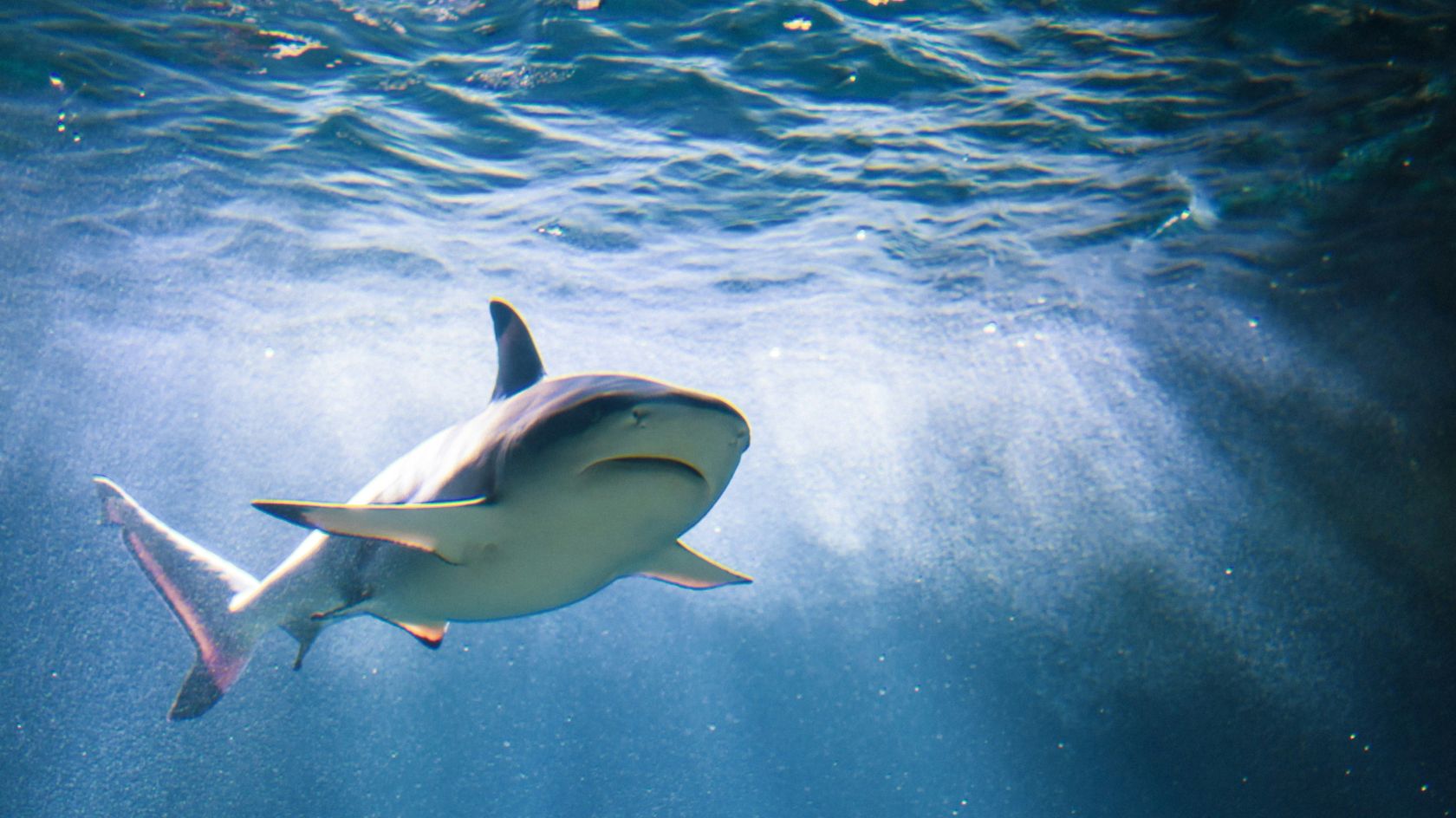
Analysis of maritime activity reveals that Portugal ranks third in the European Union and twelfth globally for shark catches; however, these figures stem primarily from high-seas commercial fishing rather than a high density of these species near the coastline. International records of marine incidents confirm the safety of the country’s bathing areas.
The International Shark Attack File lists no unprovoked attacks on Portuguese beaches; the few historical incidents associated with the national territory involved almost exclusively fishing activities or deep-water encounters far from swimming areas.
Occasional sightings
Occasional sightings of individual sharks near the coast, such as the hammerhead recently spotted at the mouth of the Tagus River, prompt monitoring by maritime authorities but are not considered aggressive behaviour toward humans.
Among the species observed off the Portuguese coast, the blue shark is one of the most common; it is generally a peaceful animal that approaches vessels or divers only out of curiosity or attraction to food. Safety guidelines recommend that, should a shark appear, swimmers leave the water calmly and follow the instructions of lifeguards, with the likelihood of an incident remaining virtually non-existent at the country’s beaches.
 Add as a preferred source on Google







 Portugal Handbook
 English
 Nederlands
 Deutsch
 Français
 Español
 Italiano
 Svenska
 Pусский
 中文
中文 Türkçe
 Português
 Czech
Czech Hungarian
 Polski
 عربي
عربي Suomi
Suomi עִברִית
 Português (Brasil)
With all the changes going on on the planet I would not be so arrogant as to tell people the risk of shark attacks is small.
The recent disappearance of a British surfer on a paddle board one mile out to sea with no body recovered to date,make me even more cautious.
We know so little about our oceans.
Sharks can attack in ankle deep water. Once you are more than a few yards out ,all bets are off.
Treat the ocean with enormous respect at all times.
By James from Algarve on 01 Aug 2026, 08:52