


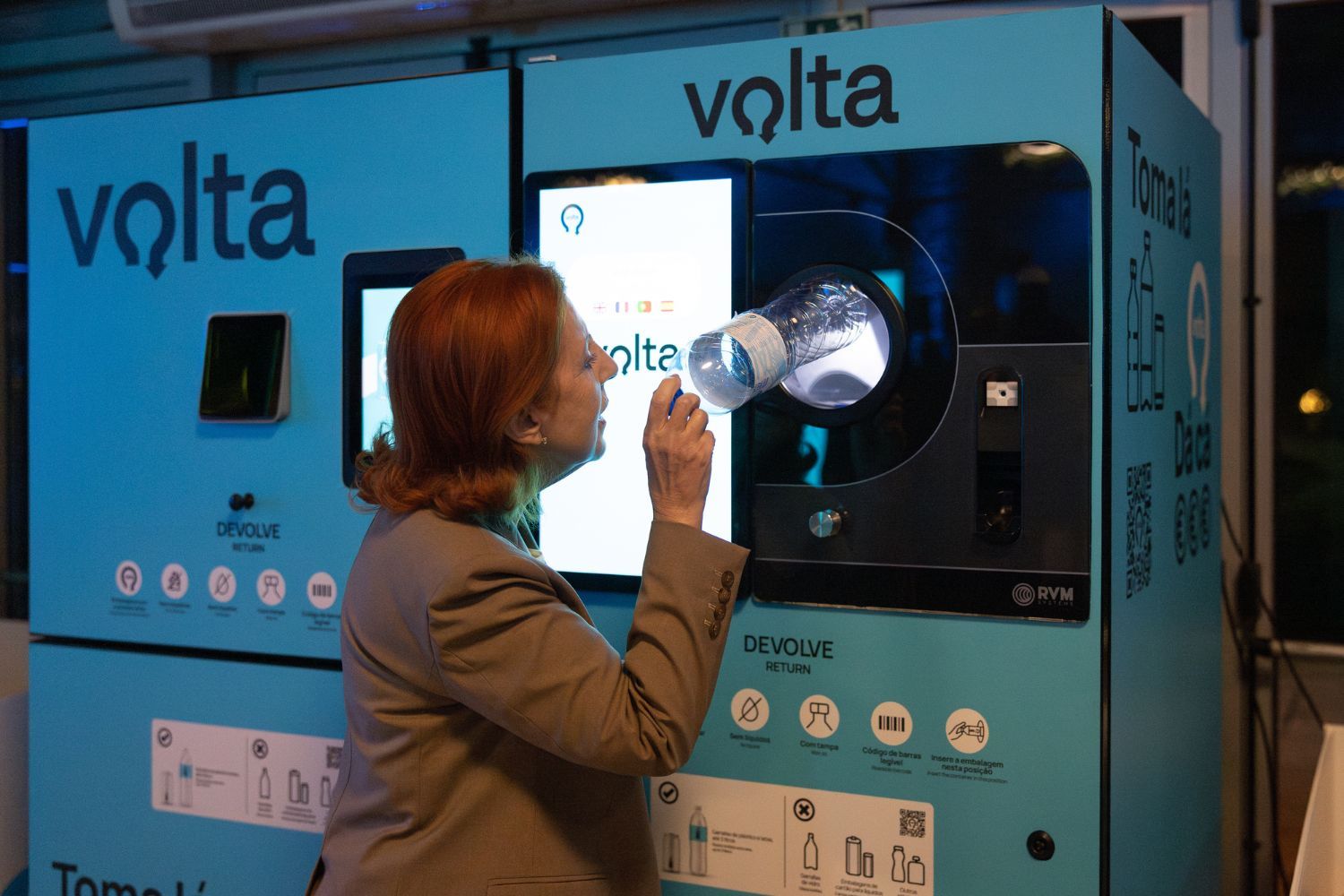
As reported by pplware, the transition period introduced when the scheme launched on 10 April comes to an end this weekend.
From that date, all eligible plastic bottles and metal cans with a capacity of up to three litres entering the Portuguese market must display the Volta logo and be covered by the national deposit return scheme.
An additional €0.10 deposit will be charged to consumers purchasing drinks in eligible containers, which is refunded when the empty container is returned to an authorised collection point.
Recycling network
The nationwide scheme, managed by SDR Portugal, is designed to boost recycling rates and reduce litter by encouraging consumers to return empty beverage containers for reuse.
According to information released by the operator, the network now includes around 2,500 return points across mainland Portugal, Madeira and the Azores, making the system accessible through supermarkets, retail outlets and other participating locations.
In addition, customers can recover their deposit in several ways, including cash, shopping vouchers, credit to a loyalty card or digital wallet, or donation to charitable organisations, depending on the facilities available at each collection point.
The first four months of operation allowed both containers with and without the Volta label to remain on sale, giving beverage producers and retailers time to clear existing stock before the mandatory phase began.
As the grace period ends on 10 August, all newly marketed eligible single-use beverage packaging must now comply with the deposit scheme.
Circular economy
Early participation figures released by SDR Portugal suggest that consumers have responded positively, with more than 10 million containers returned during the system’s first two months of operation, reflecting growing public awareness of the initiative.
This deposit return scheme forms part of Portugal’s wider strategy to meet European Union circular economy and waste reduction targets. Under the EU Single-Use Plastics Directive, Member States are expected to achieve a 90 percent separate collection rate for plastic beverage bottles by 2029.
Portuguese authorities believe that Volta will play a crucial role in helping the country reach this objective while reducing plastic pollution and increasing the quality of recyclable materials entering the waste management system.
 Add as a preferred source on Google







 Portugal Handbook
 English
 Nederlands
 Deutsch
 Français
 Español
 Italiano
 Svenska
 Pусский
 中文
中文 Türkçe
 Português
 Czech
Czech Hungarian
 Polski
 عربي
عربي Suomi
Suomi עִברִית
 Português (Brasil)
Doesn’t help when the Volta machine is full!
By Jan Rich from Algarve on 06 Aug 2026, 13:40