


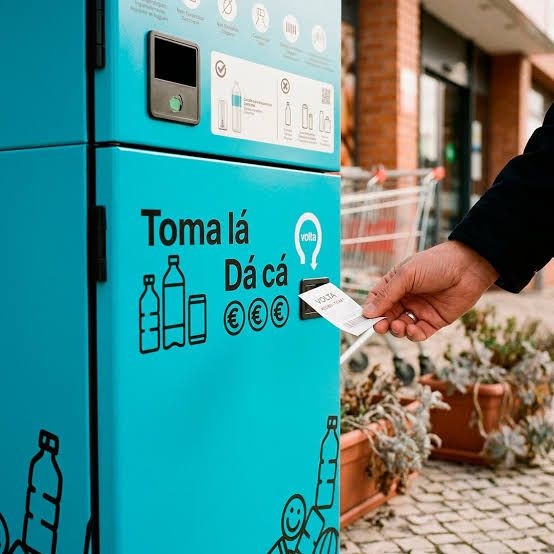
Having been submitted to parliament on 15 August, the petition, demanding that the Government, the Assembly of the Republic and the Portuguese Environment Agency “immediately suspend the “Volta” deposit and refund system and replace it with a transparent, fair and truly environmental model”, was referred four days later to the Environment and Energy Committee, according to the AR’s online page.
When it was filed with the assembly, the citizens’ petition had 34,211 signatures, and 7,500 are needed for a request to be discussed in plenary.
A month later, almost three thousand more people signed the complaint, which argues that the system "transfers costs from companies to consumers," who are also "held responsible for failures they do not control."
It also points out "a lack of transparency about who profits from the system" and that it "does not fulfil the stated environmental objective."
An environmental system should, according to the signatories, "reduce waste, increase recycling, promote producer responsibility, be accessible and fair to all," but, the petition adds, "the 'Volta' system fails on all these points, creating barriers, costs and injustices that discredit environmental policy and undermine citizens' trust."
The system, which began operating in April, allows consumers to recover the 10-cent deposit per package paid at the time of purchase of single-use bottles and cans made of plastic, metal and aluminium and smaller than three litres, by returning them to existing 'Volta' points in mainland Portugal, the Azores and Madeira.
In addition to the “immediate suspension of the “Volta” system in its current form”, the petition demands an “independent audit of the financial, operational and environmental model of SDR Portugal”, an association that “brings together more than two dozen companies in the beverage industry and retail sector” that “ensure the management of the Deposit and Refund System (SDR)”, the association indicates on its website.
The public petition “For the End of the “Volta” System and for the Creation of a Fair Packaging Management Model”, whose first signatory is João Pontes, “is not associated with any Organisation or Political Party”, being a request “from citizens to citizens”, says the text.
Implementation problems
The Minister of the Environment admitted on the 1st of this month that the Volta System faces implementation problems, especially due to packaging being disposed of on public roads, and said the identified situations are being analysed and resolved on a case-by-case basis.
“The Volta system […] is a European system that will be mandatory in all European countries, and we were the 18th country to implement this system. In all of them, at the beginning, there were disruptions, so it is a complex system, but it is very useful for reusing plastic bottles and everything that is canned,” Maria da Graça Carvalho told journalists in Brussels.
Problems detected
The Minister pointed to large events and festivals as one of the first problems detected, considering that this situation has already been resolved, and also mentioned the need to find solutions to prevent people from rummaging through the garbage in search of packaging to obtain the respective refund.
“We are in a transition process, we hope to solve all the problems,” said Maria da Graça Carvalho, arguing that it is necessary to strengthen oversight and involve municipalities, especially in the location of collection machines and in monitoring the operation of the system.
 Add as a preferred source on Google





 Portugal Handbook
 English
 Nederlands
 Deutsch
 Français
 Español
 Italiano
 Svenska
 Pусский
 中文
中文 Türkçe
 Português
 Czech
Czech Hungarian
 Polski
 عربي
عربي Suomi
Suomi עִברִית
 Português (Brasil)
Follow us on social media