


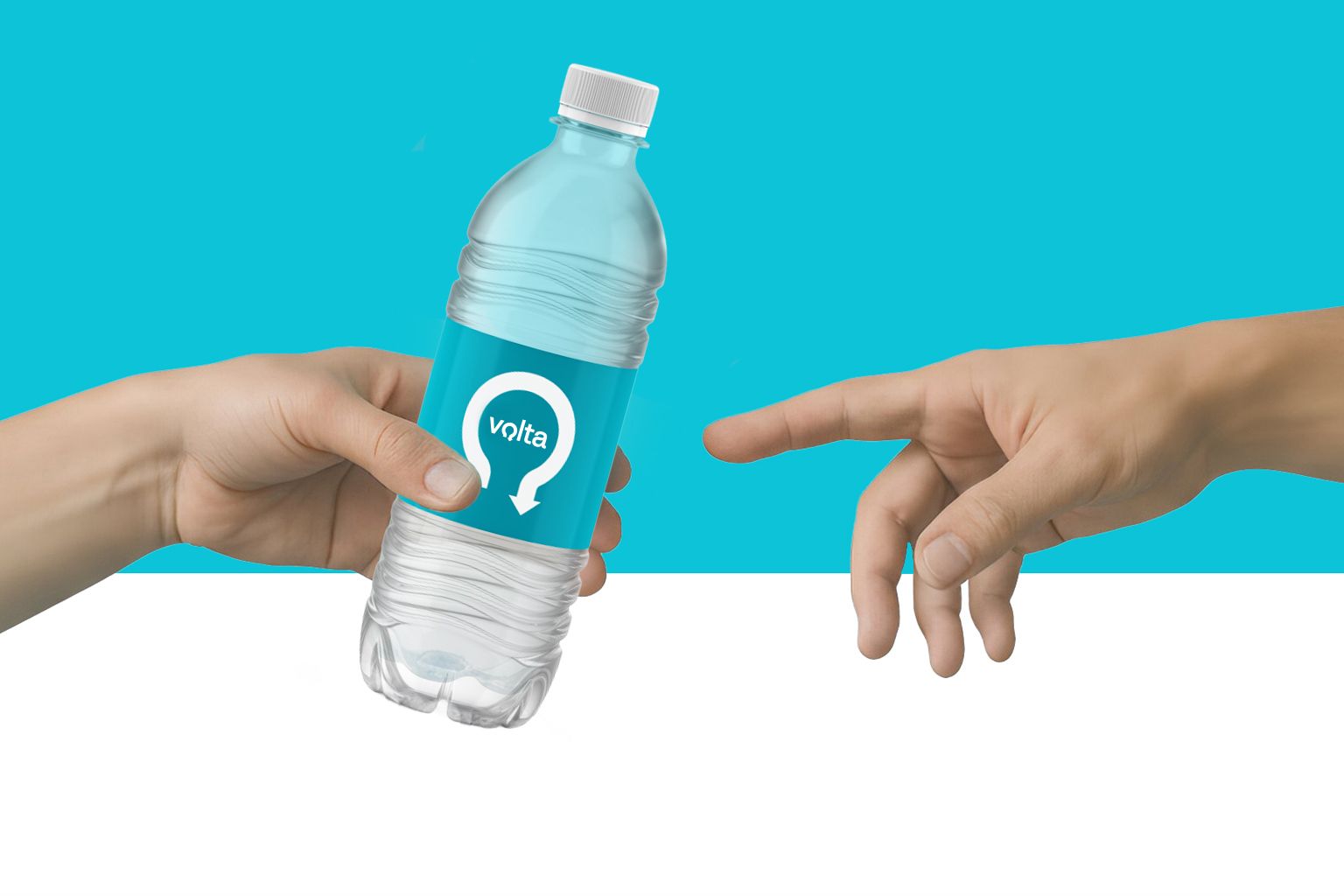
While some reverse-vending machines offer a refund directly to a bank card, others issue a voucher, cash, or another form of credit. According to Volta, retailers are allowed to decide which refund methods they make available on their equipment.
Instead of imposing a single refund method, Volta explains that “each retailer defines the refund options” available through its machines, so shoppers should check the display before completing a return.
Unclaimed deposits
Another question surrounding Volta concerns the deposits consumers never recover.
Launched on 10 April 2026, the system applies to eligible single-use plastic, aluminium and steel drinks containers of up to three litres.
The customers pay an additional €0.10 deposit when buying a participating product, which can then be recovered when the empty container is returned.
However, a deposit does not immediately become “unclaimed” just because someone does not return a bottle.
As reported by ECO, deposits are considered unclaimed if they have not been refunded by the end of the third year after the packaging was placed on the market, and vouchers that are not redeemed before their expiry date can also fall into this category.
The money does not simply go to the State or the supermarket.
When the system meets its collection targets, unclaimed deposits can be reinvested in the operation of the deposit-return scheme, including technological improvements and infrastructure upgrades.
If the relevant collection targets are not met, the corresponding amounts can instead be channelled to the Environment Fund and the Fund for the Promotion of Consumer Rights.
System expansion
This scheme has been expanding rapidly since its launch.
More than 100 million drinks containers had already been returned by 21 July, with the system reporting a collection rate of around 38 percent at that stage, where there were over 2,500 automated collection points, alongside manual collection locations and a network of around 50 Volta kiosks.
The latest figures cited by SDR Portugal indicate that the number of automated collection points has since risen to about 3,000, while the total number of containers returned has passed 150 million.
This rollout is part of Portugal’s effort to improve packaging collection and recycling rates, as the country became the 19th in the EU to introduce a deposit-return system, with the same scheme designed to encourage consumers to return drinks containers rather than place them in ordinary waste.
Collection targets
This system is financed primarily by producers, packagers and distributors, together with revenue from recovered materials.
Furthermore, the scheme is also working towards progressively higher collection targets: 40 percent in 2026, 80 percent in 2027, 85 percent in 2028, and 90 percent in 2029.
This means the return of each eligible bottle becomes increasingly important as Portugal attempts to move more packaging away from general waste and towards recycling.
Set The Portugal News as your preferred source for news on Google
 Add as a preferred source on Google








 Portugal Handbook
 English
 Nederlands
 Deutsch
 Français
 Español
 Italiano
 Svenska
 Pусский
 中文
中文 Türkçe
 Português
 Czech
Czech Hungarian
 Polski
 عربي
عربي Suomi
Suomi עִברִית
 Português (Brasil)
I have given up on using the volta system. At least 80% of the times I have tried carrying my recyclables back to various stores, the volta machines have been full, so I have had to throw my recyclables in the trash to make room for carrying my groceries home in the same bag. The 10¢ "deposit" is just a tax, and the volta machines are just window-dressing.
By responsible recycler from USA on 27 Aug 2026, 16:40