


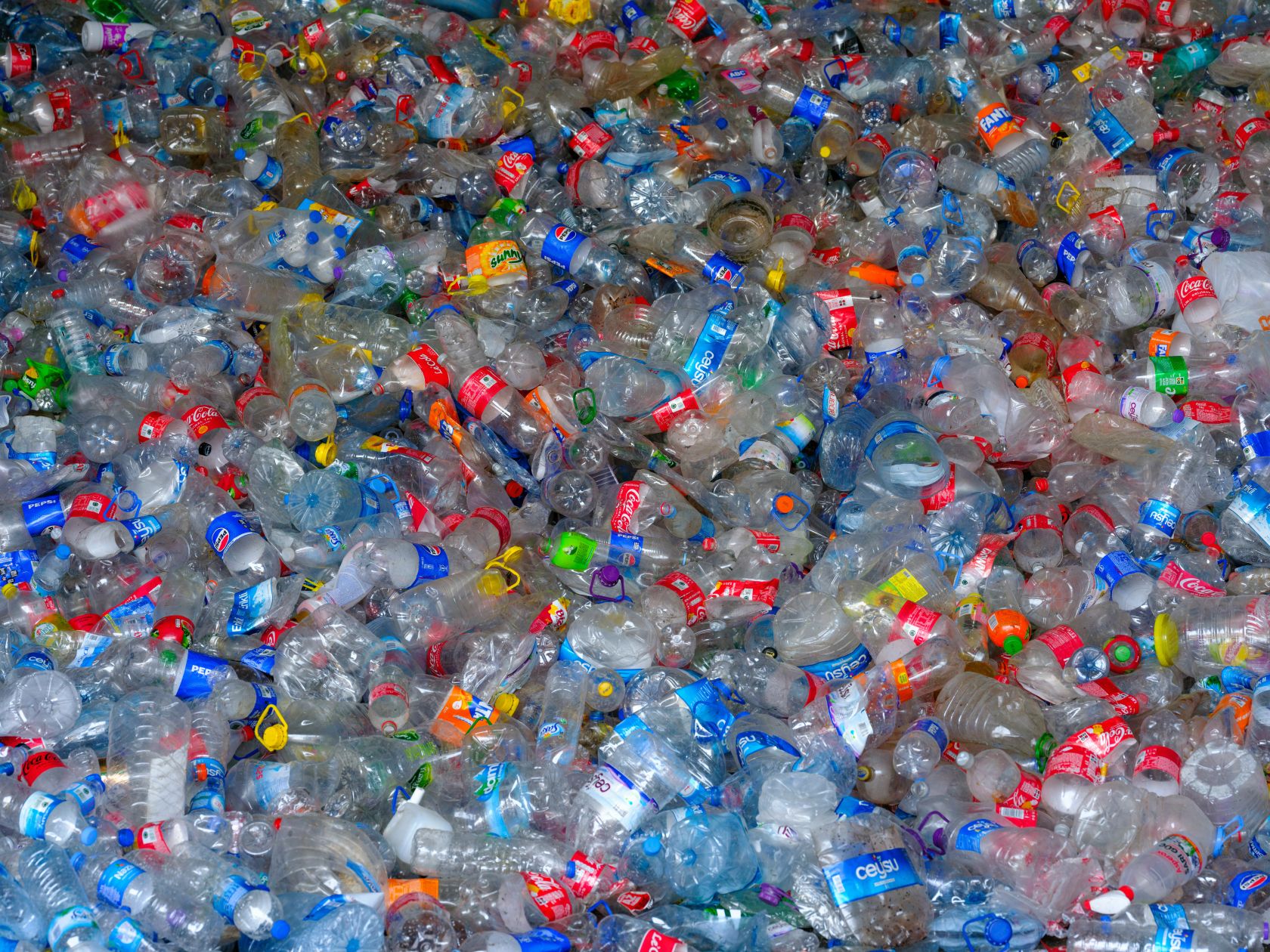
In a review of the last three months, SDR Portugal, the entity responsible for implementing and managing the system, highlights in a statement the rapid and growing adherence of the Portuguese to a system that is just beginning, but which also represents a major change in habits.
Urban hygiene
In the document, SDR also refers to news related to urban hygiene in several cities in the country, with trash cans being vandalised (and litter scattered on the street) in the search for Volta packaging.
SDR Portugal says it is available to work with municipalities, authorities and economic operators to strengthen the network and adapt collection solutions, acknowledging that "effective responses" are needed.
And he warns that "specific problems should be resolved quickly, but they cannot support definitive conclusions about a public policy that has just begun."
Identical cases to what is happening in Portugal with the trash cans were also recorded at the beginning of the system in several European countries and decreased as the infrastructure expanded, and the return of packaging became part of citizens' daily lives, he says.
He gives examples: Germany, the Netherlands, Latvia, Malta, and Ireland. Each city opted for different solutions, from raising awareness and adapting urban infrastructure to even video surveillance.
Measures in the rest of Europe
Germany created supports on the outside of the trash cans for SDR packaging, which are thus visible. And in Latvia, the opening of containers was considered a problem in the first two years but decreased significantly with changes in urban waste management.
In Ireland, the case most similar to Portugal, the problem has been the destruction of containers and scattered garbage. External supports for packaging with deposits were placed, but only partially solved the problem. Almost two and a half years after its start, collection has already exceeded 90%, and urban waste has been halved.
Reduction in waste abandonment
In the statement, SDR Portugal emphasises that scientific evidence demonstrates that the systems contribute to reducing waste abandonment and to more efficient management of public space.
It concludes that container vandalism is mainly an urban and localised phenomenon with a tendency to decrease, and communication is important.
Several countries have reinforced the message that placing packaging in unsorted waste is the main factor that leads to the search for them in containers.
The SDR Portugal association also highlights that Volta is accelerating the fulfilment of environmental goals. Portugal is not meeting the objectives imposed by Brussels and, in the last three years, has already paid fines of €600 million, paid by the State Budget. Data from the first half of the year indicate that recycling collection has stagnated.
Portugal adopts the system
Portugal was the 19th country in the European Union to adopt the system. Currently, there are already more than 2,500 automatic Volta points, for example in supermarkets. In addition to these, there are manual collection points and a network of 50 kiosks.
Strengthening this network is essential, says the association, pointing out that 54% of urban waste still ends up in landfills.
In the statement, SDR also clarifies that Volta does not use public money.
The initial investment was made by producers/packagers and packers/distributors, and the funding is provided by private entities and revenue from collected materials.
Unclaimed deposits (10 cents per package) do not constitute profit for SDR Portugal nor revenue for the State. They are reinvested in the operation and improvement of the system.






 Portugal Handbook
 English
 Nederlands
 Deutsch
 Français
 Español
 Italiano
 Svenska
 Pусский
 中文
中文 Türkçe
 Português
 Czech
Czech Hungarian
 Polski
 عربي
عربي Suomi
Suomi עִברִית
 Português (Brasil)
If you go to paying to read the articles I won't continue to read them
By Toby Lee from Alentejo on 22 Jul 2026, 08:45
As a kid back in the late 50s, early 60s all containers we bought were made out of glass, tin, or waxed paper - all recyclable or easily returned to nature by the normal degradation process. I don't understand why central governments don't mandate the use of glass instead of the plastic menace. Plastic is cheaper to produce but it pollutes oceans everywhere, especially in southeast Asia.
By Tony from USA on 22 Jul 2026, 21:29