


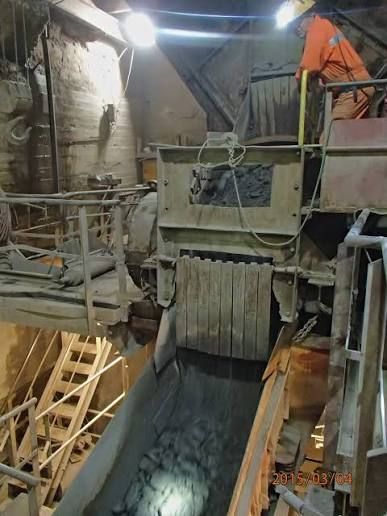
In a statement, Quercus says it subscribes to "the unfavourable opinion of MiningWatch Portugal, a project of the Natural Resources Observatory Association (ORN), according to which the documentation provided is insufficient, outdated, and fragmented for the Water and Waste Services Regulatory Authority (ERSAR) to rigorously assess the risks and environmental liabilities."
For the process to move forward, Quercus demands "the resolution of the environmental liabilities accumulated over more than a century of mining in Panasqueira," located in the municipalities of Covilhã and Fundão, in the district of Castelo Branco.
Quercus also demands an assessment of the risk to water quality and to the populations. “This issue goes beyond the local Panasqueira basin, since the Ribeira do Bodelhão is the same watercourse that feeds the Castelo de Bode reservoir, the main source of water captured and treated by EPAL for human consumption in Lisbon and in about 20 municipalities in the Metropolitan Area and the West,” it emphasises.
“It is unacceptable that an environmental license be renewed without a current, complete and independent assessment of these impacts, nor without a concrete, programmed, financially guaranteed and monitorable closure and recovery plan,” it adds.
The environmental association insists on strengthening environmental monitoring and oversight by the Portuguese Environment Agency (APA), the Water and Waste Services Regulatory Authority (ERSAR) and the General Inspectorate of Agriculture, Sea, Environment and Spatial Planning (IGAMAOT).
Regarding the procedure for reviewing the environmental license for the mines, proposed by Beralt Tin & Wolfram (Portugal), the company told the Lusa news agency that it is “a mere administrative, bureaucratic procedure, simply because the current license was expiring.”
“There have been no other changes in the operation of the mine, because when there are, they are also communicated to the competent authorities,” it concluded.
Set The Portugal News as your preferred source for news on Google
 Add as a preferred source on Google






 Portugal Handbook
 English
 Nederlands
 Deutsch
 Français
 Español
 Italiano
 Svenska
 Pусский
 中文
中文 Türkçe
 Português
 Czech
Czech Hungarian
 Polski
 عربي
عربي Suomi
Suomi עִברִית
 Português (Brasil)
Follow us on social media