


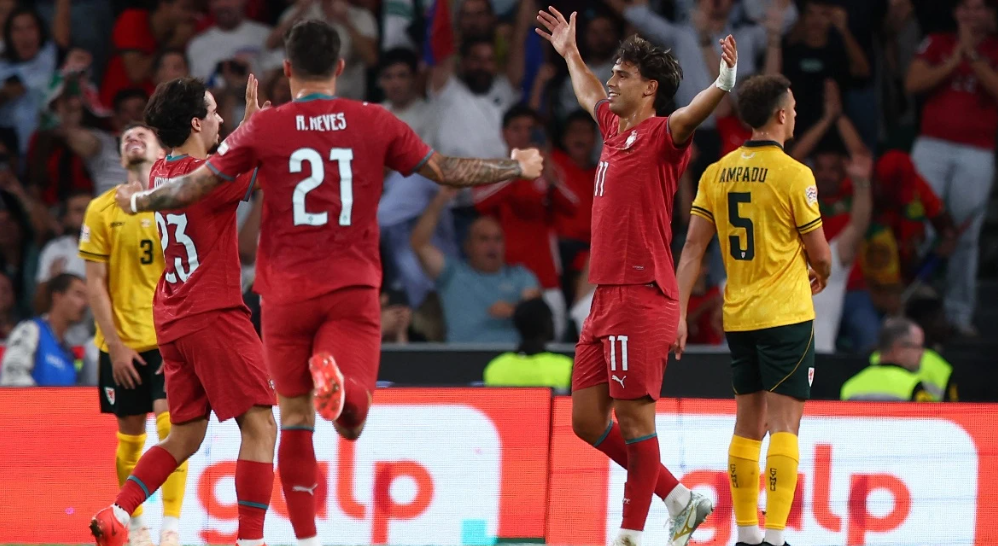
Thursday night's 1-0 victory over Wales marked the beginning of a new era for the Portugal National Team, with Jorge Jesus taking charge of his first match as national team manager. After months of debate surrounding the end of Roberto Martínez's tenure and the appointment of one of Portuguese football's most charismatic coaches, anticipation was understandably high.
Supporters arrived at Alvalade expecting to see the unmistakable fingerprints of Jorge Jesus immediately visible. Aggressive pressing, attacking football and a distinct tactical identity have followed him throughout his career, whether at Benfica, Sporting, Flamengo or in Saudi Arabia. While there were glimpses of those ideas against Wales, the most surprising aspect of the evening may have been how familiar Portugal looked.
In many respects, this could easily have been a Roberto Martínez lineup. The core of the team remained largely unchanged. Cristiano Ronaldo, Bruno Fernandes, Rúben Dias, Nuno Mendes, Diogo Costa and several other established figures maintained their central roles. There were no radical selections and no major tactical revolution. Instead, Jorge Jesus appeared to favour continuity, perhaps recognising that limited preparation time made drastic changes unrealistic.
What did stand out was the significant influence of players currently competing in Saudi Arabia. The winning goal came from João Félix, now playing for Al Nassr. Cristiano Ronaldo remains one of the biggest stars in the Saudi Pro League, while several other players with experience in the Middle East continue to occupy important places in the national team setup. For years, European football viewed Saudi Arabian football with scepticism, but it is becoming increasingly difficult to ignore the growing number of Portuguese internationals earning regular minutes there.
As for the match itself, Portugal was comfortably superior. The hosts dominated possession, controlled territory and spent most of the evening camped inside the Welsh half. The opening goal arrived after just 22 minutes, with João Félix finishing off a move started by excellent work from Nuno Mendes. It was a deserved lead, and at that stage, it felt as though more goals would inevitably follow.
The problem was that they never did. If there was one theme that defined Jorge Jesus' debut, it was missed opportunities. Portugal created chance after chance without finding the clinical edge required to put the game beyond doubt. Pedro Neto missed an inviting opportunity. Cristiano Ronaldo failed to convert a clear opening inside the box before later shooting over from another excellent position. The captain also saw a goal correctly ruled out for offside. Even late on, Gonçalo Ramos was unable to beat Danny Ward when sent through on goal.
Against stronger opposition, those misses could prove costly. To Wales' credit, they remained competitive despite spending long periods defending. In fact, Portugal were fortunate not to concede an equaliser when Brennan Johnson's effort struck the crossbar before chaos in the penalty area allowed the home side to escape. A vital intervention from Rúben Dias also preserved Portugal's lead during the closing stages.
The encouraging aspect for Portuguese supporters is that the attacking intent was clearly visible. João Félix himself highlighted the team's aggressive approach after the match, pointing to the high pressing, attacking mentality and the large number of chances created. The players appear willing to embrace Jesus' philosophy, even if the finishing still needs work.
For now, optimism remains justified. Jorge Jesus won his first match, Portugal started their Nations League campaign with three points, and the team generally controlled proceedings from start to finish. Winning while still learning a new system is rarely a bad outcome.
However, the harder tests are still to come. Matches against Norway and Denmark will provide a much better indication of how far this team can go under its new manager. Those games should also reveal whether Jorge Jesus intends to gradually reshape the squad or continue relying on the foundations established during the Martínez era.
Set The Portugal News as your preferred source for news on Google
 Add as a preferred source on Google








 Portugal Handbook
 English
 Nederlands
 Deutsch
 Français
 Español
 Italiano
 Svenska
 Pусский
 中文
中文 Türkçe
 Português
 Czech
Czech Hungarian
 Polski
 عربي
عربي Suomi
Suomi עִברִית
 Português (Brasil)
Follow us on social media