


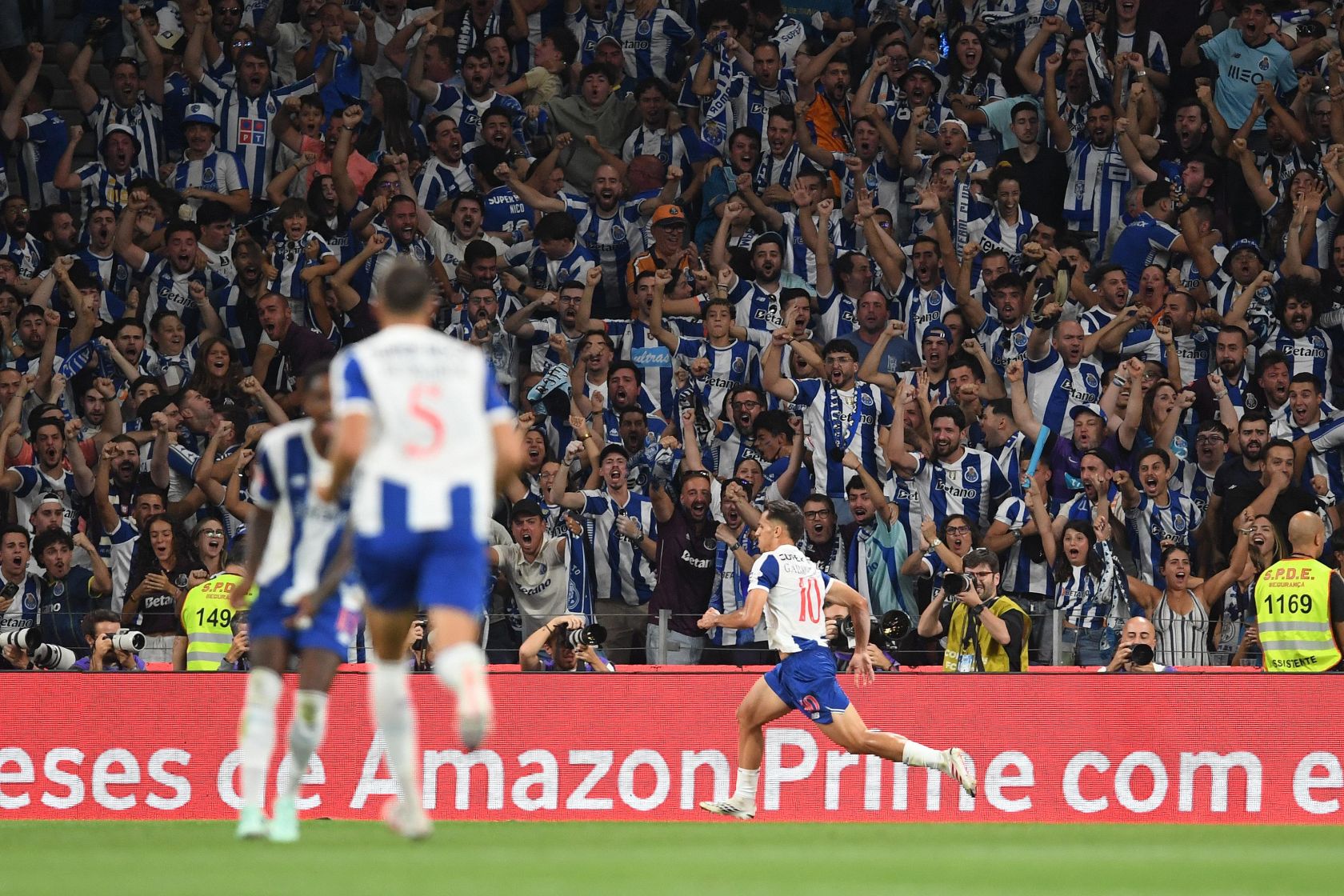
The final scoreline, however, does not tell the whole story. For much of the opening half hour, Benfica looked like the better side. Marco Silva's team arrived in Porto full of confidence and immediately imposed themselves on the game. The Eagles pressed aggressively, enjoyed more dangerous moments in the final third and created the better chances. Gianluca Prestianni, Rafa Silva and Alexander Bah all helped Benfica establish control, while Porto appeared uncomfortable against the visitors' high intensity.
But football matches are rarely won by the team that starts strongest. They are won by the team that adapts best when the game settles. As Benfica's intense opening rhythm inevitably slowed, Porto began to grow into the match. Francesco Farioli's side became more comfortable in possession, found more space between the lines and started exploiting Benfica's defensive positioning. The breakthrough arrived in the 32nd minute when Gabri Veiga capitalised on a long ball and eventually found the net after surviving an initial missed finish. It was a goal that felt slightly against the run of play, but it reflected Porto's growing efficiency.
Then came the moment that effectively decided the contest. At 1-0 down, Benfica were still very much in the game. Yet just three minutes after Porto's opening goal, Clément Lenglet received his second yellow card and was sent off. Whether one views the dismissal as harsh or justified, there is little argument about its impact. Benfica's game plan immediately collapsed. Playing at the Dragão is difficult enough with eleven men, with ten, the task became monumental.
What makes the incident even more frustrating from a Benfica perspective is how avoidable it was. Experienced defenders are expected to remain composed in emotionally charged encounters. Instead, Lenglet allowed himself to become involved in unnecessary confrontations and left his teammates facing almost an hour against the league leaders with a numerical disadvantage. It was the sort of moment that managers and supporters remember long after the final whistle.
To Benfica's credit, they briefly fought back after the interval. Alexander Bah equalised early in the second half, momentarily raising hopes of an unlikely comeback. Yet those hopes lasted only a few minutes. Porto responded immediately through Victor Froholdt, before Hwang In-Beom added a third to effectively kill the contest. Champions often respond to adversity with authority, and Porto did exactly that.
The broader significance of the result lies in the league table. Porto now sit alone at the top, five points clear of Benfica and six ahead of Sporting. More impressively, they have won every single league match this season. Seven matches, seven victories. Their record is not built on luck or moments of brilliance alone. It is built on consistency, defensive strength and a tactical identity that has become increasingly evident under Farioli.
Last season's title success prompted questions about whether Porto could maintain that level. Seven rounds into the new campaign, they appear not only capable of repeating it but potentially improving upon it. While Benfica and Sporting continue searching for consistency, Porto already look like a team fully aware of who they are and how they want to play.
For Benfica, the defeat is not catastrophic. There is still a long season ahead, and the quality within the squad remains undeniable. In fact, the opening thirty minutes showed that they possess the tools required to compete with Porto. The problem is that championships are often decided by moments of discipline and concentration. On Sunday, Lenglet's red card turned a balanced Clássico into an uphill battle.
For Porto, meanwhile, the message sent to the rest of the league could not be clearer.nThe champions are unbeaten. The champions have won every league game. And the champions now have daylight between themselves and their closest challengers.
It may only be September, but after Sunday's Clássico, the road to the Portuguese title runs through the Dragão.
 Add as a preferred source on Google







 Portugal Handbook
 English
 Nederlands
 Deutsch
 Français
 Español
 Italiano
 Svenska
 Pусский
 中文
中文 Türkçe
 Português
 Czech
Czech Hungarian
 Polski
 عربي
عربي Suomi
Suomi עִברִית
 Português (Brasil)
Follow us on social media