


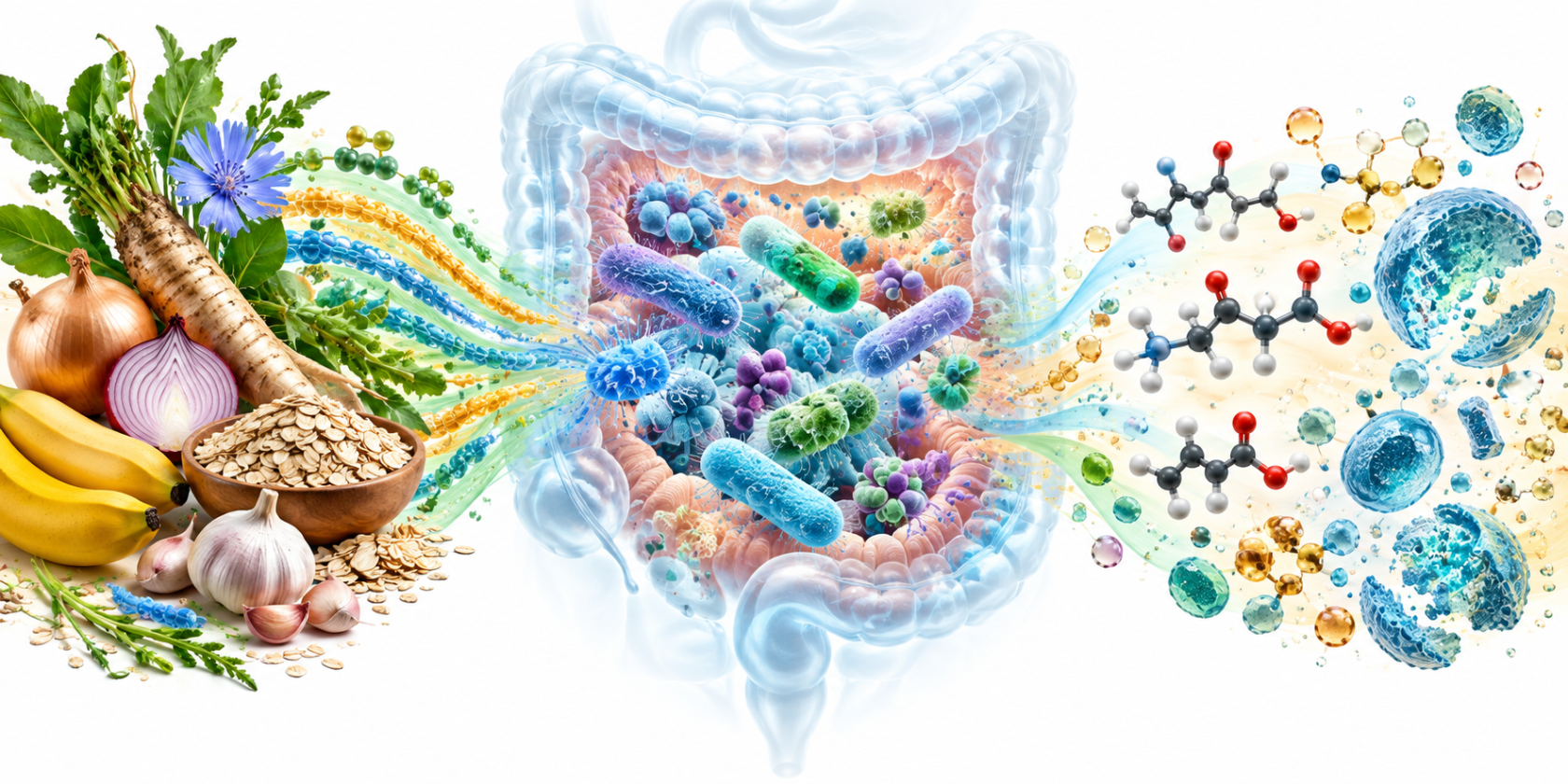
The human gut microbiome is a complex biological ecosystem involved in digestion, immune regulation, intestinal barrier function and communication between the gut, brain and other organs. This has generated increasing interest in three related but distinct interventions: prebiotics, probiotics and postbiotics. Although these terms are frequently used together in clinical, nutritional and commercial contexts, they describe different biological strategies.
According to the International Scientific Association for Probiotics and Prebiotics (ISAPP), a prebiotic is a substrate selectively used by host microorganisms that provides a health benefit. A probiotic is a live microorganism that, when administered in adequate amounts, confers a health benefit on the host. A postbiotic is a preparation of inanimate microorganisms or their components that provides a health benefit. These definitions emphasise that the presence of bacteria alone is not sufficient: a clinically relevant health benefit must be demonstrated.
Prebiotics: Supporting the Existing Microbiome
Prebiotics are generally nondigestible dietary substrates that reach the colon, where they can be selectively metabolised by resident microorganisms. Common examples include inulin, fructooligosaccharides, galactooligosaccharides and resistant starch. Some specialised human milk oligosaccharides are also being investigated for their effects on early-life microbiome development.
Through microbial fermentation, prebiotics can promote the production of short-chain fatty acids, including acetate, propionate and butyrate. These compounds may influence colonic epithelial health, intestinal permeability, immune signalling and energy metabolism. Butyrate, for example, is an important fuel for colonocytes and has been associated with regulation of inflammatory pathways and maintenance of the intestinal barrier.
However, a prebiotic is not simply any fibre. The substrate must be selectively utilised by microorganisms and its consumption must be linked to a demonstrated health benefit. This distinction is clinically important because different fibres have different fermentability, tolerability and physiological effects. Rapid fermentation may cause bloating, abdominal discomfort or changes in bowel habits, particularly in individuals with irritable bowel syndrome or visceral hypersensitivity.
Clinical application should therefore consider the patient’s baseline diet, gastrointestinal symptoms, microbiome variability and tolerance. Gradual dose escalation and adequate hydration are often appropriate, but the specific intervention should be individualised rather than based on the assumption that all fibres produce the same effect.
Probiotics: Living Microorganisms with Strain-Specific Effects
Probiotics are live microorganisms administered in defined quantities to produce a health benefit. They may include strains from genera such as Lactobacillus, Bifidobacterium, Saccharomyces and certain other bacterial groups. Their proposed mechanisms include competition with pathogens, enhancement of mucosal barrier function, modulation of immune responses and production of bioactive metabolites.
The term “probiotic” should not be interpreted as a uniform therapeutic category. Clinical effects are frequently strain-specific, dose-dependent and influenced by the patient’s condition. A product containing one strain of Bifidobacterium cannot automatically be expected to produce the same outcome as another strain of the same species.
Evidence is strongest for selected indications and specific formulations. Depending on the strain and clinical context, probiotics may have a role in reducing the risk of some forms of antibiotic-associated diarrhoea, supporting gastrointestinal function and managing selected functional bowel symptoms. Results are inconsistent across products, and benefits observed in one trial cannot necessarily be extrapolated to every commercial supplement.
Safety also requires a risk-based assessment. Probiotics are generally well tolerated by healthy adults, but rare clinically significant infections have been reported, particularly in severely immunocompromised patients, critically ill individuals, people with impaired intestinal barriers or those with central venous catheters. Potential concerns include translocation, fungemia, bacteremia, antimicrobial-resistance genes and strain-specific metabolic effects. Recent safety reviews emphasise the importance of genomic identification, manufacturing controls, strain traceability and appropriate pharmacovigilance.
For this reason, clinicians should examine the exact strain designation, viable count at the end of shelf life, storage conditions, intended indication and quality documentation. A label that states only “Lactobacillus” or “probiotic blend” provides insufficient information for evidence-based prescribing.
Postbiotics: Biological Activity Without Viable Microbes
Postbiotics are preparations of inanimate microorganisms or their components that confer a health benefit. They may contain inactivated microbial cells, cell-wall components, structural molecules or complex preparations generated through controlled microbial processing. Under the strict ISAPP definition, purified metabolites alone should not automatically be called postbiotics.
The principal attraction of postbiotics is their potential stability. Because they do not require living organisms to remain viable, they may be less sensitive to temperature, oxygen, gastric conditions and storage fluctuations than conventional probiotics. This could facilitate standardisation, transport and use in populations for whom live microorganisms raise additional safety concerns.
Mechanistically, postbiotic components may interact with intestinal epithelial cells and immune receptors, influence mucin production, support barrier integrity and regulate inflammatory signalling. Experimental studies also suggest possible effects on oxidative stress and metabolic pathways. Nevertheless, biological plausibility should not be confused with confirmed clinical efficacy. Postbiotic preparations vary considerably in composition, production method, inactivation process and dose; therefore, results from one formulation cannot be assumed to apply to another.
Clinical Integration and Research Priorities
Prebiotics, probiotics and postbiotics should be evaluated as targeted interventions rather than interchangeable wellness products. The appropriate choice depends on the patient’s diagnosis, treatment objective, medication profile, nutritional status and risk factors.
Future research should prioritise adequately powered randomised controlled trials, well-defined patient populations, validated clinical endpoints and long-term safety monitoring. Studies should report strain identity, manufacturing conditions, dose, viability or inactivation status, storage requirements and microbiological quality. Multi-omics methods may help identify which patients are most likely to respond, supporting a more precise form of microbiome medicine.
Regulation is another central issue. Products marketed as foods or supplements may face different requirements from live biotherapeutic products intended to prevent or treat disease. In Europe, health claims require strong evidence of a cause-and-effect relationship, and many probiotic claims have not been authorised because of insufficient strain characterisation or inconsistent clinical data. This makes scientifically accurate communication essential and limits the validity of broad claims such as “supports immunity” or “restores gut balance.”
Conclusion
Prebiotics feed selected microorganisms already present in the gut, probiotics introduce defined living microorganisms, and postbiotics deliver biological components without requiring viable microbes. All three approaches have a credible scientific rationale, but their effects depend on precise formulation, dose, patient characteristics and clinical indication.
The future of microbiome-based medicine will depend less on generalised claims and more on strain-level identification, standardised manufacturing, patient stratification and rigorous clinical trials. Used responsibly, these interventions may complement established medical care, but they should not be regarded as universal treatments or substitutes for diagnosis, evidence-based therapy and professional monitoring.
Contact for more information: CelerImpulso +351 923 350 340
Set The Portugal News as your preferred source for news on Google
 Add as a preferred source on Google






 Portugal Handbook
 English
 Nederlands
 Deutsch
 Français
 Español
 Italiano
 Svenska
 Pусский
 中文
中文 Türkçe
 Português
 Czech
Czech Hungarian
 Polski
 عربي
عربي Suomi
Suomi עִברִית
 Português (Brasil)
Follow us on social media