


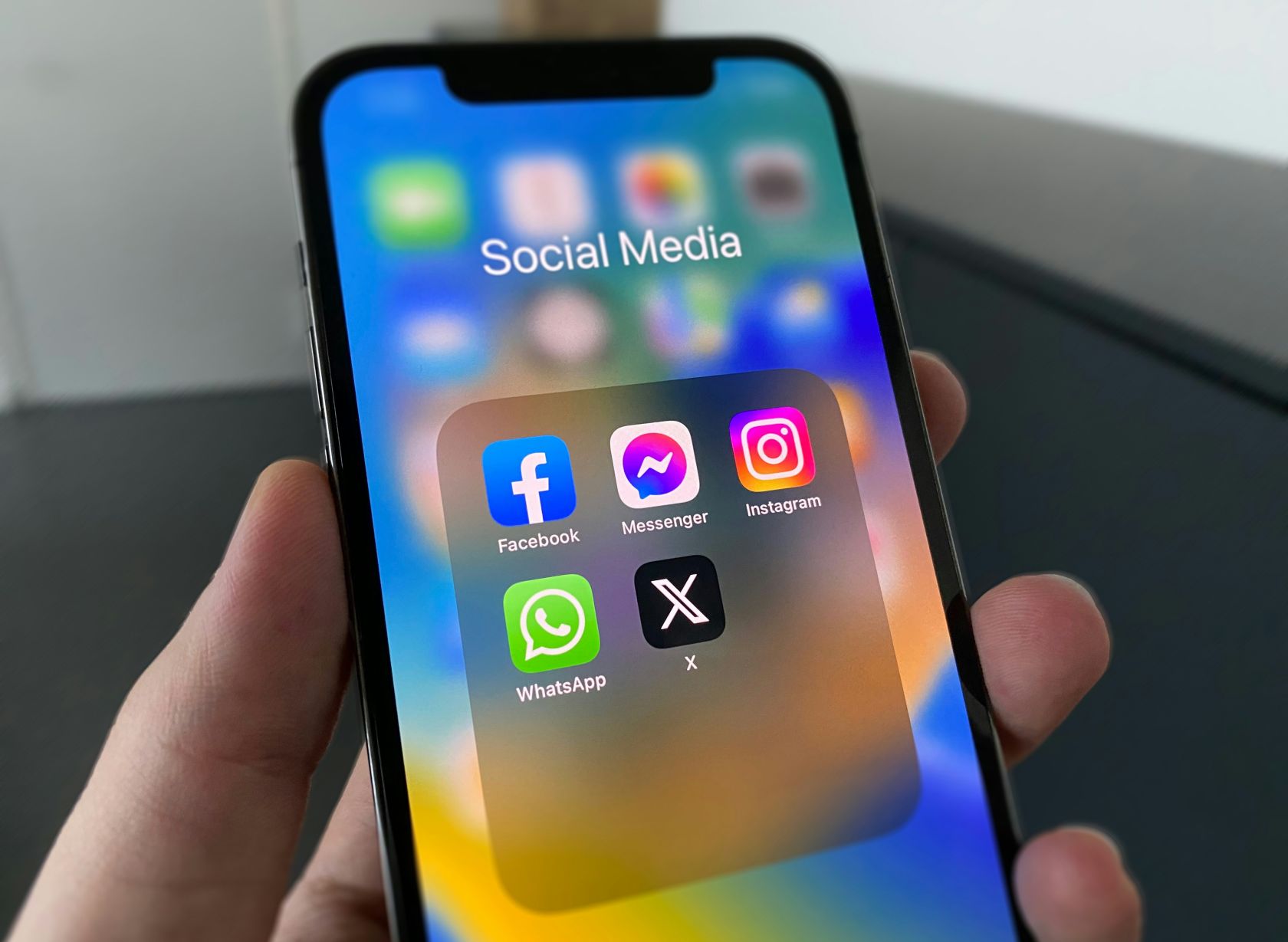
This conclusion comes from a study published in the scientific journal "Nature Human Behaviour", which tracked 5,227 students from 28 schools in northern Italy and linked the age at which they created their first social media account to their performance on standardised tests in Italian, English, and mathematics.
Researchers led by Marco Gui cross-referenced data collected between 2023 and 2024 regarding usage habits on platforms such as Facebook, Instagram, and TikTok with the students’ academic results, seeking to determine whether a relationship existed between early entry into social media and academic performance.
The results show that students who created their first account in the 6th grade, between the ages of 11 and 12, scored approximately 0.22 standard deviations lower in Italian and 0.18 standard deviations lower in mathematics by the 8th grade, compared to peers who only joined social media in the 9th grade or later.
The authors state that a difference of 0.2 standard deviations corresponds to approximately six months of school learning.
Disadvantage persisted
This disadvantage persisted in subsequent years. By the 10th grade, students who had started using social media earlier continued to show poorer results in Italian, with a difference of 0.22 standard deviations. In comparison, the gap in mathematics widened to 0.27 standard deviations.
Among students who opened an account later, in the 7th or 8th grade, the differences were smaller. However, they still showed lower results in Italian and Mathematics compared to peers who only joined social media from the 9th grade onwards.
Results in English
Conversely, the researchers found no evidence of a similar impact on results in English.
The analysis also identified an association between more frequent mobile phone use and the early creation of social media accounts.
Students who reported checking their phones more often were more likely to have joined these platforms earlier and, on average, had lower grades in Italian and Mathematics in the 10th grade.
Less parental supervision
These students also experienced less parental supervision regarding social media use, a factor the authors believe may contribute to more intense usage patterns.
Although the study, being observational research, does not establish a direct cause-and-effect relationship, the researchers consider the results to be consistent evidence of an association between early social media use and lower academic performance in two core subjects.
Greater engagement
Possible explanations cited include greater engagement with these platforms and frequent interruptions to attention caused by mobile phone use, factors that may impair concentration and learning processes.
However, the authors emphasise that the findings should be interpreted with caution, given the ongoing scientific debate regarding the effects of social media on education and the fact that other individual, family, and school-related factors also influence students’ academic trajectories.
Nevertheless, they argue that the results reinforce the need for further research into the most appropriate age for accessing social media and the role of parental supervision in the use of these platforms during adolescence.
 Add as a preferred source on Google





 Portugal Handbook
 English
 Nederlands
 Deutsch
 Français
 Español
 Italiano
 Svenska
 Pусский
 中文
中文 Türkçe
 Português
 Czech
Czech Hungarian
 Polski
 عربي
عربي Suomi
Suomi עִברִית
 Português (Brasil)
Follow us on social media