


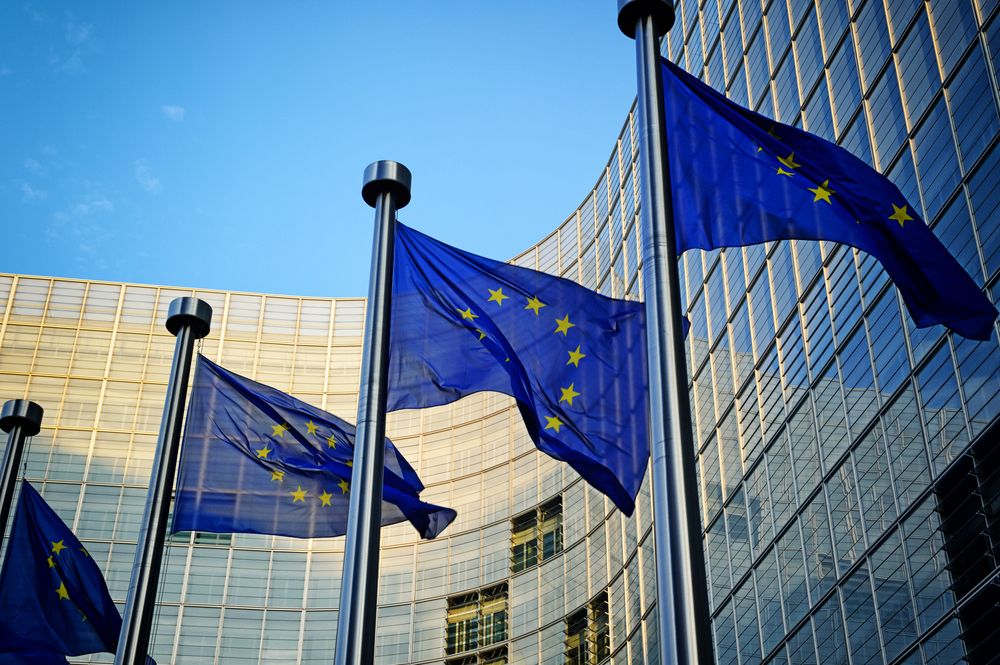
The money from Brussels was dependent on Portugal meeting 44 required reforms - spanning housing, healthcare, education, public administration, energy and digital transition - by the end of August.
It is anticipated a further €5 bn in EU loans – for investment in health, innovation, science, business competitiveness and energy efficiency – will also be unlocked.
Economy Minister Manuel Castro Almeida confirmed: “Portugal has fully implemented the planned reforms and met all of the plan's milestones and targets, securing the full €16.326bn in grants.”
The funding has not only been crucial in supporting investment but also in transforming the country’s social infrastructure and sharpening the competitive edge of its companies.

After Covid hit, the EU set up a €750 billion recovery fund in 2021.
Rather than just handing money to member states, the EU worked out a deal-for-cash model: each country submitted a national Recovery and Resilience Plan, a shopping list of investment projects it wanted to fund, paired with a checklist of reforms and targets it agreed to deliver in exchange.
The money was released in instalments once specific reforms were achieved. Failure to do so meant money was withheld. Portugal met all of the requirements laid down by the EU to ensure the full funding boost.
The nation was initially allocated €16.6bn -comprised of €13.9bn in grants and €2.7bn in loans. That was later boosted to a total of €22bn.
Explains Paul Stannard, chairman and founder of Portugal Pathways and the Portugal Investment Owners Club: “There was a great deal riding on Portugal hitting all these targets – but it has done so in style.
“It has used the money to not just recover from the impact of Covid but really kick on to emerge as one of the EU’s most attractive economies.
“Key areas such as innovation, technology and science have been significantly boosted.
“The money has been invested into key growth areas and the nation has really benefited as a consequence.”
Key deliveries on the funding included €800m in AI – an essential growth area which saw Portuguese companies embrace the benefits the technology could offer and gain a competitive advantage.
Other beneficiaries include defence and security projects and deep-tech firms spinning out of research centres, which picked up a further €400m.

In addition, significant additional funding was directed to the Mobilising Agendas programme, which channels knowledge from universities and research centres into industry. It saw its funding roughly triple, from an initial €930m to close to €3bn.
That investment underpinned 51 consortia working across health, aeronautics and space, sustainable mobility, energy, industrial digitalisation, biotechnology and construction — creating an estimated 11,000 new highly qualified jobs.
Meanwhile, health spending rose by €650m and schools and higher education received an extra €635.5m for construction and renovation across all levels.
Concludes Paul Stannard: “This significant funding from the EU has been well executed by Portugal.
“It has allowed it to create the platform, the talent and the infrastructure for industry and innovation from which it can now seek to further build going forward.”
 Add as a preferred source on Google





 Portugal Handbook
 English
 Nederlands
 Deutsch
 Français
 Español
 Italiano
 Svenska
 Pусский
 中文
中文 Türkçe
 Português
 Czech
Czech Hungarian
 Polski
 عربي
عربي Suomi
Suomi עִברִית
 Português (Brasil)
Follow us on social media