


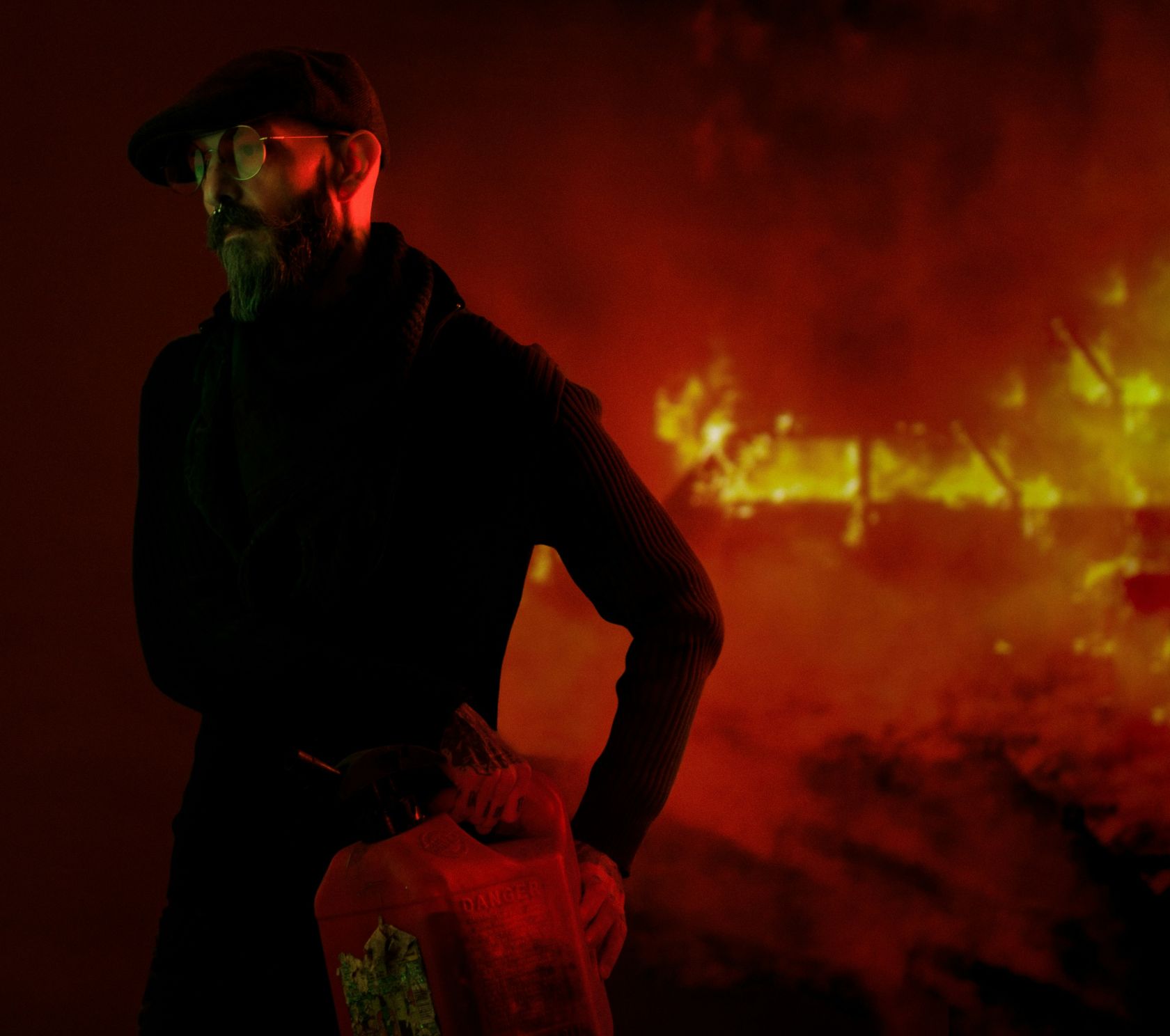
"The recent report from the Independent Technical Commission on Fires of 2025 says that the problem is that we have many ignitions, a lot of fires that start from human responsibility, whether through intent or negligence. And our great objective and challenge is, first, that there are no ignitions and, second, that we manage to maintain and improve the initial attack, whose success rate is currently 93 to 94%," Rui Rocha told the Lusa news agency.
The official was speaking at the end of the review meeting of the fire that broke out in Rochoso, in the municipality of Guarda, on 27 July, and which spread to the municipalities of Almeida, Pinhel and Sabugal.
Sense of responsibility
The Secretary of State for Civil Protection also appealed to the “sense of responsibility” of citizens, “especially in these more critical days, so that the utmost care can be taken.”
“It is also necessary to be vigilant and report to the authorities when we notice any suspicious movement, because reducing ignitions is indeed the great challenge, as well as maintaining and improving the success of the initial attack.”
That rural fire was brought under control in the early morning of the 29th and is believed to have consumed around 5,000 hectares of scrubland, pastures, and agricultural land.
The evolution of the flames also led to the closure of the A25 motorway and the National Road (EN) 16.
A week later, civil protection, firefighters, mayors, and the Secretary of State for Civil Protection analysed how the fight against the flames took place, which mobilised more than 700 personnel and eleven aerial resources.
"It was stated and explained here, technically and operationally, that the weather conditions were critical at certain times for the firefighting to have had a more favourable outcome than what was achieved," he added.
Criticism from local authorities
Faced with criticism from local authorities, particularly the mayor of Guarda, Rui Rocha appealed for "everyone to have the same level of information so that they can communicate and also understand what is being done."
What I reinforced today, once again, is the importance of local authorities monitoring these operations, because perhaps, if explanations are given at the right time, some of the criticism may be mitigated or even understood."
According to the government official, "in moments of greatest distress, when one is confronted with many things, with a lot of information, there must be the ability to make that assessment, with that rationality, and understand the operational aspects."
“This is without prejudice, and that is why I am here, to humbly note that there are one or two aspects that could be improved. Therefore, that is the objective of this meeting: to hear from those who are, firsthand, doing their best and dealing with the reality [of the fires].”
 Add as a preferred source on Google





 Portugal Handbook
 English
 Nederlands
 Deutsch
 Français
 Español
 Italiano
 Svenska
 Pусский
 中文
中文 Türkçe
 Português
 Czech
Czech Hungarian
 Polski
 عربي
عربي Suomi
Suomi עִברִית
 Português (Brasil)
Those of us who have open eyes and functioning brains, have known this for years. We also know that the main reason southern European countries are burning, is because the left has steadily, over the years, stopped engaging in controlled burning, during wet seasons, to get rid of dry underwood. A practise which used to be done for decades and prevented large uncontrolled fires in summertime.
There's also something else, I recently discovered, which says everything about our leaders, in the particular case of Spains' huge fires:
The Beriev Be-200 Altair is a Russian jet-powered amphibious aircraft famous for its' firefighting, multi-role capabilities, and unique jet design. It scoops 12,000 liters of water in 14 seconds and carries up to 72 passengers.
It's what Turkey uses in summertime, that's why we don't hear about Turkey burning!
Spain has been unable to deploy their fleet of Russian-built Kamov Ka 32 firefighting helicopters, because they cut themselves off access to certified Russian technicians and factory spare parts.
Europe has put sanctions on Russia, because they rather watch their own countries burn, than engage in diplomacy.
By Hart from Lisbon on 05 Aug 2026, 08:46
Portugal has been burning for years on the face and at the cost of its good people and destruction of valuable resources due to the inepcy and grosse incompetence of its governments at local and central levels! Leniency, corruption, and unconscience are the main drivers! Until the human factor is eliminated by enforcing severe retribition there will be no change! Sad but true! Our politicians are accomplices of these crimes! We are fed up and the local victims should take action before more beautiful, valuable resources, and even human lives are gone for ever!
By A L Fernandes from Other on 05 Aug 2026, 13:55
We are in central Portugal, Castelo Branco district, and we consult the IPMA/incêndiorisco site every morning before starting to do anything on the land.
Today the risk was under maximum but the land is very dry so we just strayed weedkiller and didn't use the brush cutters which we really need to do.
Last month there was a State of Emergency declared,,which banned the use of all machinery except emergency work. Great, but I only saw this after searching.
Why is this not pinged to mobile phones as other information usually is ?
During this period we still had a neighbour using a brushcutter, presumably not knowing that it was banned.
By Christopher Douglas from Beiras on 05 Aug 2026, 21:06