


Fuel now accounts for between 30% and 40% of the costs faced by freight companies, according to the National Association of Public Road Freight Transporters (ANTRAM).
The problem is not simply that diesel has become more expensive. Prices are changing so quickly that companies are struggling to work out what to charge for jobs that may not be carried out for several weeks.
André Matias de Almeida, a spokesman for ANTRAM, said increasing transport prices has become unavoidable for some operators.
He gave the example of one large national and international transport company which previously spent around €1 million to buy one million litres of fuel. Following the surge in prices linked to the conflict in the Middle East, the same amount of fuel cost €2 million.
Supermarkets could feel the effect next
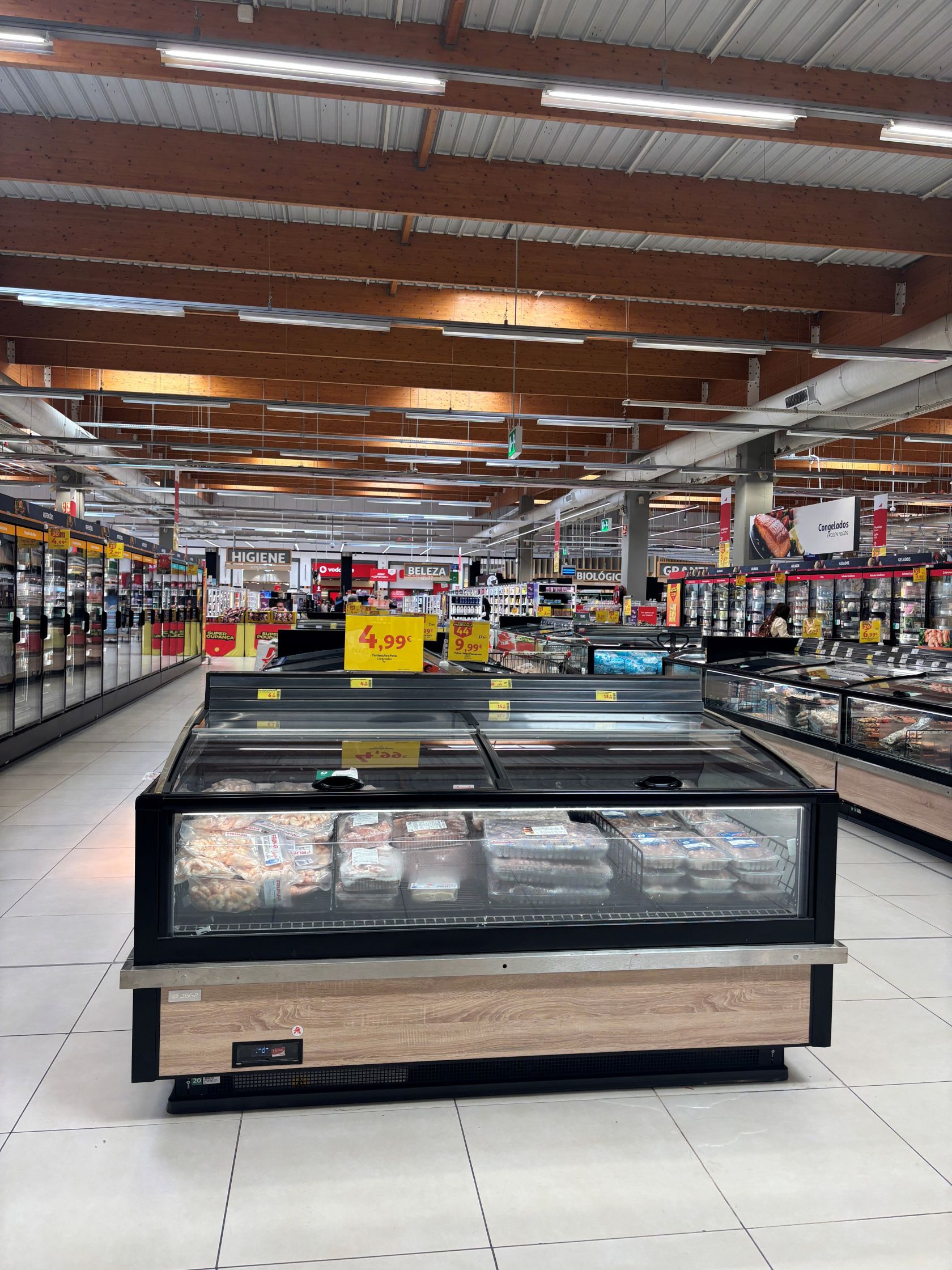
Those higher transport bills may soon reach supermarket shelves.
Gonçalo Lobo Xavier, director-general of the Portuguese Association of Distribution Companies (APED), said the impact could begin to show in retail prices in roughly a month, as new contracts are agreed and fresh supplies reach stores.
There is a delay because supermarkets buy goods and arrange supplies in advance. Higher costs therefore take time to travel from farms and producers through logistics and transport companies before reaching retailers.
Meat and eggs are causing particular concern. Both are being squeezed not only by fuel prices, but also by higher costs for cereals, fertilisers and animal feed. APED expects animal protein to remain under significant price pressure.
Portuguese haulers say Spain has an advantage
ANTRAM is also warning that Portuguese transport companies are becoming less competitive against Spanish operators.
Spain continues to provide extraordinary diesel support, while an earlier Portuguese measure providing 10 cents per litre for professional diesel ended on 30 June. The Portuguese Government has since said it is preparing to restore support for freight transport, as well as firefighters, the social sector and taxis.
The difference is particularly noticeable close to the border. ANTRAM says a Spanish haulier can fill its tank before entering Portugal, complete a collection and delivery and return to Spain without needing to refuel here.
Transport companies in northern Portugal are facing another issue this week.
New restrictions on Porto’s Via de Cintura Interna (VCI) prevent heavy goods vehicles travelling through the road between 7 am and 9 pm on weekdays, although vehicles beginning or ending their journey in Porto or Vila Nova de Gaia are exempt if the trip is registered in advance.
ANTRAM estimates that alternative routes could add as much as 60 kilometres to some journeys, bringing yet another increase in fuel use and delivery times. Following a meeting involving more than 180 northern hauliers, the association has not ruled out protests.
Passenger transport operators are feeling the fuel squeeze too. Their association, ANTROP, estimates that higher prices will cost the sector around €16 million between July and September.
Unlike freight companies, bus operators cannot simply pass that increase on to passengers because fares are regulated and public service contracts still have to be fulfilled. ANTROP says some operators have resorted to borrowing money to cover wages and other costs.
For shoppers, there is no suggestion that supermarket prices will suddenly jump across the board next month. But APED’s warning is that today’s higher transport and production costs are still moving through the system. Meat and eggs are the products it is watching most closely.
 Add as a preferred source on Google







 Portugal Handbook
 English
 Nederlands
 Deutsch
 Français
 Español
 Italiano
 Svenska
 Pусский
 中文
中文 Türkçe
 Português
 Czech
Czech Hungarian
 Polski
 عربي
عربي Suomi
Suomi עִברִית
 Português (Brasil)
Follow us on social media