


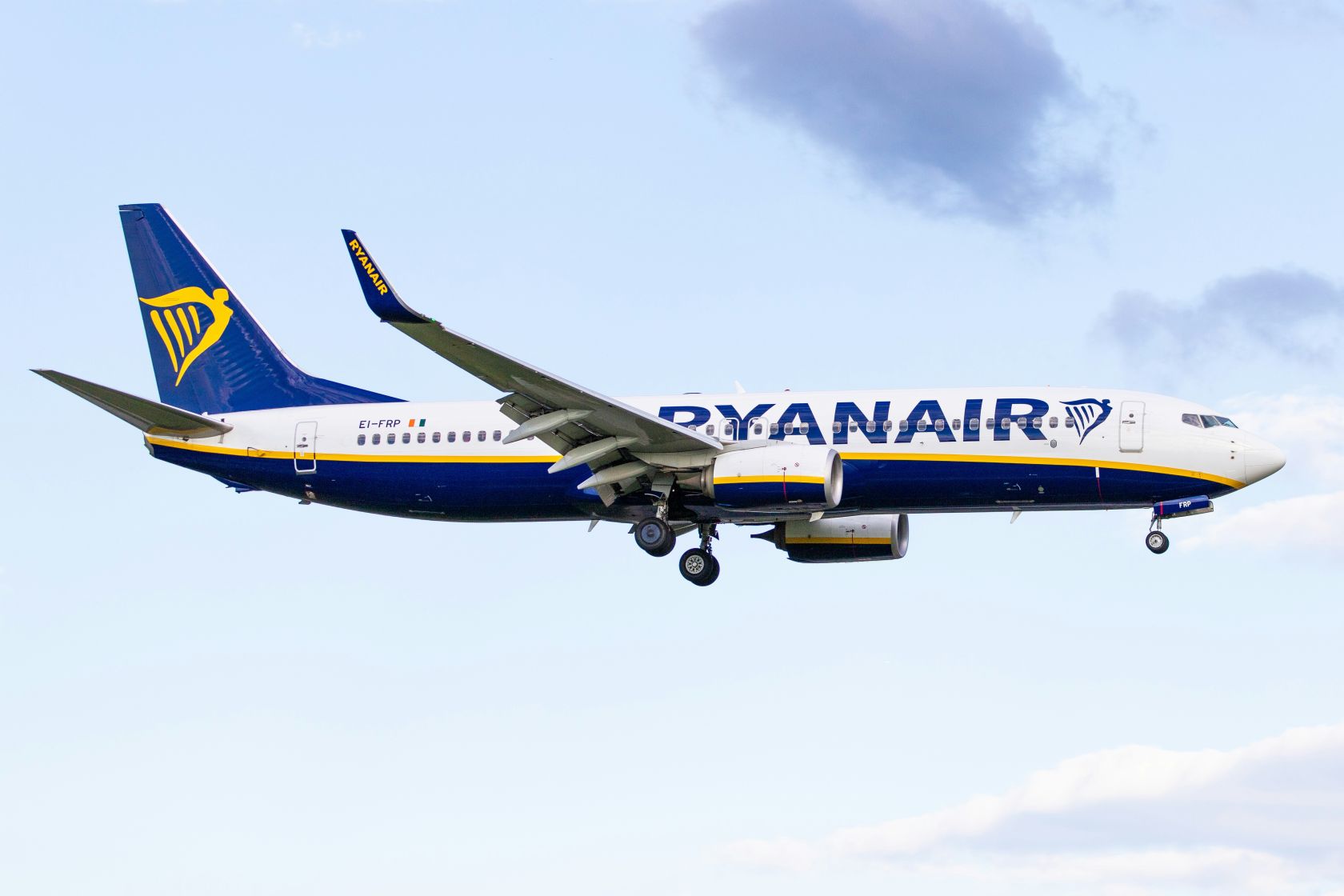
The incident took place on 10 July when a Boeing 737 en route from Thessaloniki to Memmingen saw debris from a failure of the blade on the right engine tear through the cowling and shatter the window adjacent to the seat occupied by 61-year-old Ljubisa Karovic.
While the preliminary report from the National Transportation Safety Board (NTSB) states that the passenger became stuck in the window frame—with witnesses saying that other people had to help pull him back into the aircraft—the airline's boss maintains that no part of the passenger's body extended beyond the fuselage, even though he admits that the man was violently thrown against the structure.
The public comments made by O’Leary when the company presented its financial results have led to another disagreement with the US aviation authorities, who have cautioned the executive that he is in breach of the international investigation rules laid down in Annex 13 of the International Civil Aviation Organisation (ICAO).
Since he is acting as a technical advisor to the inquiry conducted by the Greek authorities, the airline is not allowed to release any data or make definite statements without first obtaining permission from the NTSB. This official reprimand comes after the executive had previously stated that the engine failure was caused by a bird strike—a theory which the NTSB report later confirmed by finding organic residues.
The inquiry also discovered that the aircraft, which had been in service for 18 years, had carried out all the necessary maintenance and ultrasonic inspection procedures but had not yet received the mechanical upgrade required by a Federal Aviation Administration (FAA) directive published in March 2025.
This directive is based on recommendations made after the deadly Southwest Airlines accident of 2018 and is intended to guard the fuselage against damage caused by engine blade debris, with a deadline of July 2028 for completing the modifications to the fleet.
 Add as a preferred source on Google







 Portugal Handbook
 English
 Nederlands
 Deutsch
 Français
 Español
 Italiano
 Svenska
 Pусский
 中文
中文 Türkçe
 Português
 Czech
Czech Hungarian
 Polski
 عربي
عربي Suomi
Suomi עִברִית
 Português (Brasil)
Follow us on social media