


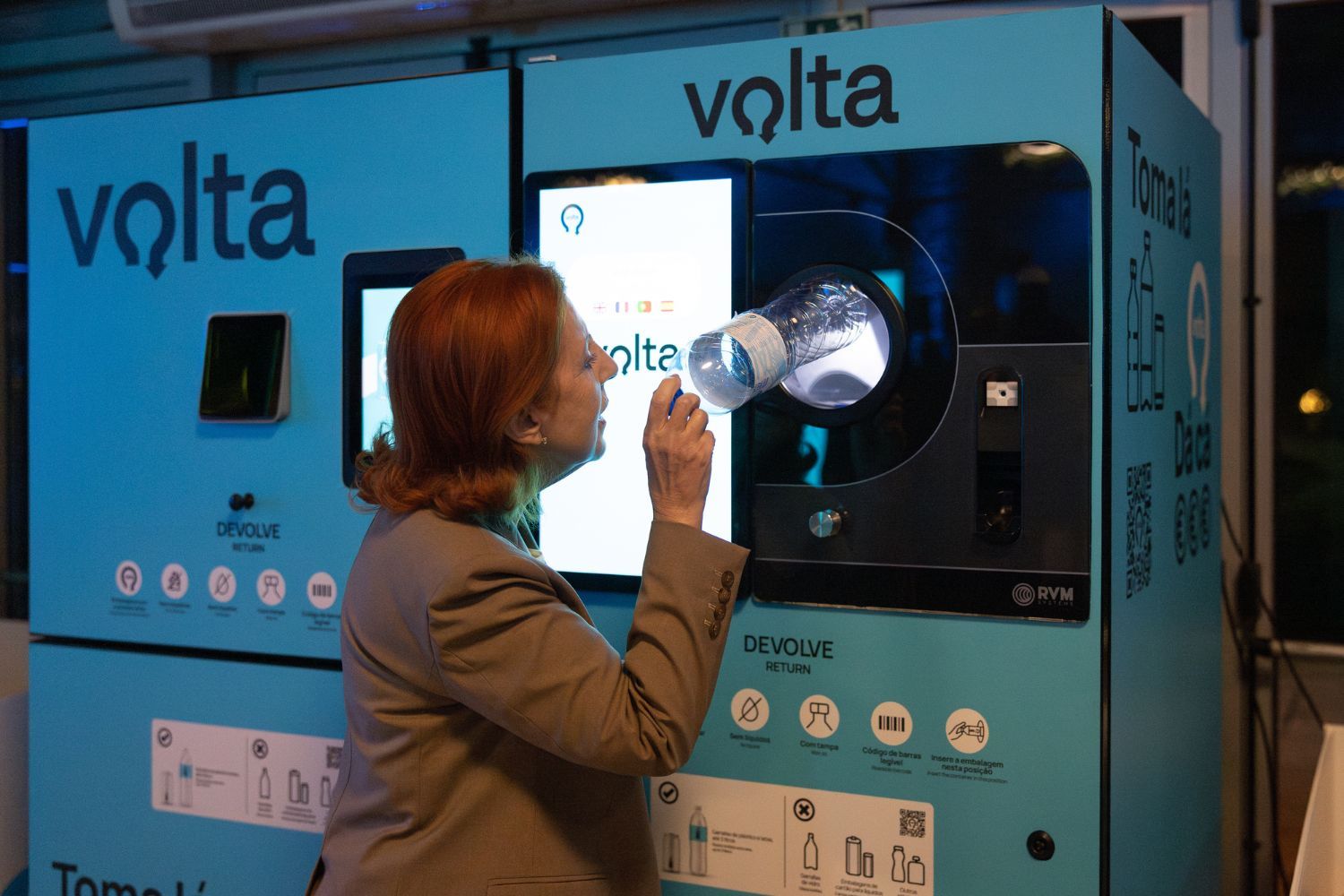
Speaking at Lisbon’s Municipal Assembly on Tuesday, 15 September, the PSD mayor said the scheme was well-intentioned but had produced what he called an “unprecedented social drama” in the capital.
“An environmental policy should not be a tax, nor should it be a social drama”, Moedas stated, while acknowledging the importance of increasing recycling and reuse.
These comments come after several months of complaints about people searching through rubbish bins for bottles and cans carrying the Volta symbol, which can be returned in exchange for the 10-cent deposit paid when the packaging is purchased.
Negative impacts
The system has operated since 10 April and covers single-use plastic, metal, and aluminium beverage containers of up to three litres.
Consumers can reclaim the deposit by returning eligible packaging to designated collection points across mainland Portugal, Madeira and the Azores.
According to Moedas, the scheme has negatively affected urban hygiene in Lisbon, with bins reportedly being searched and, in some cases, waste being removed and left on the streets as people look for refundable containers.
As reported by CNN Portugal, Moedas also referred to France, saying the Government should follow the example of cancelling the system. “It is a good intention. It is a bad result”, he added. “We do not want it.”
The mayor made the remarks as he presented the municipal executive’s work between June and August, thanking Lisbon City Council workers and staff from the capital’s 24 parish councils for dealing with more than 100 events over the summer, including the Lisbon Festivities, Book Fair, FIFA World Cup, Rock in Rio, Volta a Portugal and Kalorama.
Furthermore, around 2,600 bins were placed across the city during the period as part of efforts to maintain cleanliness during the busy summer programme.
Waste management
Sofia Lisboa, PCP municipal assembly member, welcomed Moedas’ call for the Volta scheme to be abolished but said his position did not resolve wider concerns over waste management.
She criticised what she described as the Government’s “subordination to private interests” and questioned who ultimately pays for the deposit system, while emphasising the growing practice of searching through rubbish for eligible containers.
Lisboa also claimed that recent figures showed the capital had the highest number of complaints about urban waste among municipalities, citing overflowing bins, accumulated rubbish, unpleasant smells, and an increase in rats and cockroaches as public health and quality-of-life concerns.
 Add as a preferred source on Google







 Portugal Handbook
 English
 Nederlands
 Deutsch
 Français
 Español
 Italiano
 Svenska
 Pусский
 中文
中文 Türkçe
 Português
 Czech
Czech Hungarian
 Polski
 عربي
عربي Suomi
Suomi עִברִית
 Português (Brasil)
Follow us on social media