


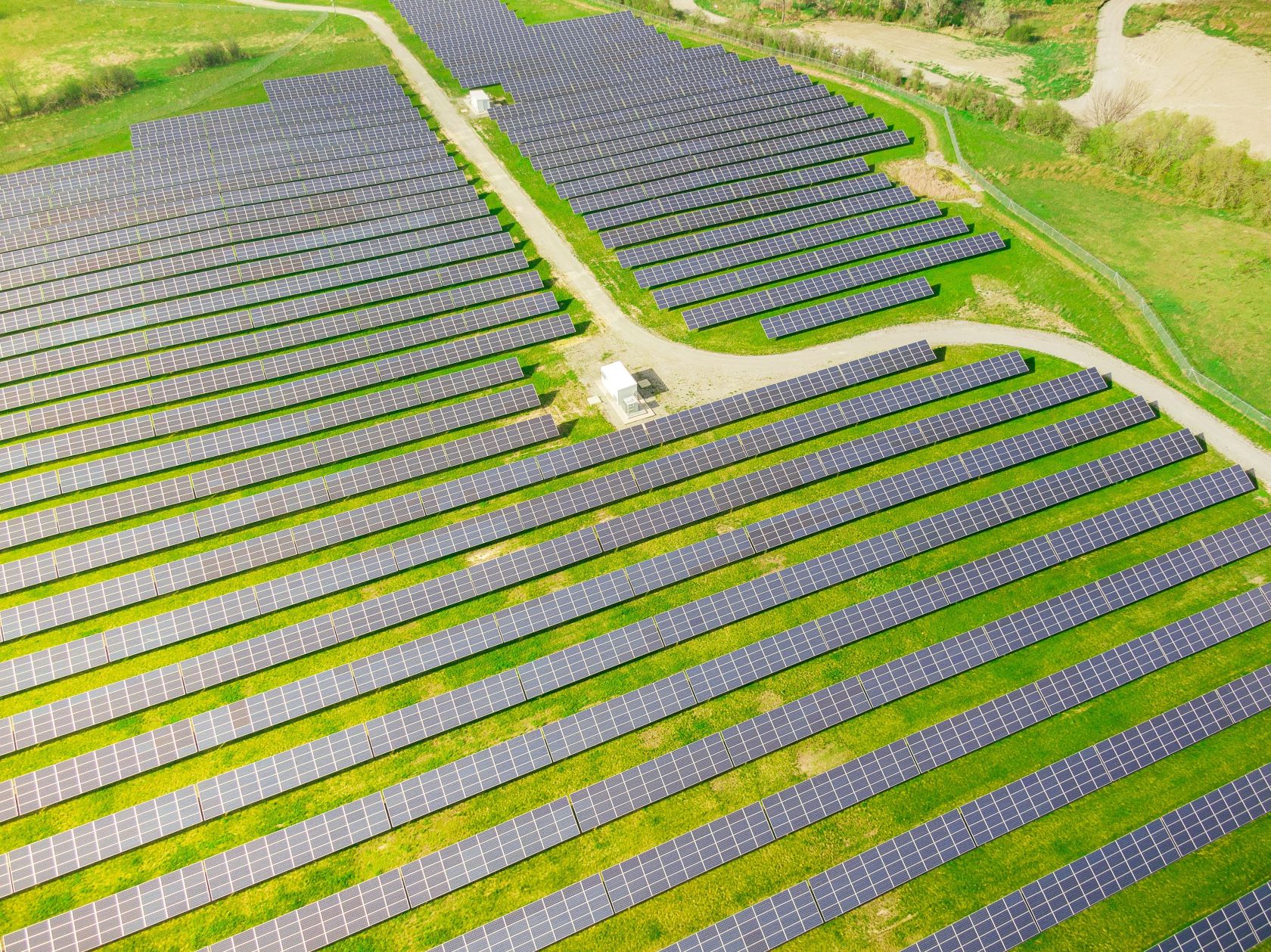
Researchers from NOVA University Lisbon and the University of Lisbon have been studying whether porous rocks deep underground could be used to store surplus renewable electricity as compressed air.
In the most favourable scenario they modelled, a single underground reservoir could store as much as 1 TWh of energy, enough to come close to the consumption of some medium-sized Portuguese cities.
The idea sounds futuristic, but compressed-air energy storage has been around in various forms since the 1970s. What the Portuguese research explores is how it could work inside naturally porous rock formations at considerable depth.
How does it work?
When wind turbines or solar panels produce more electricity than is immediately needed, that surplus power could be used to run compressors.
Air would then be pushed down a well, potentially hundreds or even thousands of metres underground, into the tiny spaces found naturally between grains of porous rock.
Those spaces normally contain salty water that is not suitable for drinking. The compressed air displaces the water and remains trapped underground under pressure.
When the electricity is needed again, the process is reversed. The compressed air is brought back towards the surface, where its expansion can drive turbines and generate electricity. No fuel needs to be burned in the process.
Ricardo Pereira, a researcher at GeoBioTec at NOVA School of Science and Technology, told Euronews that the ground could essentially be used as a battery, potentially storing enough energy to help supply small towns.
The researchers tested different geological conditions and depths to see how much energy could theoretically be stored.
Their best-case model produced an energy density of up to 156 kWh per cubic metre and a maximum storage capacity of around 1 TWh at an operating depth of 3,000 metres. Pereira stressed that this represents an optimum scenario rather than what every underground site could achieve.
Portugal may have the geology for it
There is another reason the research could be particularly interesting for Portugal.
Scientists are now looking at where suitable rock formations might exist, and the Lusitanian Basin, stretching roughly between Lisbon and Aveiro, has emerged as an area with considerable potential.
It also happens to cover one of the country’s more industrialised regions, where wind, solar and hydroelectric power are already widely used.
Lisbon and Almada are among the areas highlighted by the researchers as potentially interesting because of their population and industrial activity.
Underground storage could also help the electricity network when something goes wrong.
Compressed-air systems can provide what is known as a “black start”, allowing electricity generation to begin without first drawing power from the grid.
Pereira said such technology might have helped manage some of the difficulties experienced during the Iberian blackout of 2025, although he was careful to stress that it would not have provided a magic solution to an outage on that scale.
The biggest hurdle may be the law
Don’t expect underground energy reservoirs to appear across Portugal just yet.
Pereira estimates that getting a project from geological studies through drilling, testing and finally into operation could take between five and ten years.
There is also a more immediate problem. Portugal currently lacks specific legislation allowing this type of underground energy storage, according to the researcher.
Because the subsurface belongs to the State, companies cannot simply begin developing underground storage projects without an appropriate regulatory framework. Pereira told Euronews that the lack of legislation currently prevents companies from progressing even to sufficiently detailed preliminary studies.
For now, the Portuguese work is about establishing what might be possible rather than announcing a new energy project.
But if suitable geology can be identified and the regulatory questions resolved, some of the electricity generated on particularly sunny or windy days could one day be stored somewhere rather unexpected: in the rocks deep beneath Portugal.
 Add as a preferred source on Google







 Portugal Handbook
 English
 Nederlands
 Deutsch
 Français
 Español
 Italiano
 Svenska
 Pусский
 中文
中文 Türkçe
 Português
 Czech
Czech Hungarian
 Polski
 عربي
عربي Suomi
Suomi עִברִית
 Português (Brasil)
Follow us on social media