


The final product is physical. It has to arrive at a real home, construction site, hotel or commercial space, in the right quantity, at the right time, and then be installed correctly. Yet, despite how much the rest of the construction and design industry has changed, flooring is still often approached in remarkably traditional ways.
This is where the idea behind KAIA Surfaces began. We believed that quality should not have to come at the cost of unnecessarily high prices. With smarter sourcing, careful price optimization and more efficient processes, we believe high-quality flooring can be made more accessible without compromising on what matters.
At the same time, we saw an opportunity to modernise the experience around flooring: bringing faster communication, clearer quotations, reliable timelines and
end-to-end support to an industry that remains highly dependent on traditional ways of working.
Because when you are renovating a home or managing a construction project, choosing a floor is rarely just about choosing a palette.
It is about knowing what will work, how it should be installed, how much material is required, what the conditions of the screed/underlay should be and what happens if something changes.
Quality Should Extend Beyond the Product
In many industries, customers have become accustomed to receiving information quickly. Quotations can be requested online, information is readily available and deliveries can be tracked.
Construction is different. Flooring, in particular, remains highly dependent on people, physical materials and what is happening on site.
We don't believe that should change. Flooring will always require craftsmanship, experience and people who understand the realities of a building.
What can change is everything around it.
At KAIA, our aim is to make the process more straightforward and predictable: from the first enquiry and quotation, through product selection and technical advice, to logistics, delivery and installation support.
For an architect, contractor, interior designer or homeowner, receiving a clear quotation quickly is useful. Knowing when the material can actually be delivered is even more important.
A beautiful floor is only valuable if it arrives when the project needs it.
We Don't Start With the Floor. We Start With the Project.
One of the biggest things we have learned is that there is no universal “best” flooring.
A Lisbon apartment, a coastal villa in Cascais, a hospitality project or a family home can have completely different requirements.
Before recommending a product, we want to understand the project. What is the existing subfloor? Is there underfloor heating? What are the humidity conditions? How much traffic will the space receive? Is it a renovation or a new build? Will the floor be exposed to water? Which installation method is appropriate?
These questions may not be as exciting as choosing between different shades of oak, but they can have a much greater impact on the final result.
This is also where some common assumptions about flooring begin to fall apart.
Some Things We Believe About Flooring Aren't Quite True
Many people assume that a thicker floor is automatically a better floor. It isn't that simple.
The construction of the product, its core, surface layer, stability, intended use and installation system all contribute to performance. Thickness is one specification, not a complete measure of quality.
The same applies to the word “waterproof”. A waterproof flooring product does not mean that every installation condition is automatically suitable for every wet environment. The substrate, joints, installation and surrounding construction all matter.
There is also a persistent misconception that engineered wood is somehow not “real” wood.
Engineered wood flooring combines a genuine wood surface with a multilayer construction designed to provide greater dimensional stability. For many modern homes and renovation projects, this makes it a practical way of bringing the warmth and character of natural timber into a contemporary building.
Even underfloor heating, which is often considered incompatible with wood flooring, requires a more nuanced conversation. The question is not simply whether the material is wood, but whether the particular flooring construction is suitable and whether the complete installation is carried out correctly.
This is why we believe product selection and technical advice should go together.
The Floor Starts Before the Floor
Perhaps the most important part of a flooring project is something the homeowner will never see.
Before the first plank is installed, there may be discussions about screed humidity, substrate preparation, adhesives, acclimatisation, expansion requirements or compatibility with heating systems.
In a renovation, an existing floor may need to be removed. A subfloor may need preparation or levelling. In a new build, delivery needs to be coordinated with other trades.
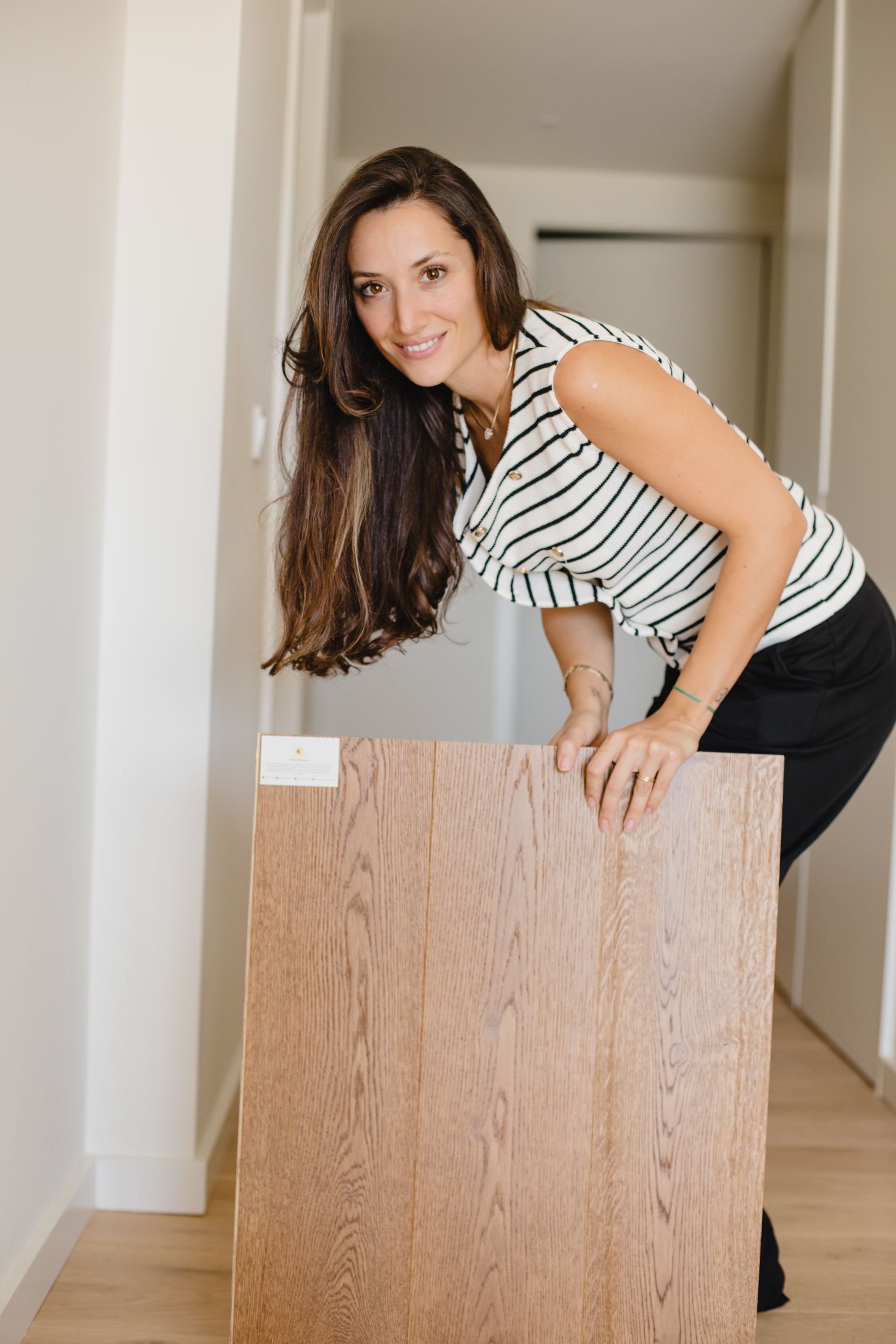
This is why we don't see our role as simply supplying boxes of wood or SPC flooring.
We want to be involved from end to end, working with the people responsible for the project and helping them make decisions before problems appear.
It is a simple idea, but one that makes a significant difference: the floor is only one part of the flooring project.
A More Modern Approach to a Very Physical Industry
Portugal is an interesting market for this approach.
From older Lisbon apartments and traditional homes to new
residential developments, villas and hospitality projects, every building comes with its own characteristics. Renovations may require careful moisture control and preparation of existing
subfloors, while newer projects can bring different technical considerations, such as screed composition, underfloor heating compatibility and installation requirements.
For homeowners and professionals who are accustomed to fast, digitally organised services, slow quotations or uncertain delivery dates can be frustrating.
We understand that expectation.
Our goal isn't to make flooring less personal or less hands-on. It is to make the experience around it more efficient.
Technology and better processes can help us respond faster, communicate more clearly and plan more accurately. But the final result will still depend on people: the architect specifying the material, the contractor coordinating the project, the installer preparing the floor and the team making sure the right product reaches the right place.
We believe the future of flooring lies in combining both sides.
Beautiful Materials. Better Processes.
Ultimately, we still believe in what has always made flooring special.
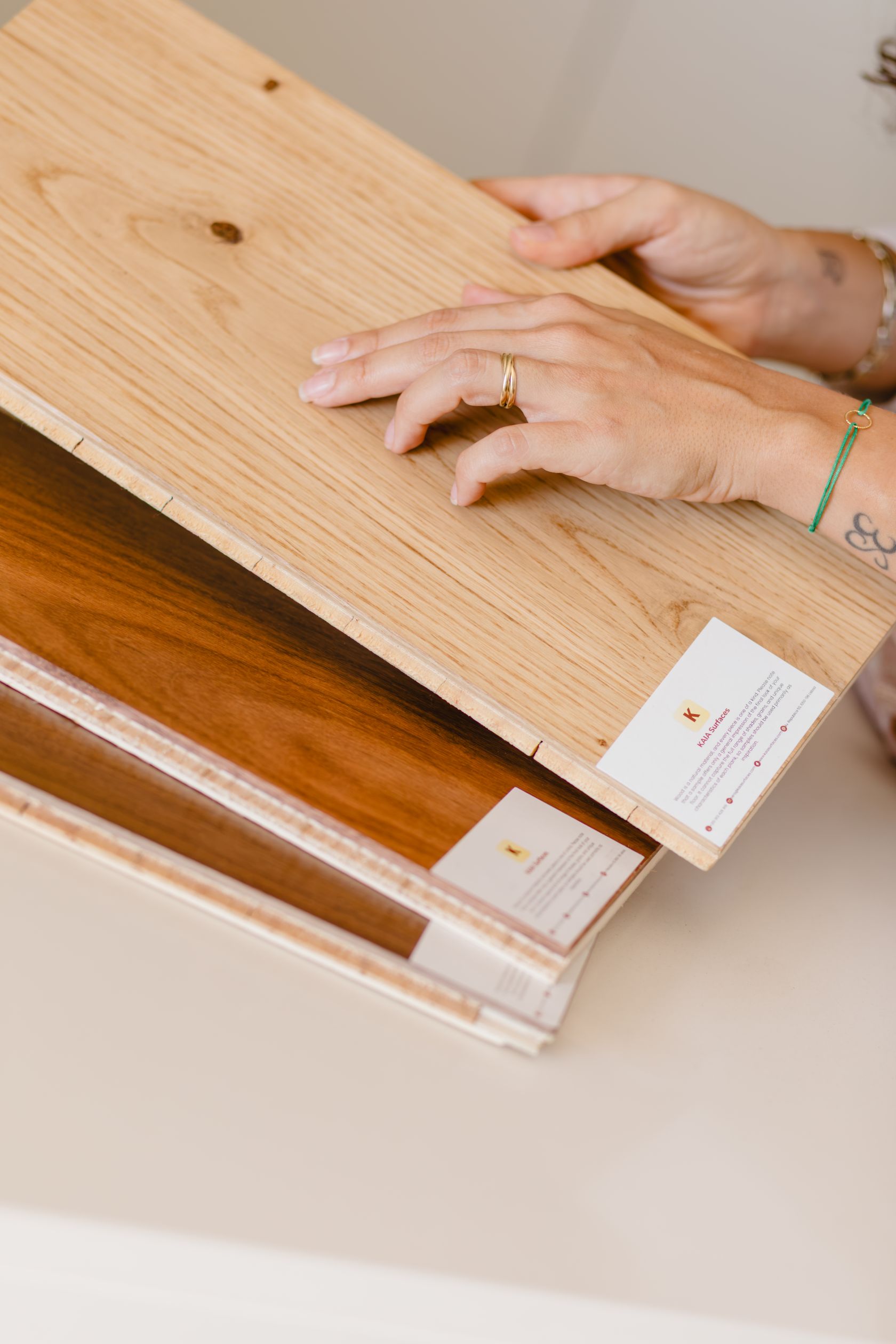
We believe in the warmth of natural wood, the character of a beautiful grain, the precision of a well-installed herringbone and the difference that a carefully chosen floor can make to a home.
But we also believe that quality should not stop at the product; and it should not automatically mean an excessive price.
Through better sourcing, thoughtful product selection and price optimisation, we believe high-quality flooring can be more accessible without compromising on performance or design.
Quality is knowing what you are buying.
Quality is receiving a clear quotation without unnecessary delays.
Quality is knowing the expected lead time and planning around a realistic delivery date.
Quality is having someone available when a technical question comes up.
And quality is having the support to take a project from the first conversation to the finished floor.
That is what we are building with KAIA Surfaces: not simply a company supplying flooring in Portugal, but a more modern way of working with it; bringing together high-quality wood and SPC flooring, competitive pricing, technical expertise, responsive communication, reliable logistics and end-to-end project support.
Because in the end, a floor should do more than look beautiful on the day it is photographed.
It should be the right floor for the building, the right solution for the project, the right value for the investment and, years later, still feel like the right decision.
 Add as a preferred source on Google





 Portugal Handbook
 English
 Nederlands
 Deutsch
 Français
 Español
 Italiano
 Svenska
 Pусский
 中文
中文 Türkçe
 Português
 Czech
Czech Hungarian
 Polski
 عربي
عربي Suomi
Suomi עִברִית
 Português (Brasil)
Follow us on social media