


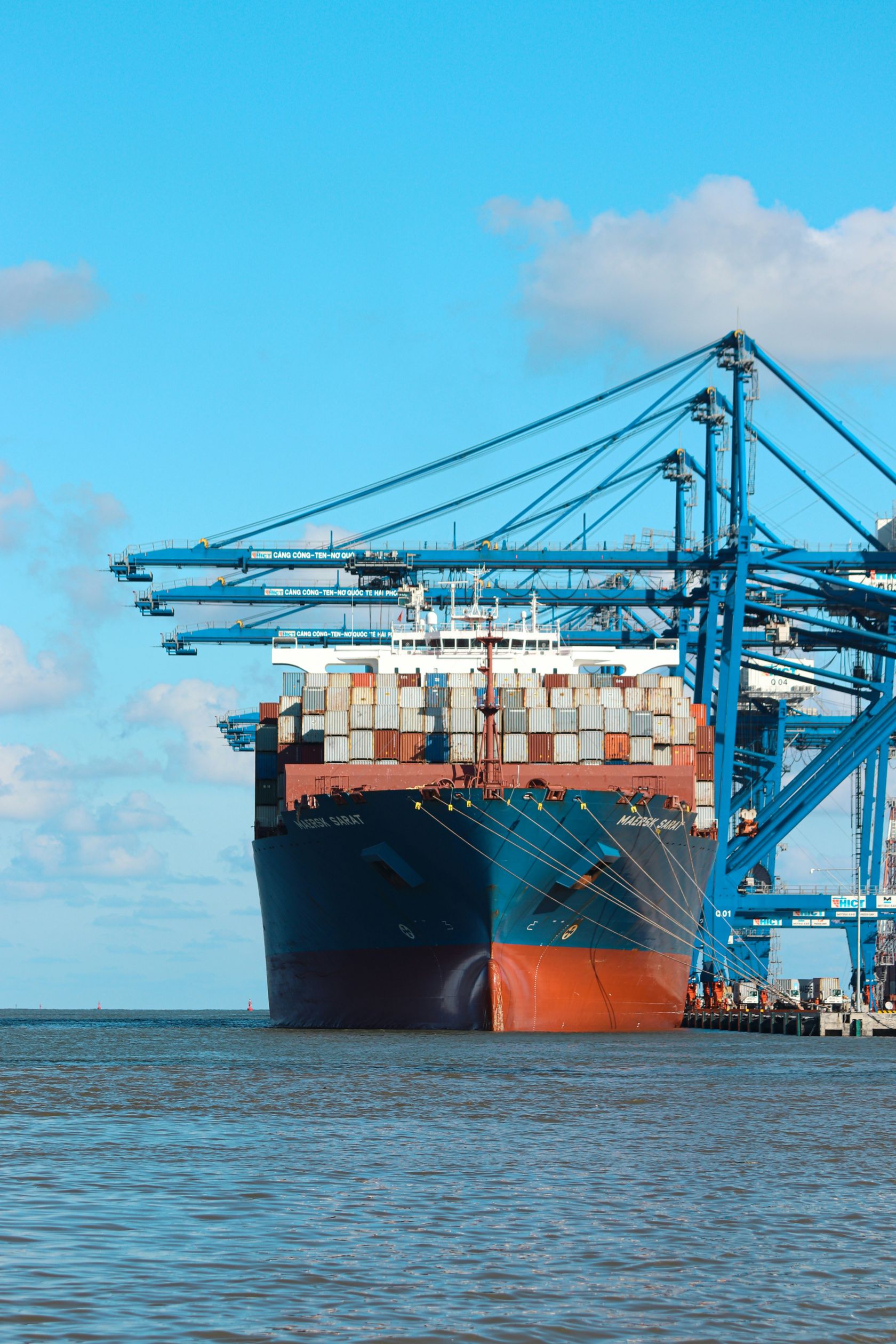
Portuguese goods exports to the United States fell by around 5% in volume during 2025, according to a study by the European Commission’s Directorate-General for Economic and Financial Affairs.
That put Portugal sixth among EU countries recording the biggest falls, behind Slovakia, Cyprus, Greece, Luxembourg and Spain.
The picture across Europe was quite different.
Despite months of uncertainty surrounding President Donald Trump’s tariff policy, EU exports to the US ended 2025 at roughly the same level as the previous year.
One reason was timing. American companies bought more European goods during the first three months of 2025, getting orders in before Trump’s so-called reciprocal tariffs took effect.
Exports then fell considerably during the summer before recovering towards pre-tariff levels by the end of the year.
Overall, 11 of the EU’s 27 member states recorded a year-on-year fall in the volume of goods sent to the US. Portugal, Sweden and Germany were among those particularly affected.
Others managed to increase their exports despite the tariffs, including Denmark, Hungary, Poland, Lithuania, the Netherlands and Belgium.
A small but noticeable hit to Portugal
The effect also showed up in Portugal’s economic growth.
The Commission’s analysis estimates that the tariffs knocked around 0.1 percentage point off Portuguese growth in 2025.
Across most of the EU, the impact was limited. The contribution of US exports to annual GDP growth generally ranged between a loss of 0.1 percentage point and a gain of 0.15 percentage point.
Portugal’s exposure to the American market is relatively concentrated in certain industries.
Before the tariff changes, the US accounted for around 6.7% of Portugal’s goods exports in 2024. Portuguese sectors with greater exposure include wood and cork products, rubber and plastics, minerals and related manufacturing.
The tariff dispute has changed considerably since then, with different rates and exemptions introduced over the past year.
The EU-US agreement reached in July 2025 initially brought greater certainty for European exporters by setting a 15% ceiling for most EU goods entering the US. The tariff regime has been altered again during 2026.
China may be the bigger concern
Interestingly, the Commission’s study suggests Trump’s tariffs may not be the biggest long-term trade problem facing Europe.
Imports into the EU from China increased by 9% in volume during 2025, widening Europe’s trade deficit with the country.
In many EU countries, Chinese imports grew at double-digit rates. Parts of eastern Europe saw increases of as much as 80%.
It would be easy to assume that Chinese goods were simply being diverted towards Europe after being hit with US tariffs. The Commission says the pattern started before the latest American measures and appears to be part of a longer-running trend.
Its concern is what happens if that continues.
A sustained rise in imports could put pressure on European manufacturers, particularly if it leads to production moving elsewhere or leaves individual industries increasingly dependent on overseas suppliers.
For Portugal, the figures tell two slightly different stories. Europe’s exports proved more resilient to the US tariffs than many initially expected, but Portuguese exporters didn’t escape them quite so easily.
Set The Portugal News as your preferred source for news on Google
 Add as a preferred source on Google








 Portugal Handbook
 English
 Nederlands
 Deutsch
 Français
 Español
 Italiano
 Svenska
 Pусский
 中文
中文 Türkçe
 Português
 Czech
Czech Hungarian
 Polski
 عربي
عربي Suomi
Suomi עִברִית
 Português (Brasil)
Follow us on social media