


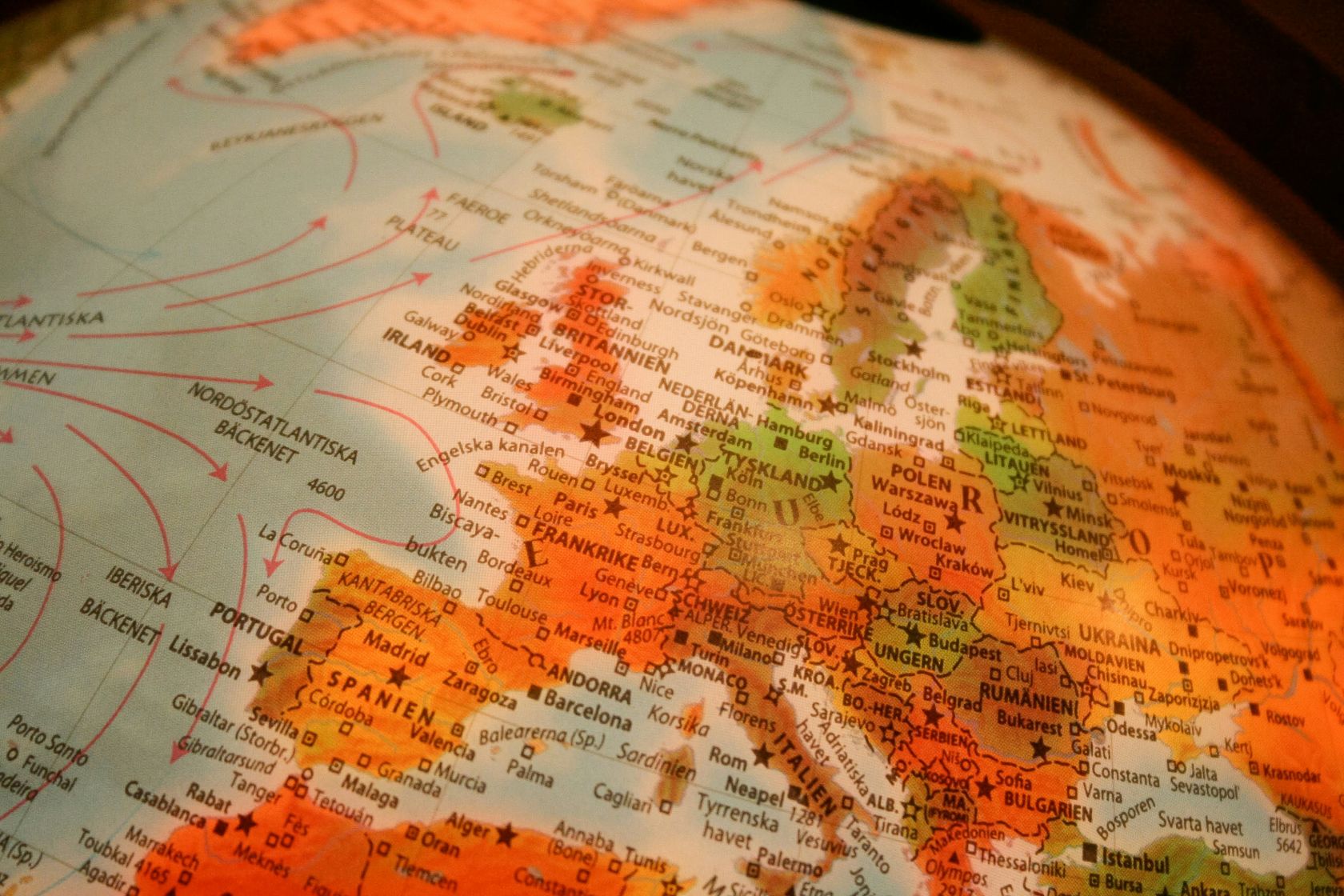
We are at the western end of the continent, far from its industrial and economic centre and far from the large markets of Central Europe. That geography has often been presented as a disadvantage. But perhaps something particularly interesting is happening: in the new digital economy, the same geography can start to put Portugal at the centre of some of the world's most important connections.
This was one of the reflections that most marked me at Atlantic Convergence 2026, in Lisbon, where this year I was invited to prepare and moderate two panels that sought to bring together sectors that I know well and have been writing about: renewable energies, digital infrastructure and real estate. Over two days, international experts discussed submarine cables, data centres, artificial intelligence, energy, connectivity, space, cybersecurity and digital sovereignty. As these conversations intersected, it became evident that we can no longer analyse each of these infrastructures in isolation.
Portugal is geographically placed between Europe, the Americas and Africa. The submarine cables that reach the Portuguese coast transform this location into a point of entry and exit of data between continents. But a cable, by itself, does not necessarily create a new economy. The real value begins when we can add to connectivity data centres, competitive energy, terrestrial fibre, computing capacity, technology companies, research and investment.
This is precisely where the energy transition intersects with the digital transformation. Artificial intelligence requires increasing computing capacity and this infrastructure needs huge amounts of electricity. Portugal has very interesting conditions to increase renewable production and can combine this capacity with its Atlantic position and international connectivity. Energy and data thus begin to be part of the same economic discussion.
Atlantic Convergence put this possibility precisely on the table when discussing Portugal as a potential Atlantic digital gateway, capable of connecting Europe, the Americas and Africa through submarine cables, terrestrial fibre and data centres. But having a privileged location does not automatically mean being able to turn it into an investment. We need electricity grids, connection capacity, prepared land, efficient licensing, digital infrastructure and, above all, decisions fast enough to compete with other countries looking for exactly the same projects.
Perhaps it is also necessary to change the way we think about our own geography. Portugal is not only at the western end of Europe. It is at the centre of a huge Atlantic area that is once again gaining economic and geopolitical importance.
For centuries, the Atlantic has helped define Portugal's position in the world through sea routes. In the twenty-first century, part of these routes is at the bottom of the ocean and carries data instead of goods.
The opportunity is before us. The challenge will be to ensure that Portugal is not only the place where cables arrive and data pass, but the country where a growing part of this data is stored, processed and transformed into investment, companies, knowledge and skilled employment.
Our geography has not changed. What is changing is its value.
Set The Portugal News as your preferred source for news on Google
 Add as a preferred source on Google


 Portugal Handbook
 English
 Nederlands
 Deutsch
 Français
 Español
 Italiano
 Svenska
 Pусский
 中文
 Türkçe
 Português
 Czech
 Hungarian
 Polski
 عربي
 Suomi
 עִברִית
 Português (Brasil)

Follow us on social media