


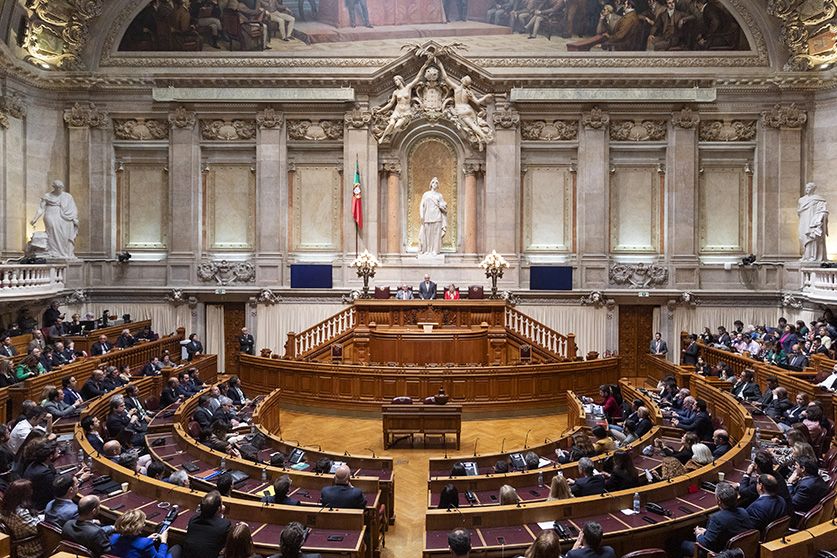
Portugal is considered a parliamentary democracy, with representation of different political parties in the Parliament. The democracy the Portuguese people know today was established in 1974, after the Carnation Revolution, which ended the dictatorship of the Estado Novo.
Glancing at the political system
Portugal lives under a Democratic Republic, ruled by a Parliamentary democracy, with separation of powers, based on the Constitution of 1976.
The Parliament has 250 members from different parties, elected through elections held every four years.
In Portugal, power is not centred on a single person but is spread between the Parliament, the Government, the President of the Republic, and the courts, which, while in the public domain, are not affected by legislative or executive responsibilities.
Portugal is also part of the European Union; therefore, some laws in the country are made according to the bloc, which also has a Parliament with Portuguese representation.
The Portuguese Constitution
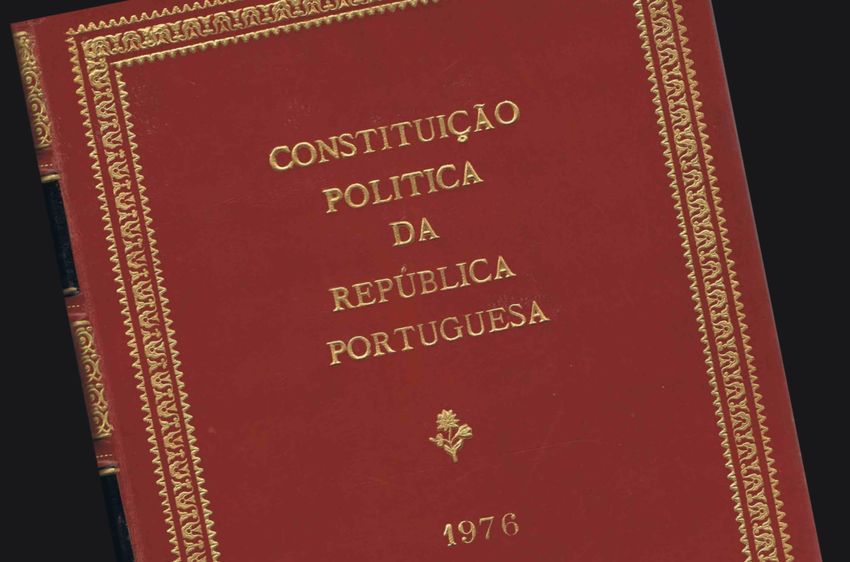
The Portuguese Constitution was approved in 1976 and gives the people the power to make political decisions, ensuring that the State is ruled only according to the Constitution.
This means that laws written by the parties' representatives must be written according to the Constitution, which, in Portugal, presents the fundamental rights and freedoms of all Portuguese.
It is common to see on the news that the Constitutional Court did not approve certain laws approved by the Parliament. This happens when the judges of the Constitutional Court realise that some articles in a law do not meet what the Constitution allows.
Besides describing the fundamental rights of the Portuguese population, the Constitution also defines the hierarchy in the Portuguese political system.
The branches of Government
The political power, in Portugal, is separated between the executive, legislative and judicial powers, with the representative of the country being the President of the Republic.
Executive Branch
The Parliament and the Government are led by the Prime Minister, elected during the legislative elections. The Prime Minister leads the Council of Ministers, which can be described as the group of ministers who debate and provide immediate measures, such as those applied during states of alert, for example, during pandemics or extreme weather events.
The ministries are chosen by the Prime Minister and can be either people from the electoral list presented to citizens or people who do not belong to the party, such as the Minister of Home Affairs, Luís Neves.
Legislative Branch
In terms of legislation, members of parliament draft laws from their respective parties.
Members of Parliament are divided into groups, regardless of their political party, to discuss measures on certain topics. Then, depending on their areas of interest, each party writes a draft law to be debated and voted on in Parliament. Those debates are monitored by the President of the Assembly of the Republic. In those debates, parties discuss the law drafts, which may lead to tense moments between members of different parties.
The approved projects are then sent to the President of the Republic, who approves or vetoes them.
Judicial Branch
In terms of judicial powers, as mentioned before, they are handled by the courts, which are independent of the Government or the Assembly of the Republic.
Although the courts are ruled by laws approved by the executive and legislative members of parliament, they are independent when it comes to applying the law and imposing penalties according to the situation described in court.
There are different courts in Portugal, such as the Tribunais Judiciais, the common ones. The first judgment is usually issued by the Tribunal da Comarca, a court located in the area where the crime happened. If the lawyers do not agree with these courts' decision, the case is sent to Tribunal da Relação, which is located in Lisbon, Porto, Coimbra, Évora and Guimarães. There is also a possibility of presenting another disagreement with a decision by this court, leading to the Supremo Tribunal da Justiça, located in Lisbon.
There are also courts for administrative and fiscal crimes, as well as a court for the enforcement of the Constitution when new laws are approved in Parliament. There is also the Tribunal de Contas, which is aimed at solving cases regarding public accountability.
The President of the Republic
Elected every five years, the President of the Republic is the highest political figure in Portugal, representing the country abroad and also serving as the head of the Armed Forces.
Although people think that the powers of the President of the Republic are reduced, the elected President has the power to approve and veto laws and, if necessary, send them to the Constitutional Court. Nevertheless, a law can only be vetoed three times by the President of the Republic; however, after every veto, the Parliament is expected to modify it according to the President’s justification.
Portugal political system
Portugal’s political system is complex, with different areas of interest. While sharing an overview of the functioning of the Portuguese democracy, Portuguese politics still has other branches, such as local power, highlighting the importance of Câmaras Municipais and Juntas de Freguesias.
It is also important to consider that, in Portugal, foreigners can also vote in local elections; however, keep an eye on the Portugal Handbook to be aware of everything about Portugal’s political system.
 Add as a preferred source on Google







 Portugal Handbook
 English
 Nederlands
 Deutsch
 Français
 Español
 Italiano
 Svenska
 Pусский
 中文
中文 Türkçe
 Português
 Czech
Czech Hungarian
 Polski
 عربي
عربي Suomi
Suomi עִברִית
 Português (Brasil)
Follow us on social media