


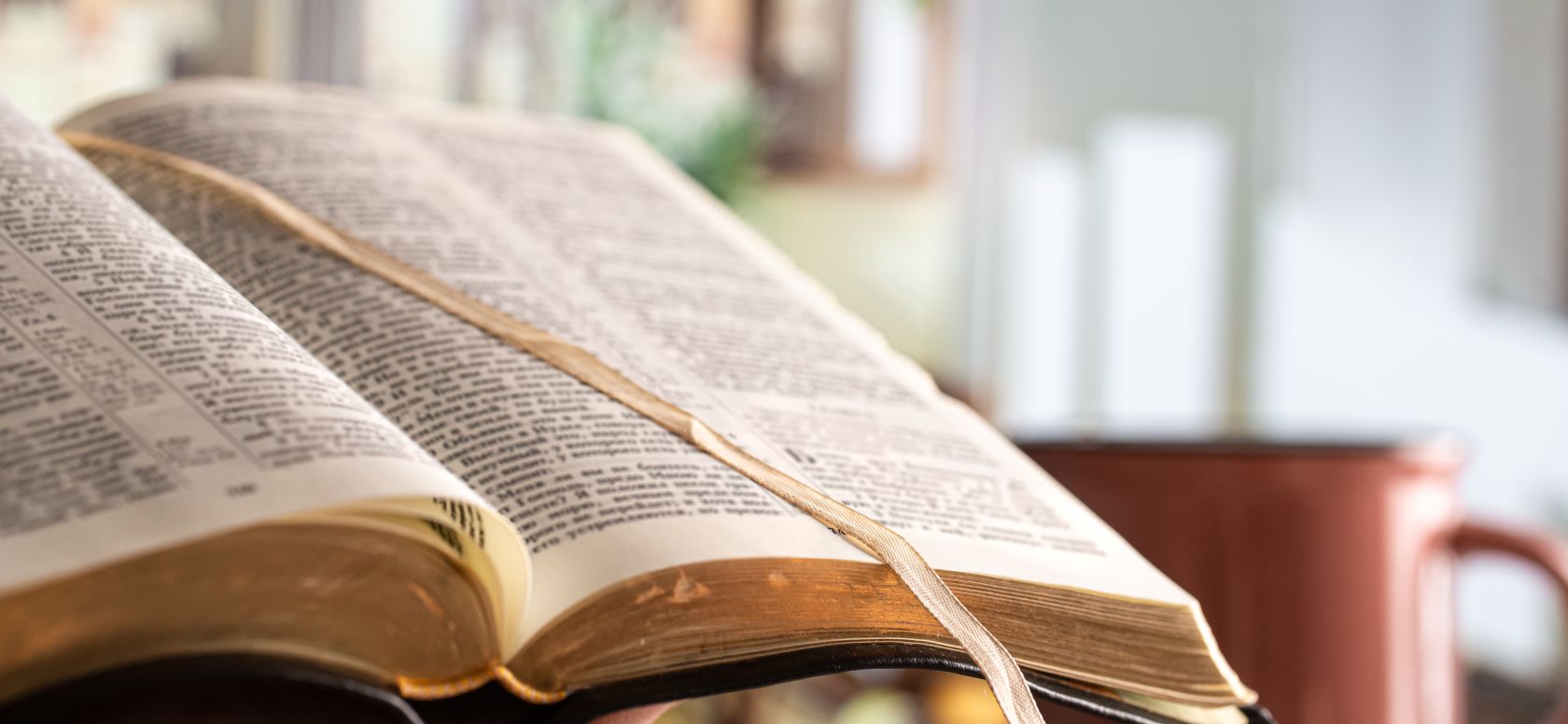
In 1526 the Renaissance humanist, William Tyndale, completed a translation of the New Testament from ancient Koine Greek and Hebrew texts to English. He determined that this should be published by the newly introduced printing press so that it may be read “as much by a humble ploughboy as a prince”
Due to opposition from the conservative Catholic bishops who maintained that God´s Word could only be transcribed in Latin, Tyndale firstly took his manuscripts to Cologne where his intentions were betrayed to the city´s religious authorities. He then journeyed up the Rhine to Worms where 3,000 copies were produced on the protestant press of Peter Schoeffer. These were concealed in bales of cloth and smuggled into Britain where they were rapidly sold. However, the bishops would have none of this and gathered together the entire edition for destruction by burning in the precinct of St. Paul´s Cathedral
Only three complete editions are known to have survived. For one of these the British Library paid £1,000,000 and then produced, in year 2000, a pocket-sized reproduction. The other two are held in the Wurttenberg state library and, ironically, at St. Paul’s.
After the destruction, Tyndale remained in Europe where his gift as a linguist enabled him to study translations made in Spanish, Italian, French and German – the latter being particularly useful for the contemporary writings of Martin Luther. This enabled him to complete a revision of the New Testament which was printed in 1534 as an edition of 20,000 copies. For these, there was an almost insatiable demand in Britain despite the severe punishments imposed by the Catholic authorities, led by Thomas More, for reading or even listening to the work.
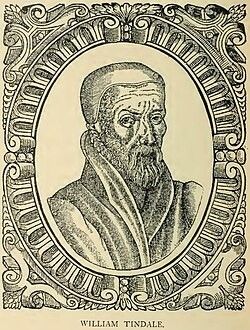
In 1535 William Tyndale was arrested on charges of heresy and jailed near Brussels in the castle of Vilvoorde where, the following year he was garroted and then burned at the stake.
The foundations laid by Tyndale led to the publication in 1611 of the magnificent King James version of the New Testament which relied on much of the 1526 translation for the clarity of its expression in what we now describe as Early Modern English.
The words fisherman, castaway and busybody plus everyday phrases such as filthy lucre and those given in the first paragraph of this essay were all created by William Tyndale. On this 500th anniversary we should all be grateful to his memory.
Set The Portugal News as your preferred source for news on Google
 Add as a preferred source on Google








 Portugal Handbook
 English
 Nederlands
 Deutsch
 Français
 Español
 Italiano
 Svenska
 Pусский
 中文
中文 Türkçe
 Português
 Czech
Czech Hungarian
 Polski
 عربي
عربي Suomi
Suomi עִברִית
 Português (Brasil)
Follow us on social media