


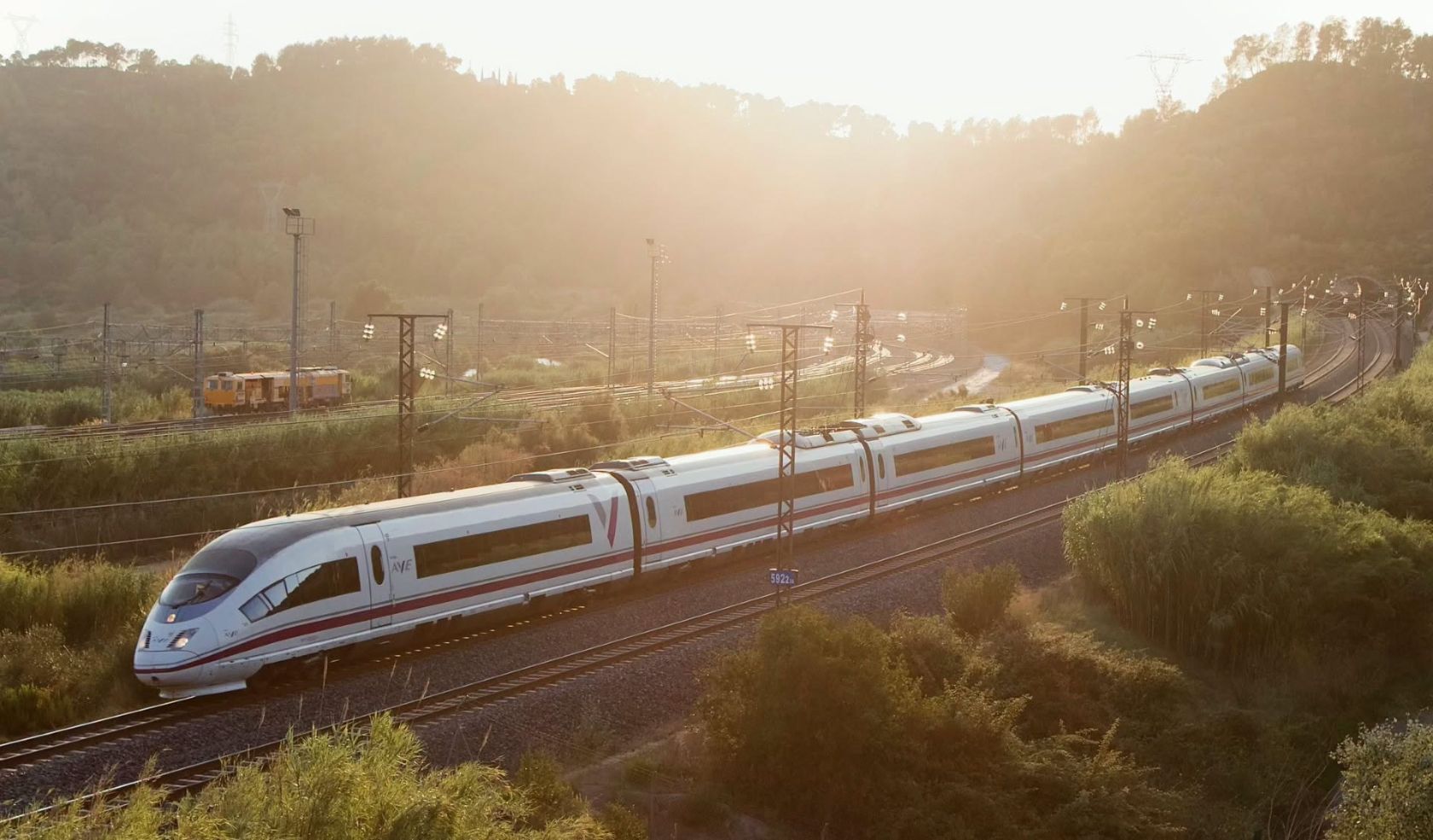
Spain’s RENFE recently decided to switch its growth plans away from France into Portugal. RENFE are rail giants, when they want expansion, they will probably get it.
Why abandon their plans for France? The French government have never made a secret of protecting their industries against any change they can stop or delay. RENFE originally wanted to deliver a high-speed connection with France for the Paris Olympic Games 2024. However, technical obstacles, bureaucratic requirements and delays caused what might be called a ‘hot dispute’.
Spain’s state-owned rail operator is widely recognised as a world leader in the railway sector, specifically in high-speed rail. While countries like Japan and China often dominate global conversations around train technology, Spain boasts the most extensive high-speed rail network in Europe and the second-largest in the world, trailing only China. RENFE has built a global reputation for punctuality, world-class infrastructure engineering, and commercial high-speed.
Now they are turning their attention to Portugal, and they have virtually unlimited resources. In global infrastructure indices (such as the World Economic Forum’s historical tracking), Portugal ranks 31st globally for the quality of its railroad infrastructure. RENFE’ s knowledge and experience are going to make a big difference to the Portuguese rail system. Whatever your political views, this will make a big difference to the market, and high-speed rail connections are going to be a number one priority.
Work is already proceeding well on the Lisbon to Madrid link. What currently takes ten hours will be reduced to three hours, city centre to city centre. Air travel can’t compete on these shorter routes. The Portuguese government has already approved the development of the Lisbon to Madrid high-speed line, and construction is already underway, though several sections still need to be completed. Some sections are already undergoing testing. Évora–Elvas/Caia Section: Reached final testing phases in Portugal, with the 80 km cut-off track scheduled to enter service in mid-2026.
Poceirão–Bombel Section: Prepared for track duplication work to begin in 2026, aiming for completion by 2029 to support the 2030 initial five-hour service.
Lisbon Madrid high-speed line. Advanced construction on Spanish connecting segments, including work around Plasencia to prepare for future high-speed operations.
Spanish trains on Portuguese rail lines
Spanish Transport Minister Óscar has made it clear that RENFE will start operations in Portugal. The EU open access rules give them the right to do this. France resisted, but it’s not likely that Portugal will be able to resist. Spain’s national rail company is heavily finalising plans to expand its high-speed trains directly into the Portuguese market, causing intense debate, but it will almost certainly go ahead.
RENFE need expansion, and they only have two neighbours: France and Portugal. Like it or not, Portugal is next on their expansion plans. You also have to bear in mind that RENFE have vast financial resources and a fleet of high-speed trains ready to go.
So how will they compete with CP?
Rail travel in Portugal is highly subsidised and low cost compared with many other northern EU countries. Competing on cost of travel is a big challenge. It is highly likely they will compete on convenience and comfort. The RENFE fleet is modern and fast. They know how to supply extra comfort and facilities for the passenger.
One of the earliest countries to start open access was the Czech Republic, one of the most open and competitive passenger rail markets in Europe, highlighted by vibrant open-access operations on key commercial corridors. The Incumbent: České dráhy (ČD) remains the primary state-owned passenger operator, holding roughly 50% to 60% of the market share. Private companies like RegioJet and Leo Express challenge the state monopoly on major intercity routes. I have travelled on CD and RegioJet. RegioJet focus on low cost, CD seem to focus on quality and service. My preference was for CD though they were a bit more expensive. Fares on both operators are vastly less expensive than say the UK, where rail travel is eye-wateringly expensive compares to other EU operators.
Northern Europe to the South
The demand for high-speed rail within Europe grows every day. The main north-to-south route uses two main hubs. Paris and Madrid. Virgin have already been awarded the rights to use the Channel Tunnel, so expect competition on the route. The European Commission remains highly committed to a fully integrated cross-border corridor. Under the Trans-European Transport Network (TEN-T) master plan, the EU aims to connect Paris and Madrid directly, eventually extending to Lisbon. The long-term goal is to optimise the tracks so a train can travel between Paris and Madrid in roughly six hours by the mid-2035 timeline. At this moment, there is no existing link, via Barcelona is the only option.
The Route: Take a French SNCF Voyageurs TGV from Paris Gare de Lyon to Barcelona-Sants. From there, switch to a Spanish high-speed train (operated by RENFE AVE, Iryo, or Ouigo España) to Madrid Puerta de Atocha. Travel Time: The fastest connection takes roughly 10 hours and 10 minutes if schedules align tightly.
Madrid Lisbon is getting closer, but it’s not yet complete. Once complete, it’s a three-hour journey time, and added to the existing Paris Madrid route of 10 hours, it means that Paris Lisbon could be 13 hours, with the hope that if Spain and France can resolve the direct link, it could be even less time, and that starts to get tempting.
With the ongoing problems at airports- check-in delays, security, air traffic problems, etc.- wouldn’t it be tempting to take the train?
 Add as a preferred source on Google







 Portugal Handbook
 English
 Nederlands
 Deutsch
 Français
 Español
 Italiano
 Svenska
 Pусский
 中文
中文 Türkçe
 Português
 Czech
Czech Hungarian
 Polski
 عربي
عربي Suomi
Suomi עִברִית
 Português (Brasil)
Follow us on social media