


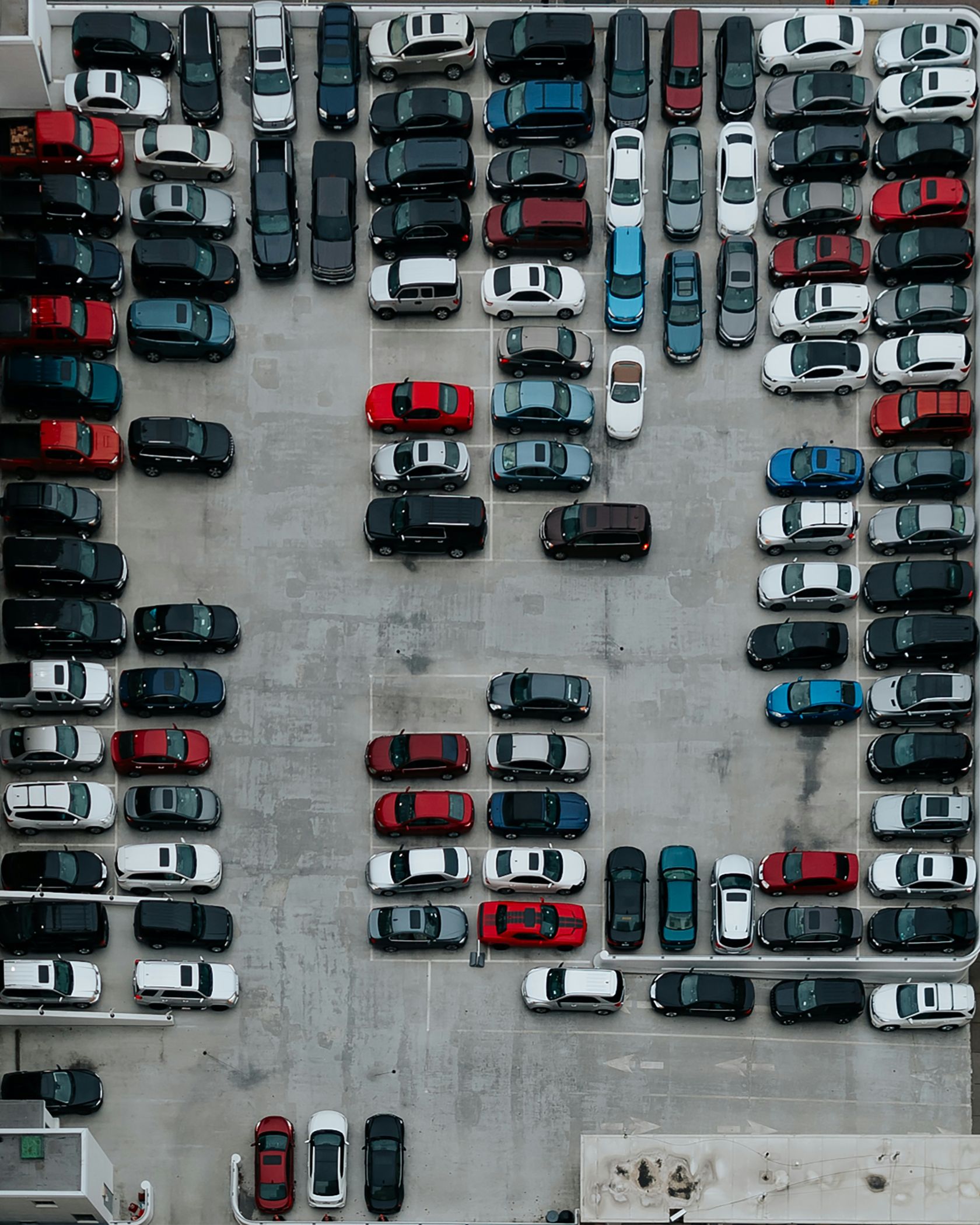
“By the end of the year, we will present the new parking policy for the city. One approach will be to reduce on-street parking and prioritise residents. Consequently, it will make parking more difficult for those coming from outside the city or for those away from their place of residence,” announced Pedro Duarte.
When asked why some areas of the city have more resident-reserved parking than others, the mayor said the situation would be “reviewed.”
“This new parking policy is precisely intended to correct such situations; therefore, the answer is yes: we will review this, we will prioritise residents, and we will not discriminate [based on the parish],” he stated.
Noting that the municipality “will not increase the number of on-street spaces”, but rather attempt to reduce them, Pedro Duarte aims to create more parking facilities, “whether underground or in multi-story structures.”
Although everything remains “open” and he does not wish to “jump the gun,” the mayor acknowledged the necessity of “examining the contracts” the municipality holds regarding parking. He also said legal work is underway to ensure residents can benefit from lower parking rates than those from other municipalities parking in Porto.
In Porto, parking management varies across the city’s districts. There are four limited-duration parking zones (ZEDL); three are operated under concession by the company EPorto, while one is managed by the municipal company STCP-Serviços.
In addition to changes in parking management, Pedro Duarte said he intends to implement further short-term measures to discourage car use in the city, noting that a plan to pedestrianise the historic centre is currently under study.
“We recognise there are limitations; the Ribeira tunnel, for instance, plays a crucial role in connecting the city, and we won’t be able to eliminate vehicular traffic from the entire historic centre. However, I believe we can do a lot of work there to make the area much more pleasant,” he said.
The official described it as “unacceptable” to have a car park in the Alfândega area “right over the river, arguably the city’s most prime location”, and announced plans to “do away with” parking there.
The municipality is also working to establish five new restricted vehicle access zones (ZAAC) in Sé, Bonjardim, Miguel Bombarda, Batalha, and Tito Fontes, which will join the five zones already in place (Carmelitas, Cedofeita, Flores, Ribeira, and Santa Catarina).
On public transport, Pedro Duarte said the municipality will add six kilometres of bus lanes by the end of the year (increasing the total from 15 to 21 kilometres). He also noted that the reinforced Via Livre program, under which STCP can report illegal parking in these lanes, saw citations rise from 508 in August 2025 to over 1,800 in August of this year.
Starting with Avenida Fernão de Magalhães but aiming to expand the project citywide, the municipality also plans to install traffic lights equipped with sensors that detect approaching buses and “switch to green as they draw near.”
Regarding the municipality’s expansion of the “30 Network” (which sets a 30 km/h speed limit in various residential areas and locations with high accident rates), Pedro Duarte acknowledged that, for now, the measure is primarily “educational.” However, the city will launch a public tender in early 2027 to acquire a radar-based speed control system to deploy throughout the city.
“We recognise that the automobile is vital for many families, for numerous economic sectors, and for many professionals; we are not waging a war on cars. But we must understand that using public transport needs to be more rewarding than using private transport,” he concluded.
 Add as a preferred source on Google





 Portugal Handbook
 English
 Nederlands
 Deutsch
 Français
 Español
 Italiano
 Svenska
 Pусский
 中文
中文 Türkçe
 Português
 Czech
Czech Hungarian
 Polski
 عربي
عربي Suomi
Suomi עִברִית
 Português (Brasil)
Follow us on social media