


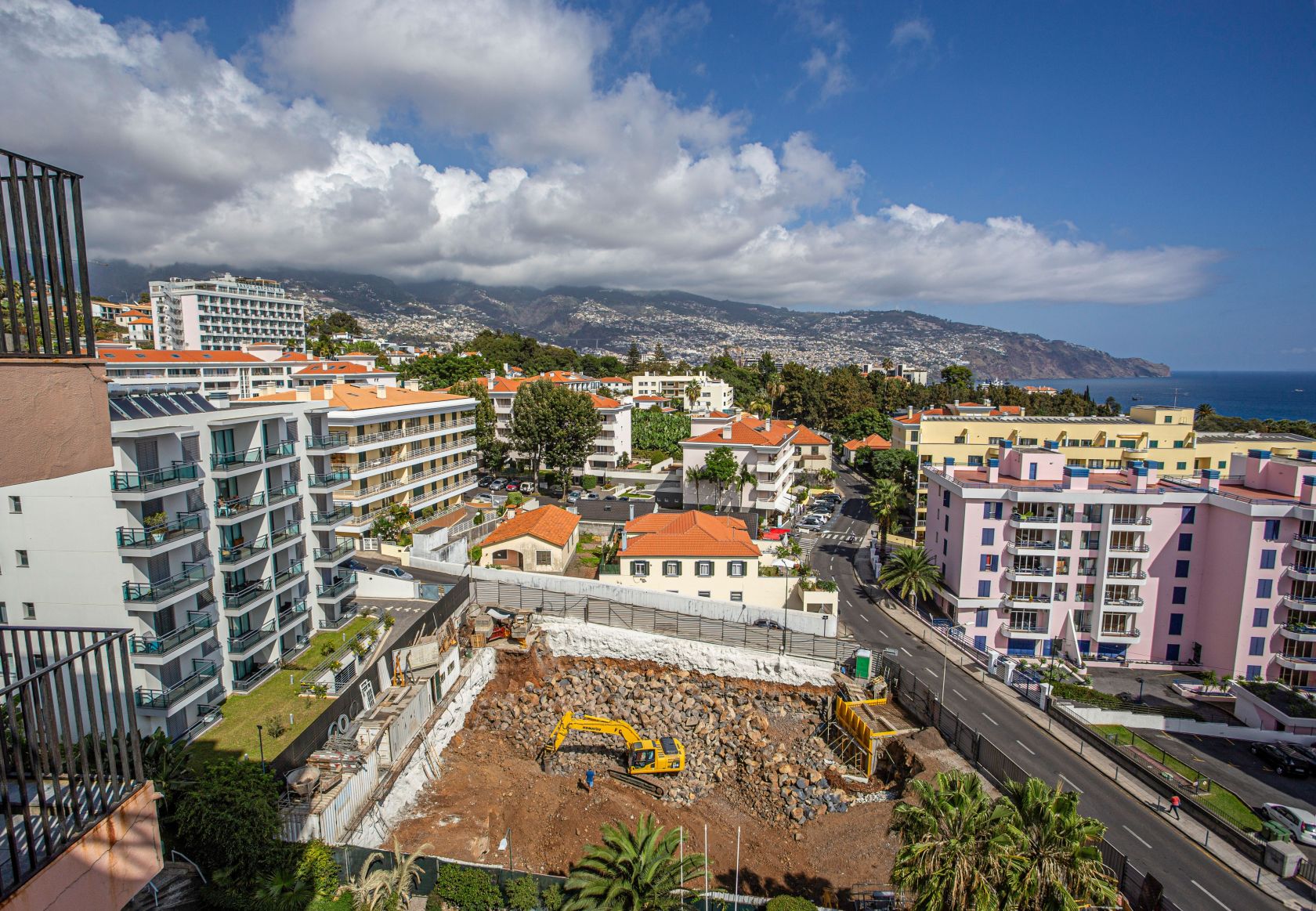
After years in which supply grew far below the country's needs, increasing construction has become one of the central answers to the housing crisis. But there is a part of this equation that we talk about much less. Building more does not necessarily mean being able to build cheaper.
The latest figures from INE help to understand the problem. The construction costs of new housing increased by 6.8% in July compared to the same period of the previous year. Materials were 6.3% more expensive, and labour increased by 7.3%. Among some materials, there are even more significant increases, such as copper wire, PVC pipes or bitumen. Even more significant, none of the materials considered in the index recorded a year-on-year reduction.
This should force us to broaden the discussion about housing. It is relatively easy to argue that we need to put more houses on the market. It is much more difficult to understand at what price these houses can actually reach families.
A new home starts long before construction. There is the cost of land, projects, licensing, infrastructure, financing, materials, labour, taxation, and risk associated with the years that can elapse between the acquisition of land and the sale of the first home. If several of these costs continue to increase, there is a limit to what we can expect to happen in the final price.
This does not mean accepting that houses inevitably have to continue to rise. It means realising that a true affordability policy cannot act only on the sale price or on the buyer's financial capacity. It also has to act on the cost of producing housing, and here I think that we lack the industrialisation of construction in Portugal, as I have already mentioned in several previous articles.
We need to build more, but also to find ways to build better, faster and with greater predictability. This involves more efficient licensing processes, greater availability of land prepared for construction, adequate infrastructure, workforce training and greater use of industrialised processes and new construction technologies. It also involves reducing uncertainty, because time also has a cost and inevitably ends up being incorporated into the final price.
There is also another important issue. Portugal is preparing to mobilise billions of euros to increase the public and affordable supply of housing. This investment is necessary, but the State and municipalities buy construction in the same market as the private ones. They use similar materials, use the same companies and need the same workforce. If the sector's productive capacity does not increase, more investment could also mean greater pressure on already scarce resources.
That is why perhaps we should stop measuring housing policy only by the number of houses advertised or licensed. We also need to monitor how much it costs to produce each one and how long it takes to put it on the market.
Portugal undoubtedly needs more supply. But if we want this supply to be truly affordable to Portuguese incomes, we have to look at the entire chain that produces a house. Otherwise, we may end up building more housing without being able to solve the question that really matters to families: at what price?
Set The Portugal News as your preferred source for news on Google
 Add as a preferred source on Google








 Portugal Handbook
 English
 Nederlands
 Deutsch
 Français
 Español
 Italiano
 Svenska
 Pусский
 中文
中文 Türkçe
 Português
 Czech
Czech Hungarian
 Polski
 عربي
عربي Suomi
Suomi עִברִית
 Português (Brasil)
Follow us on social media