


There is something about the Alentejo that draws me back. Its name comes from the Portuguese além Tejo, meaning ‘beyond the Tagus’. This vast region stretches south towards the Algarve, a sweep of open landscapes, ancient olive trees, cork forests and vineyards fading into distant horizons. It is a land of contrasts, of fierce summer heat and surprisingly cold winters, where a glass of full-bodied red wine feels entirely at home.
And then there is Estremoz.
My husband and I first discovered this white marble jewel in 2022, not long after moving to Portugal. On a weekend away with InterNations, a global community for people living and working abroad, we were still in that delicious stage of not knowing what might be waiting around the next corner.
Lunch took us to Howard's Folly.
Beyond the doors of this winery and restaurant lay an explosion of colour: paintings, sculptures, eclectic furniture and wine bottles stacked, glowing against the walls. There was something wonderfully irreverent about the place, as though someone had given their imagination permission to roam.
I didn't know then that Howard's Folly would eventually become part of my own creative story.
Known as the White City, Estremoz had already taken hold of me. We wandered its narrow streets, marble beneath our feet, pausing to admire its majestic fountain and the walls of its medieval castle. In the sharp sunlight, the white stone seemed almost dazzling, yet its age invited another kind of looking. How many footsteps had crossed those thresholds? How many lives had passed behind those shuttered windows?
We returned, as one does to places that continue to tug at you.
At the Museu Berardo Estremoz, eight centuries of azulejos, Portugal's distinctive decorative tiles, unfolded before us. Blues, greens, yellows, intricate patterns and unexpected flourishes. So much patience, skill and imagination preserved in something as ordinary, and extraordinary, as a glazed square of clay.
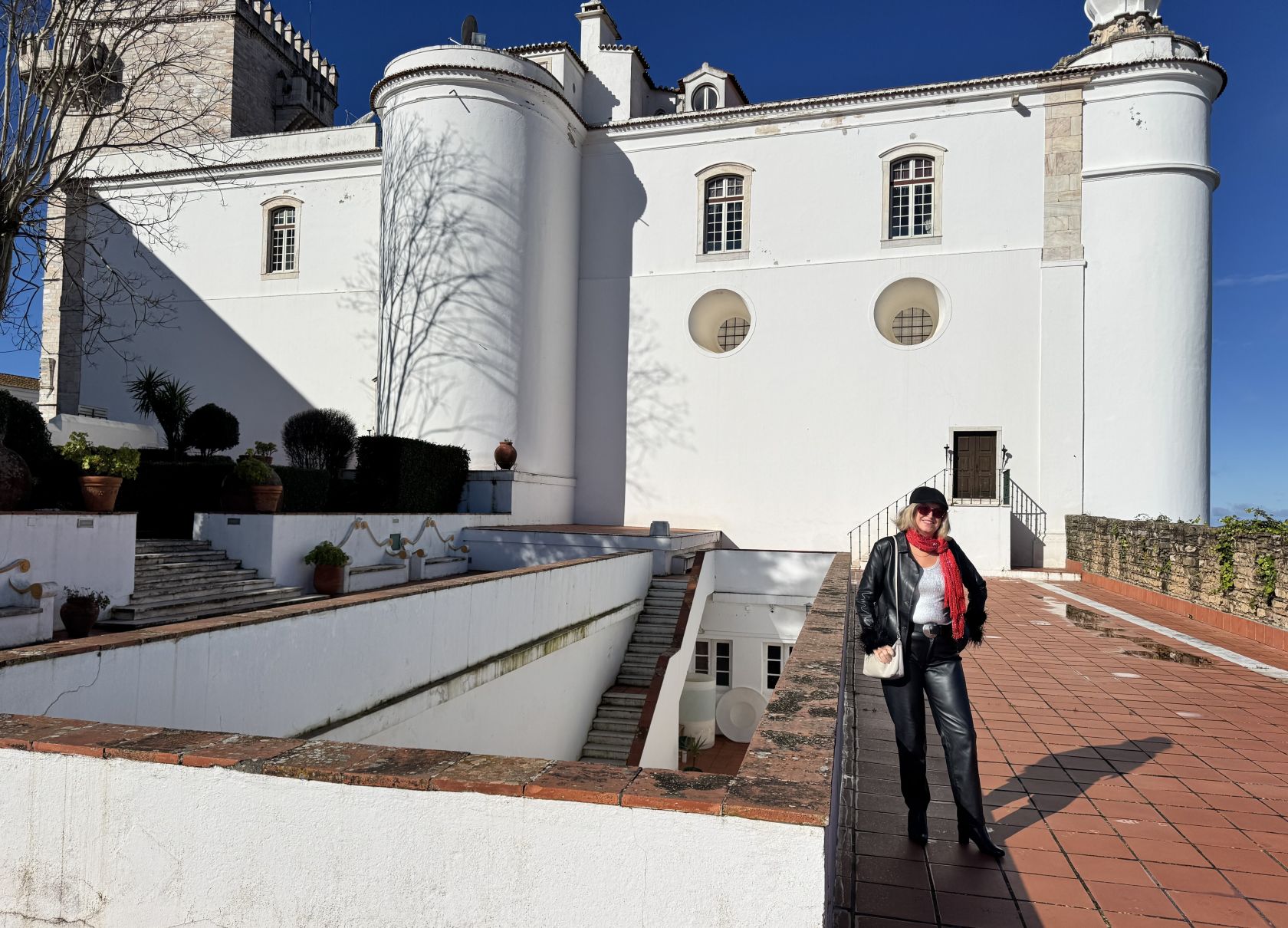
In January, we celebrated my husband's birthday, sleeping high above the town in the Pousada Castelo de Estremoz, surrounded by ancient stone walls and the vast Alentejo landscape. Down in the Rossio, the Saturday market offered another kind of history: olives, cheeses, vegetables, old books, ceramics and objects whose former owners I could only imagine.
Video caption: An evening of art, literature, wine and meaningful conversations at Howard's Folly in Estremoz, inspired by The Red Silk Dress and paintings from Ingela Johansson's RED Collection. Videography: Bernardo Carvão, AlinhaAgency
Perhaps it's these glimpses into the past that I find so compelling.
Having spent many years in Asia, where I watched familiar skylines transform almost between visits, I've become increasingly drawn to places where the past still feels close enough to touch.
Estremoz is certainly not frozen in time. Its markets are alive, old buildings have found new purposes, and behind historic façades there are artists, winemakers and people pursuing new ideas. Yet somehow, the city has retained something of itself, its character shaped by centuries rather than the passing trends of the moment.
And I find something rather beautiful about that.
When I later began imagining another gathering around my novel, The Red Silk Dress, my thoughts returned to Howard's Folly. We travelled back to explore the possibility of hosting a Salon. On 26 September, paintings from RED: Seven Emotional Thresholds, created by my friend, Swedish artist Ingela Johansson, found a home alongside my novel among the winery's exuberant and playful artworks. Guests gathered around the paintings, looking, listening and sharing stories of their own.
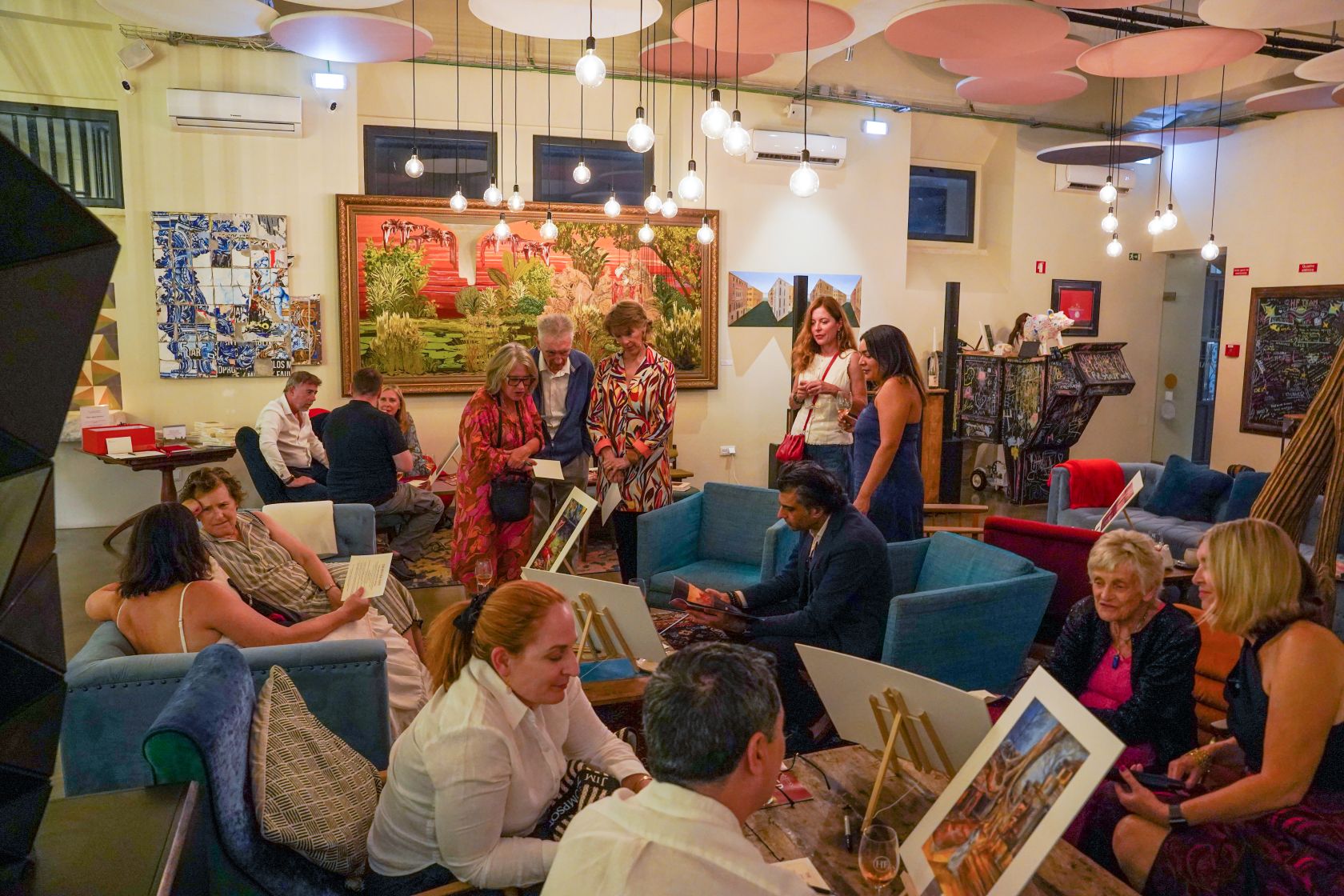
That evening, our host, Ana Cunha, revealed another layer to the story. Howard Bilton's long-held dream of creating a winery was intertwined with his passion for art and collecting. As co-founder of the Sovereign Art Foundation, he brought these worlds together with a deeper purpose, championing emerging artists and supporting vulnerable children through art therapy. Even the labels on the Sonhador wines we enjoyed throughout the evening featured paintings created by children supported through the foundation. There was something particularly moving about this connection, with art offering a language for feelings and experiences that words cannot always reach.
As the Salon unfolded, I invited guests to linger beside Ingela's paintings and reflect on questions written on small cards.
One has stayed with me.
Can a place change us, or does it reveal something that was already waiting within?
Having moved eight times across three countries in just twelve years, it's a question I continue to hold close.
Perhaps what Estremoz has revealed is something I have been slowly recognising about the kind of life I now want to inhabit. One that makes space to savour beauty, follow curiosity, linger in conversation and enjoy the sheer pleasure of discovery. Not as an escape from the uncertainties of the world, but as a way of living more fully within it.
In many ways, this reflects something I've been exploring through Red Silk: silk, stone and space.
Stone in the marble steps and ancient walls, foundations that have endured for centuries. Silk in the life moving through them, in the colour, creativity, conversations and desires that refuse to stand still. And space beneath those enormous Alentejo skies, in a market square, over a long lunch, or in a room where strangers feel able to share their stories.
In a world that demands constant movement, places like this remind us of the beauty of things worth keeping, and the importance of leaving enough space for something new to emerge.
Discover Red Silk
Explore The Red Silk Dress, Red Silk Salons and the evolving Red Silk Thread at: www.theredsilkdress.com

About Natalie Turner
Natalie Turner is a British author, columnist, cultural curator and leadership adviser based in Portugal. Her debut novel, The Red Silk Dress, explores longing, identity and awakening across Cambodia, Malaysia and Paris. She is also the author of the award-winning Yes, You Can Innovate, creator of Red Silk and founder of Women Who Lead.
Main image caption: Natalie Turner at the Pousada Castelo de Estremoz, surrounded by the white marble architecture of one of her favourite towns in the Alentejo.
Set The Portugal News as your preferred source for news on Google
 Add as a preferred source on Google


 Portugal Handbook
 English
 Nederlands
 Deutsch
 Français
 Español
 Italiano
 Svenska
 Pусский
 中文
 Türkçe
 Português
 Czech
 Hungarian
 Polski
 عربي
 Suomi
 עִברִית
 Português (Brasil)

Follow us on social media