


Luís says: “Travelling globally for study, work, and leisure, I was always deeply affected by the reality of the destruction we are doing to our planet. I had this awareness that I didn’t want things to go this way, that we are doing something unsustainable, and that if we keep on doing this, we are going to end up in a very bad place.” Working as an electrical engineer, he understood that this was not connected to his values, so he started learning about permaculture and agroforestry, and took that further while travelling in Asia.
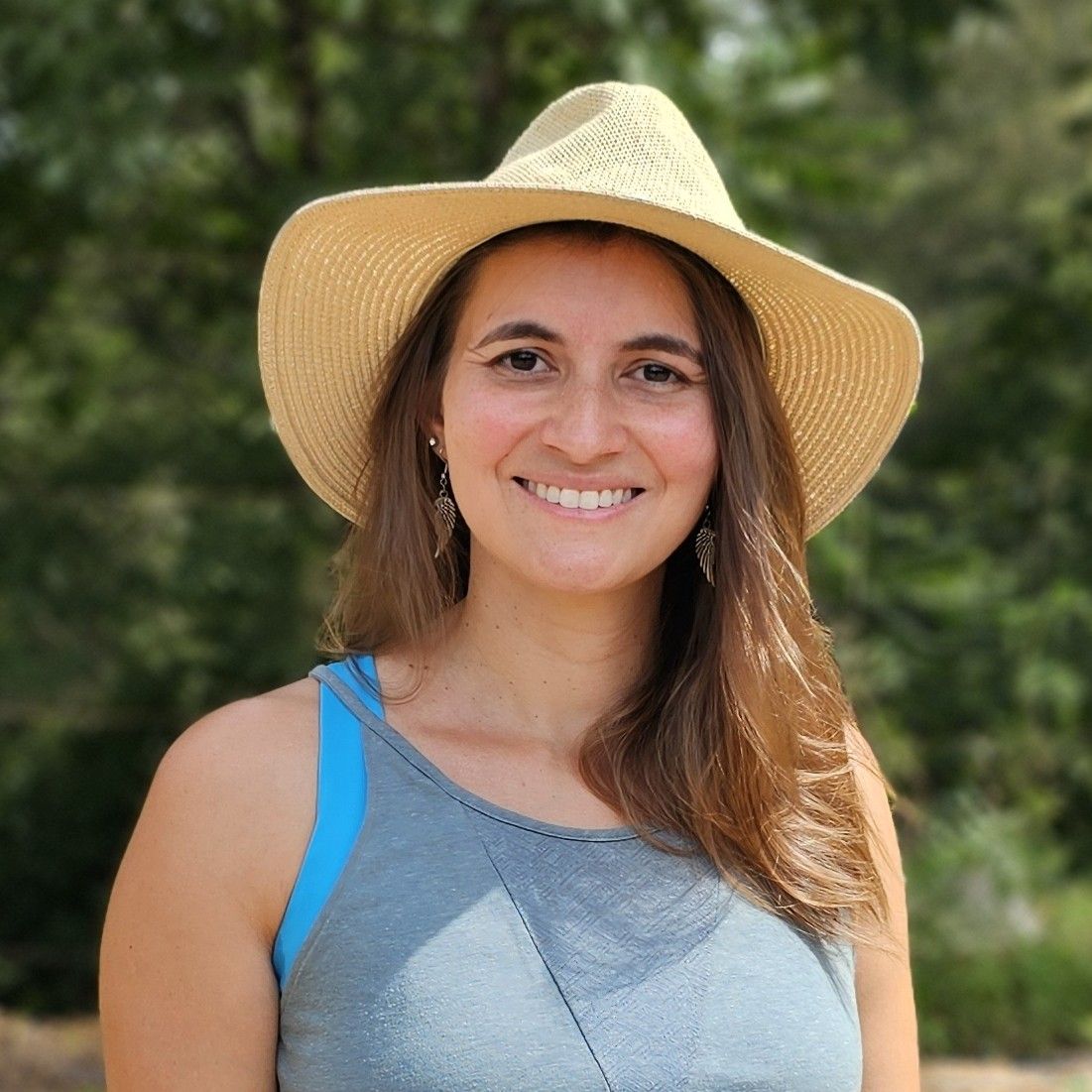
Laura grew up in Brazil, in the Amazon region, and came to Portugal to do her master’s in art management. She says: “I was working at festivals, and when I started working in the arts, it was also because of the social part of it, the community, doing something together, teaching kids. But then there came a moment when it became more about selling tickets than actually doing something good for the world.”
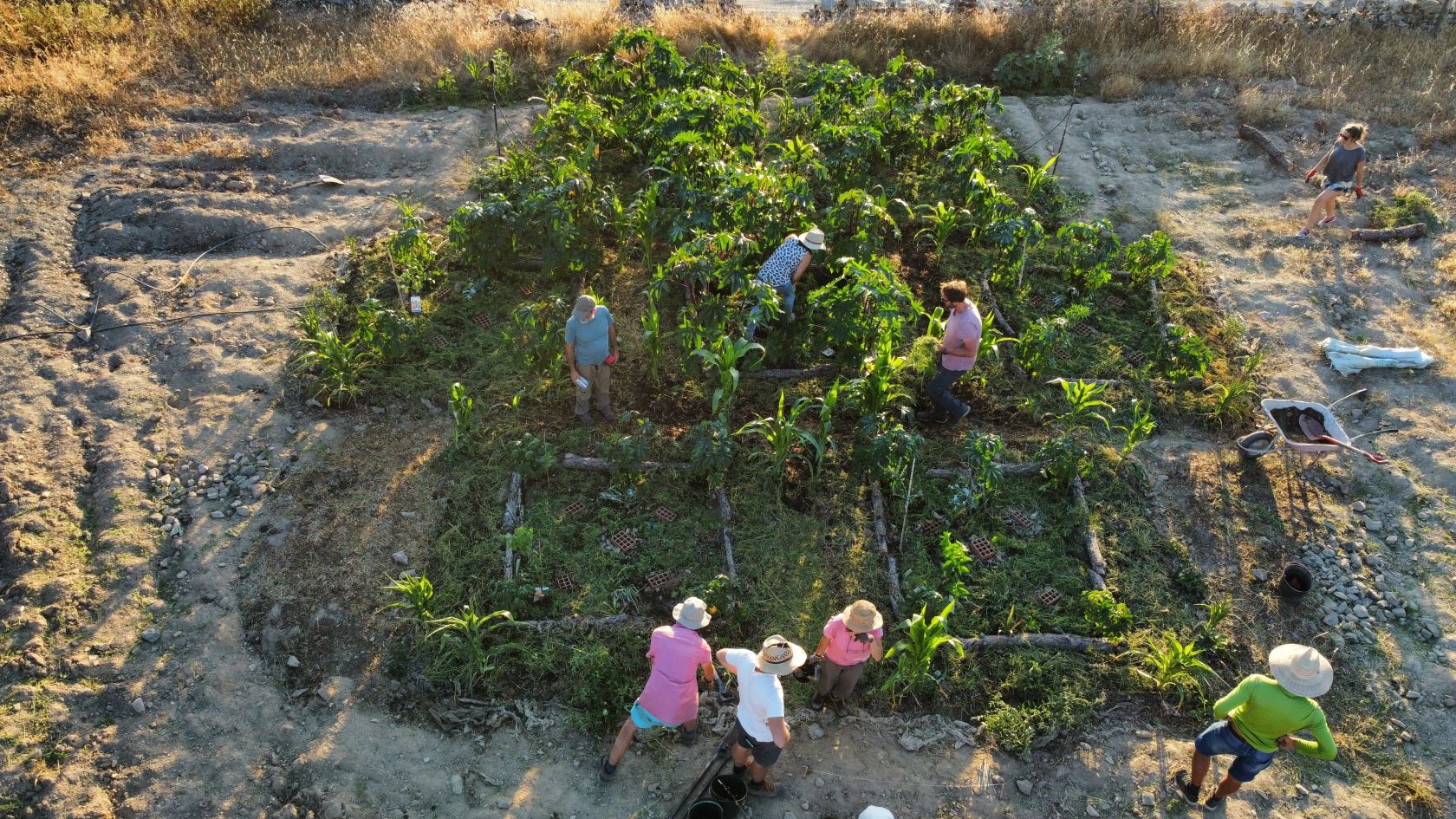
The model is a square plot of 3x3 metres that one person can plant and maintain. It has an inner space of 2x2 metres where the long-term species live, and an outer ring used as a vegetable patch. By combining techniques that inspire them, such as syntropic agriculture from Brazil and the Miyawaki method from Japan, they arrive at a range of possibilities, from a native-species forest left alone, the original goal of the Miyawaki method, to a full food forest.
The name “Biggest” comes from the idea of a decentralised network rather than a single site where everything happens. It is the sum of all the mini food forests spread around. They work across sites in Portugal, most of them in the Algarve, and the movement has started to spread elsewhere, including Ecuador, where a woman who attended one of their workshops asked them to help start it there.
They came up with the idea together, while already involved in agroforestry projects. Luís developed the square concept, a standard that could be replicated by people anywhere. Laura brought the idea of a network. He explains: “I felt that I wanted to make a positive impact, one that could involve many people together, all moving in the same direction.”
For Laura it was about desertification. She says: “Every time we go back to Luís’s family land in Alcoutim, we see many trees struggling and dying, so I thought, okay, nobody is doing anything, let’s do something.”
Plot Zero: the first mini food forest, and what it changed
Luís grew up close to Alcoutim. At eight, his family moved to Lisbon, but throughout his youth he continued visiting family in the countryside. That is where they made their first mini food forest.
Luís explains: “The first plot we did wasn’t in the current model. We call it Plot Zero, because now we’re counting. Back then we came from the Syntropic way of doing things; we didn’t know about the Miyawaki way yet. So we decided to create a jungle in one go.”
The idea behind these methods is to accelerate the system’s development. In the case of syntropic agriculture, this means a lot of pruning, to increase organic material in the soil and create more space for other species.
Today the plot at Luís’s family place has done what they hoped. Inside Plot Zero the air is noticeably cooler, and you can dig your hand into the earth, while right next to the forest the soil is still hard as rock.
At Quinta da Fornalha, close to Castro Marim, they run their training and have mini food forests at different stages. After the first year, the mulberry and pomegranate trees already bear fruit.
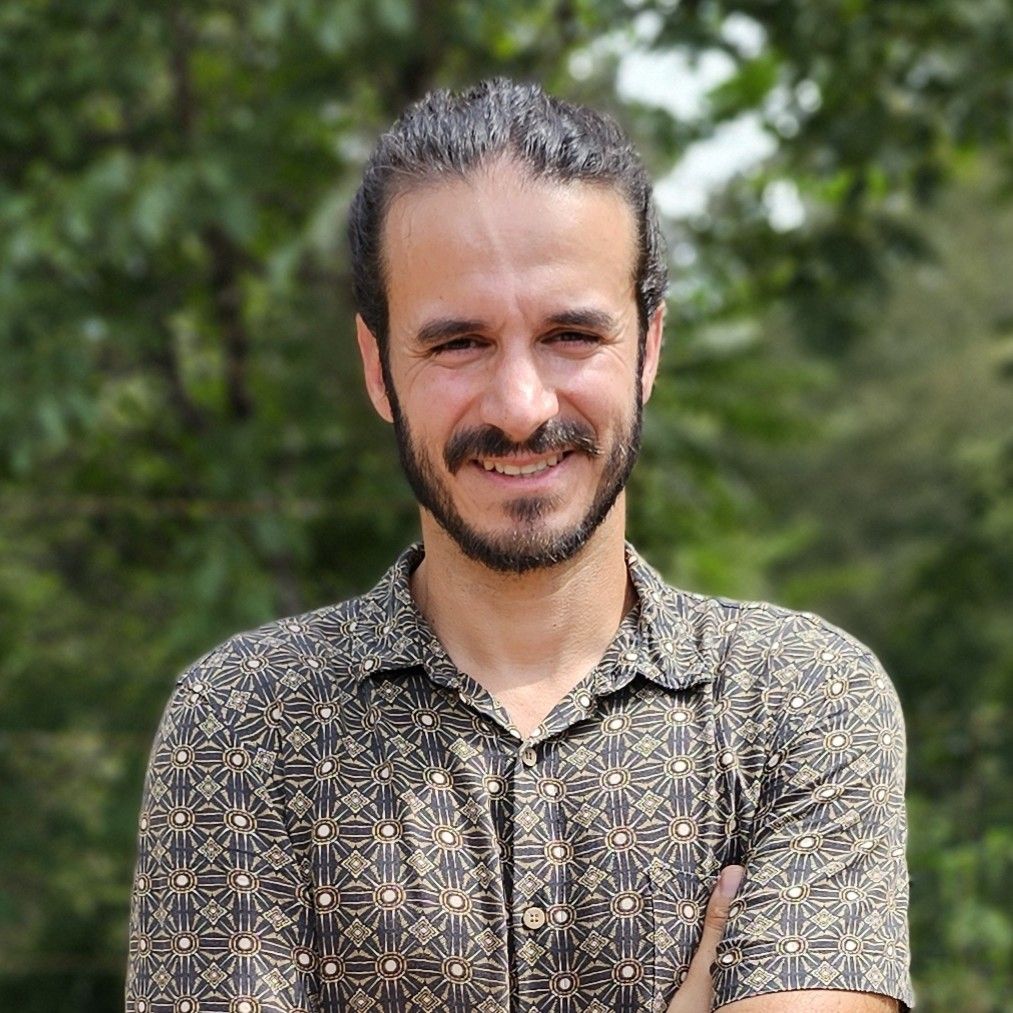
Laura says: “We have plots across around 25 sites. We didn’t create all of them. Some we did, and others the people did themselves after we trained them.”
They offer online and offline training, consulting and implementation. The last can happen in two ways: either they build it together with the people who own the land, so they learn to do it themselves, or they build it for a household or a business and then hand it over. Maintenance afterwards can also be arranged.
They will soon launch an online course and a mobile app, both built around a five-step plan to guide people through the process.
The strategy they keep returning to is to concentrate resources instead of spreading them thin, and to work gradually, plot by plot, letting each plot teach you. Your first plots become your teachers, your seed source and your nursery. They show you what thrives in your conditions, so you can propagate the winners.
Find Biggest Mini Forest
Website: biggestminiforest.com
Instagram: @biggestminiforest
YouTube: youtube.com/@BiggestMiniForest
Read the full profile on Sustainable Living:
sustainableliving.pt/projects/biggest-mini-forest
About
Sustainable Living
Sustainable Living is a hand-curated, bilingual platform of the people, projects and practices building a more sustainable Portugal. Browse projects, people, jobs and events, follow the daily news in Pulse, all in English and Portuguese.
Each week we feature one of them on this page. Discover more projects at sustainableliving.pt
Contact
Web: sustainableliving.pt
Email: info@sustainableliving.pt
Instagram: @sustainableliving.pt
Facebook: facebook.com/sustainablelivingpt
About Luís
Luís Afonso is an engineer who turned his passion for agroforestry and ecosystem regeneration into a practical mission. As co-founder of Biggest Mini Forest, he developed a simple, step-by-step approach that helps people turn a plot of 3x3 metres into a mini food forest, making regenerative food production accessible to anyone.
About Laura
Ana Laura Cruz is a communicator, cultural manager and fiction writer from the Brazilian Amazon. Trading daily rain for Portugal’s drying landscapes changed her path. Years of volunteering on agroforestry projects turned into a career. As co-founder and Executive Director of Biggest Mini Forest, she connects people to regenerative agriculture through a growing network of mini food forests.
 Add as a preferred source on Google





 Portugal Handbook
 English
 Nederlands
 Deutsch
 Français
 Español
 Italiano
 Svenska
 Pусский
 中文
中文 Türkçe
 Português
 Czech
Czech Hungarian
 Polski
 عربي
عربي Suomi
Suomi עִברִית
 Português (Brasil)
Follow us on social media