


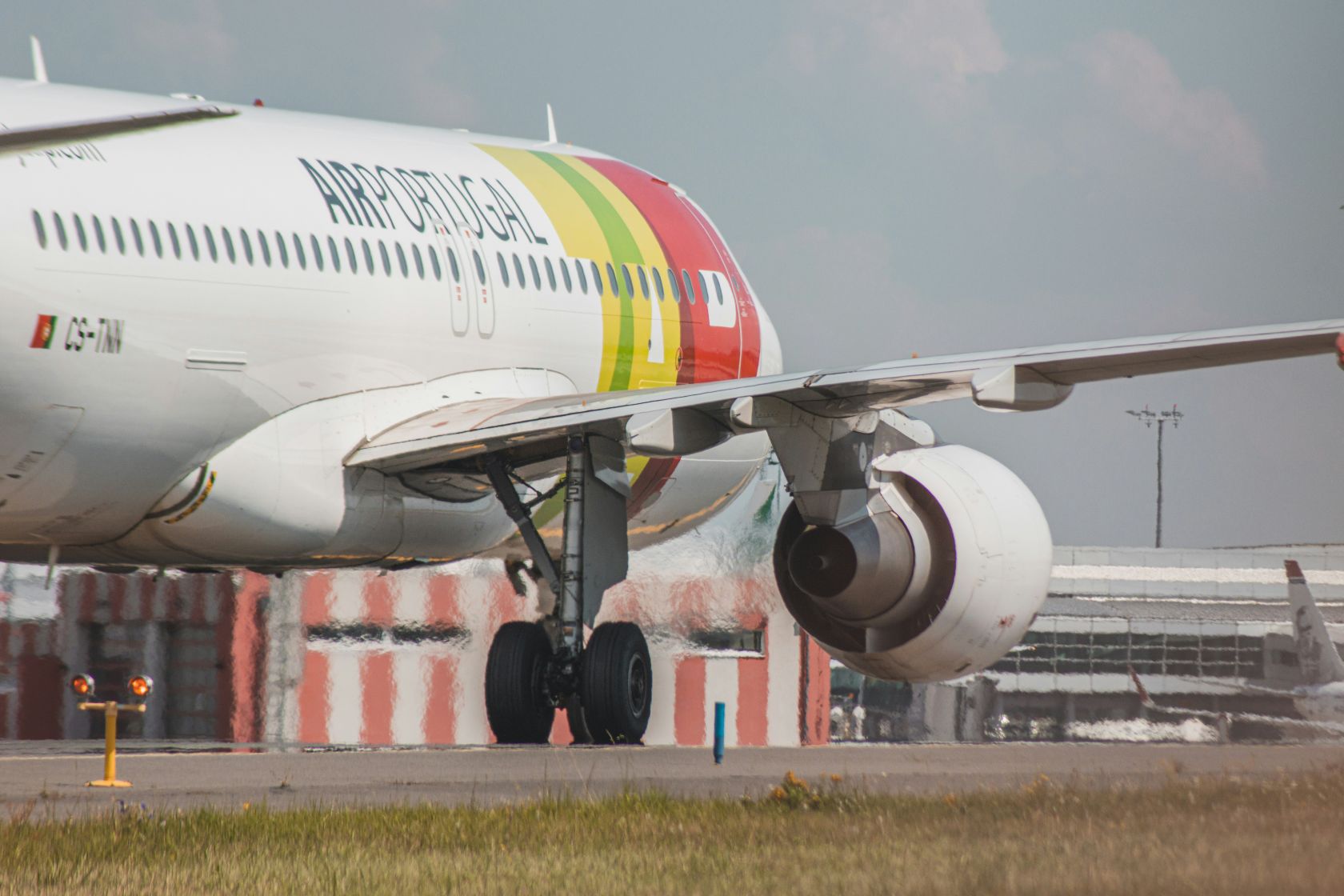
Citing data from a study by the European Federation for Transport and Environment, of which it is a part, Zero expressed "great concern" about jet fuel consumption, which represents an increase of about one million tons of carbon dioxide (CO2) per year.
"This situation is particularly worrying when considering that emissions from the main road fuels have grown by 3.6% and those from electricity production have fallen by about 70%, and that in 2026 Portugal will still not have a carbon budget for aviation and the Roadmap for the Decarbonization of Aviation (RONDA) has not been completed," Zero argued in a statement.
According to the association, while synthetic fuels are not available on the necessary scale, the growth of air traffic “may compromise a carbon budget for aviation that Portugal has not yet defined” and which “must be developed rapidly” to establish how much the sector can cumulatively emit in a way that is compatible with the objectives of the Paris Agreement on reducing greenhouse gases.
Synthetic aviation fuels (e-SAF), produced with renewable hydrogen and sustainable carbon, will be “essential to decarbonise flights that cannot be avoided, transferred to more efficient modes, or decarbonised by other solutions,” the environmental advocacy organisation explained in the document.
Zero's position is based on an analysis published today by the European Federation for Transport and Environment, which compares emissions trajectories and expansion plans with carbon budgets compatible with the Paris Agreement of 20 major airports in 10 European countries.
“The fundamental conclusion is clear enough: the growth of air traffic cannot continue to be treated as independent of climate limits, especially at a time when synthetic fuels remain far from the necessary scale,” he said.
The association therefore considered it urgent that each country define, “in a transparent and scientifically sound manner,” the carbon budget available for aviation.
“RONDA must fill this gap, starting by defining a carbon budget for Portuguese aviation, with a trajectory and milestones for 2030, 2035 and 2040 and benchmarks that allow for the assessment of emissions associated with different airports,” Zero stated.
 Add as a preferred source on Google





 Portugal Handbook
 English
 Nederlands
 Deutsch
 Français
 Español
 Italiano
 Svenska
 Pусский
 中文
中文 Türkçe
 Português
 Czech
Czech Hungarian
 Polski
 عربي
عربي Suomi
Suomi עִברִית
 Português (Brasil)
Follow us on social media