


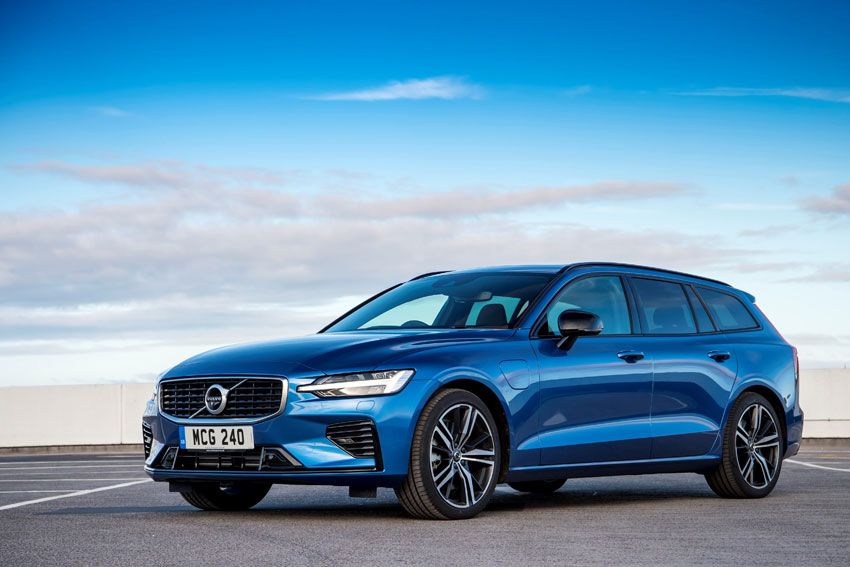
Can you see what I'm getting at here? I'm just thinking that there may JUST be the slightest grain of hope for us Volvo estate car die-hards. The thing is, will Volvo actually commit to building another one?
Sadly, as the undisputed king of estate car makers, right now, Volvo simply won't commit to sharing any plans for future estate car models. And it's for a very simple reason. Volvo executives, and assorted company bean counters, aren't too convinced that there’s going to be enough people who'd actually want to buy one.
Watch the video here 👇👇👇
Hybrid reintroduction
I've approached the subject of Volvo estate cars, and their phasing out, in a previous article here in The Portugal News. At the time, I didn't realise the phasing out was only a transient phase in Volvo history, because lo and behold, they were reintroduced, albeit in hybrid form. More about that later.
Anyway, it wasn’t too long ago that Volvo had no fewer than four different estate car variants in its lineup. But now, just one remains. The V60. The larger V90 finally left production only last year. However, Volvo estate car fans can rest easy, because there seem to be no immediate plans to axe the V60, despite Volvo having discontinued both the V60 and the V90 models back in 2023. However, the Volvo estates returned a year later (as I mentioned, in hybrid-only form) thanks mainly to popular demand. Confused? Yes. Me too.
The brand’s top sales executive later confessed that the decision to axe the estates had been “a mistake”. I think he was right, because arch-rivals Mercedes, Audi and BMW continued to create new estates in their model ranges, so there’s obviously still some demand for the humble load bugger, or “sports break" as they tend to be referred to these days.
Competitive market
Believe it or not, the UK is the third largest market for Volvo products worldwide, behind only China and America. Apparently, us Brits’ love for the brand comes from a strong sense of nostalgia. A case of: ‘my grandad had one of those,’ or ‘my father had one’. As you can perhaps see, it sometimes encroaches into some rather emotional territory.
That's all good, but fond memories of our parents’ old 240s or 940s might not necessarily cut the jolly old mustard when it comes to sales volumes for a potential new model/s. In today’s competitive car market, what the car-buying public has very clearly wanted are SUVs And, quite frankly, SUVs are far better suited to accommodate EV and hybrid technologies than ordinary saloon or estate cars. This is why Volvo is somewhat hesitant about investing time, resources and hard cash in order to create a new estate car. Bucking the SUV trend could easily prove to be a bit of a gamble.
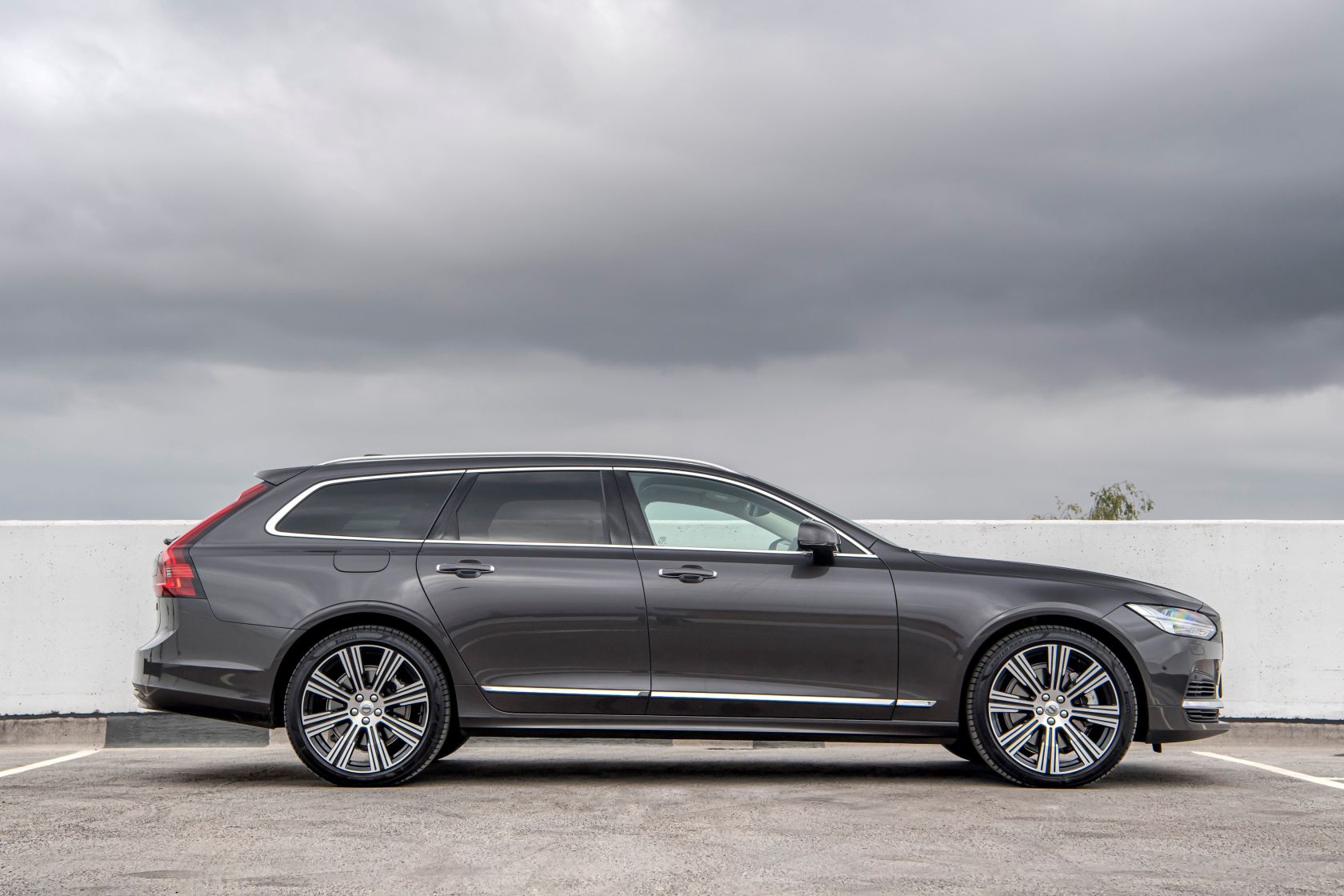
Volvo have looked a bit erratic in recent times with their estate car offerings. Volvo estates have been in production, they've been out of production, and then they've even come back from the dead. The V60 could justifiably be rebranded as The Volvo Lazarus. But seriously, it all stems from a very rational question. Put simply, was Volvo selling enough V90S & V60S to justify their production? In a nutshell, was there a serious business case for the continuation of these estate car models? More to the point, would producing a new one prove to be in any way feasible? It all boils down to how the market looks.
New estate car
So, a new Volvo estate car may yet happen. Volvo hasn’t given an unequivocal ‘no’ when asked about whether it will ever make a new one. Volvo’s new, highly scalable EV architecture (SPA3), which underpins the EX60, could yet be used as the basis for an all-new electric estate car. SPA3 is a very adaptable platform onto which large or small future models could potentially sit. This means that there's scope for Volvo to build lofty SUVs as well as low-slung saloon-type cars using just one basic platform. For the company’s bean counters, the flexibility of SPA3 architecture underpins the feasibility of any future estate car production. So, my perception of the scenario (perhaps tainted with more than just a hint of the aforementioned nostalgia) is that the door is clearly being left just slightly ajar. For now at least.
Back to boffindom: The SPA3 architecture will underpin all of Volvo’s new electric cars from here on in. Not surprising, because it does feature plenty of cutting-edge technical stuff as well as its adaptability. For example, Volvo’s “cell-to-body” integration for the battery pack, which is a hefty 800-volt electrical system, is “weight-saving” thanks to a complexity-reducing “megacasting” construction (thanks, Google). This system liberates more interior space, which in-turn provides far more freedom for designers. This actually makes the possibility of sleek estate cars much more likely. Volvo Cars have already hinted that they're working up to presenting “the most ambitious product plan” in the brand’s illustrious history. Us estate car stalwarts can only hope that this will mean the eventual announcement of at least one practical Volvo estate car in the not too distant future.
In the meantime, all we can do is patiently wait, with bated breath, hoping that any future new Volvo estate model will live up to expectations. Looking back at the Volvo estates of old, they have much to live up to. Fingers crossed then, ehh?
Set The Portugal News as your preferred source for news on Google
 Add as a preferred source on Google








 Portugal Handbook
 English
 Nederlands
 Deutsch
 Français
 Español
 Italiano
 Svenska
 Pусский
 中文
中文 Türkçe
 Português
 Czech
Czech Hungarian
 Polski
 عربي
عربي Suomi
Suomi עִברִית
 Português (Brasil)
Follow us on social media