


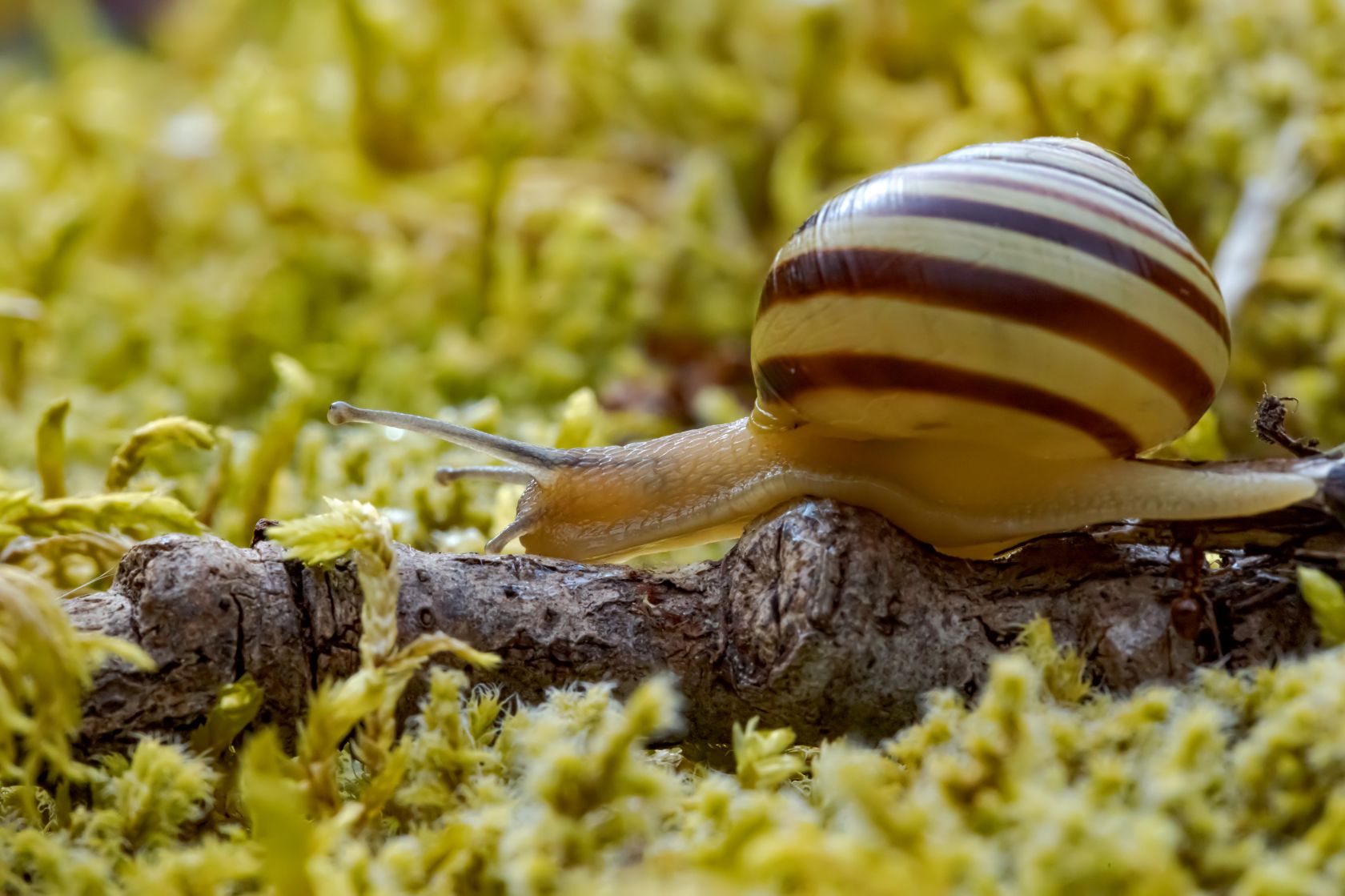
Travelling through Portugal - and in particular in the Algarve - countless cafes and restaurants put out signs reading “Há caracóis!’ or ‘Temos caracóis!’ to let passers-by know they have snails on offer.
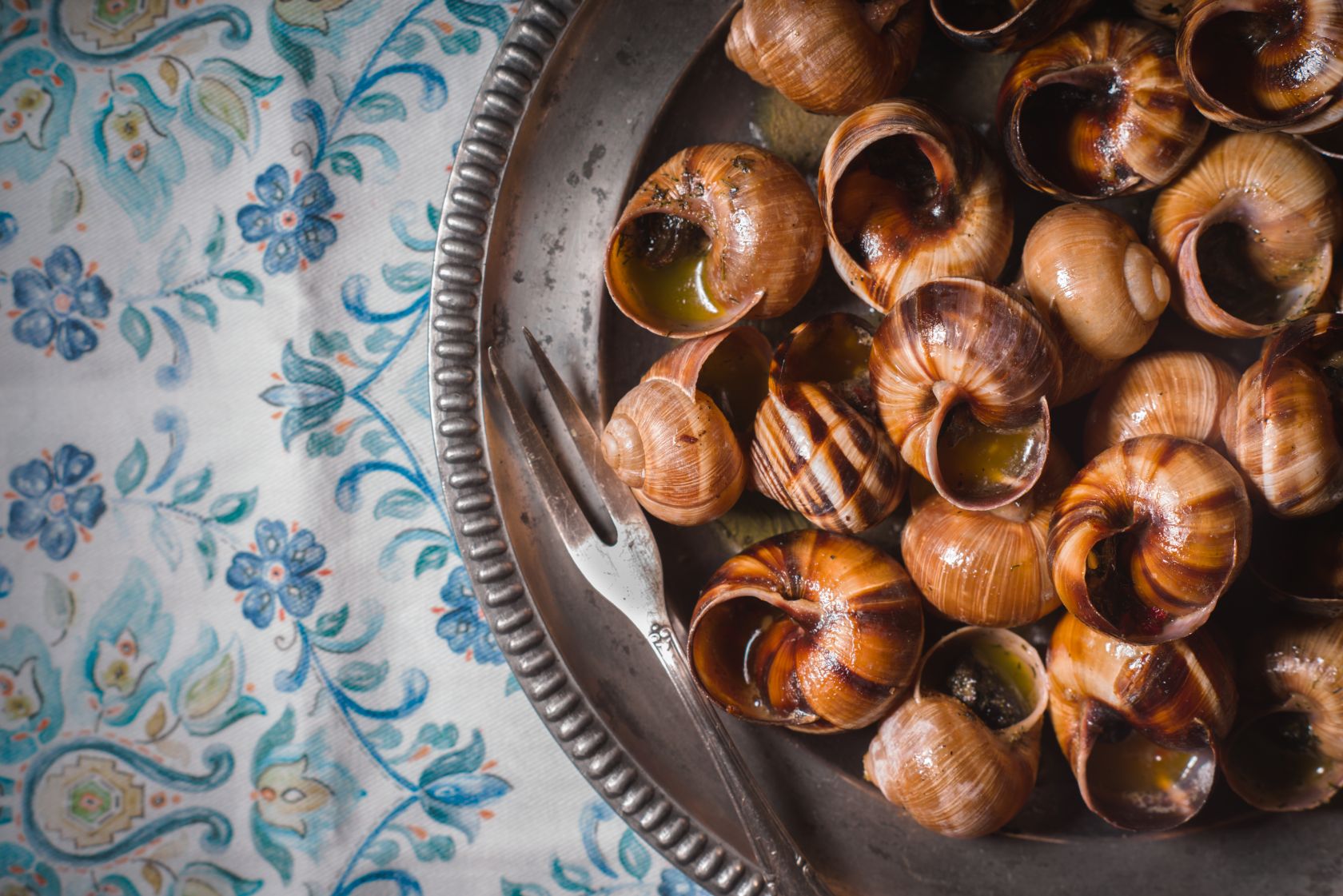
Locals say that snail time is between May and August (traditionally any month not containing the letter ‘r’ apparently), when nets containing these molluscs start to appear hanging by restaurants’ doors and in food shops, and are one of the most appreciated appetisers by the Portuguese, and are often served in a small dish with a toothpick or a fork to help you painstakingly dig them out of their shells.
These small snails – caracóis - are land snails, carefully harvested from the wild and often collected after a shower of rain, and although not all wild snails are edible, the scientifically named Helix pomatia or Helix apsersa are the most common ones consumed.
Some of the bigger, chunkier ones, the ‘caracoleta’, are even farmed, which, to be honest, I didn’t take seriously when I first heard of this, but it is a complicated and profitable business some farmers are turning to, because their large size allows year-round income with a price that compensates for its captive exploitation.
Most land snails are hermaphrodites – being both male and female - and as mating is a violent process lasting around 12 hours, the strength of their shells is important, as death may occur if the shells are too weak! And the saucy little creatures don’t ‘do the business’ with the first partner they meet either, often engaging in mating with multiple individuals to maximise their reproductive success. Each will lay an average of 100 eggs, and this reproductive process usually only happens once in their lives, with spawning taking place ten days later.
Secret Recipes
It is known that since the time of the Roman Empire, snails have been eaten both here on the Iberian Peninsula and in France, and snail consumption goes back to the time of our hunter-gatherer ancestors. The snails were fed with flour, aromatic herbs and wine in order to make the meat unique. There are many recipes for snail preparation, and different countries have many diverse secrets for cooking them.
Snails actually don’t have much taste but take on the flavour of the ingredients they are cooked with. Their texture is firm and slightly chewy, comparable to that of squid and mussels. On average, snails contain 16 grams of protein per 100 grams of edible meat, and are low in fats and calories.
In Portugal, snails are first cleaned, then boiled in water to remove any impurities, and are cooked on a low heat with salt and oregano. Afterwards, they are finished in a broth composed of onion, bay leaf, garlic, white wine and olive oil, and sometimes pieces of chorizo and our famous piri-piri sauce are added to make the flavour even more intense.
 Add as a preferred source on Google







 Portugal Handbook
 English
 Nederlands
 Deutsch
 Français
 Español
 Italiano
 Svenska
 Pусский
 中文
中文 Türkçe
 Português
 Czech
Czech Hungarian
 Polski
 عربي
عربي Suomi
Suomi עִברִית
 Português (Brasil)
What an interesting article.
I've been around Portugal for 20 years or more but only tried caracóis for the first time last year. My Portuguese friend ordered some in a cafe in Quarteira and, lo and behold, a substantial 2-person serving landed on our table. I watched her tucking in with considerable gusto and, at first, was reluctant to join in. But, eventually, I bit the bullet, alongside a multitude members of the mollusc phylum, and actually enjoyed the experience - to my complete surprise.
The broth was particularly tasty. Ours even had a few little bits of fresh orange floating around in it. Quite delicious!
By Douglas Hughes from UK on 08 Aug 2026, 08:33