


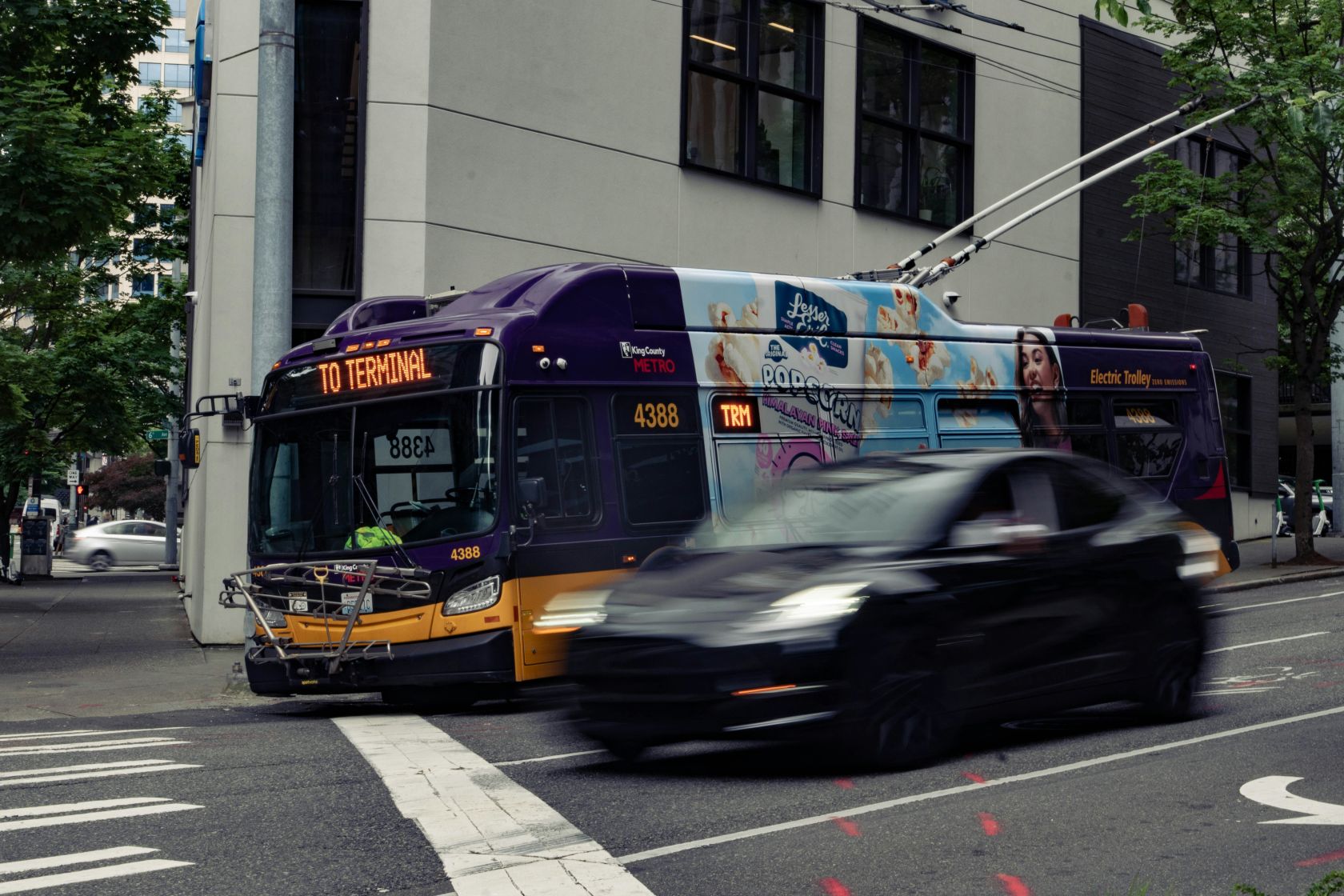
According to Paulo Carvalho—an administrator at Rodoviária do Tejo, the parent company of Rodoviária do Lis II (which holds the public passenger transport concession for the region)—the 11 electric buses will enter service once the charging station located in the Cova das Faias Industrial Zone in Leiria is operational; this is expected to happen by the end of 2026.
The CIM unveiled 11 fully electric buses to bolster public transport services.
“The new vehicles represent a significant boost to public transport capacity, improved mobility for the population, and another step toward decarbonising the fleet serving the region’s municipalities,” the CIM stated in a press release.
The CIM is directly investing in six of the 11 buses, exceeding three million euros—including the associated electric charging system—partially funded through the Recovery and Resilience Plan (PRR).
The concessionaire will manage these six vehicles under a paid vehicle-use agreement signed today at the Nerlei Building in Leiria.
“The allocation of these six vehicles is intended exclusively for providing additional service amounting to 300,000 vehicle-kilometers per year, thereby representing a real increase in public transport capacity,” the Intermunicipal Community (CIM) highlighted.
The concessionaire purchased the remaining five electric vehicles—an investment of approximately €2.5 million, also funded by the PRR—directly. They complete the fleet of 11 new buses, which will reinforce lines with the highest demand and occupancy, particularly in the municipalities of Leiria, Pombal, and Porto de Mós, the CIM added.
Following the signing of the agreement, CIM President Jorge Vala described the occasion as “highly significant for the Leiria Region,” noting that it realises “one of the principles agreed upon at the start of operations,” while also fulfilling a commitment “regarding the environmental footprint” and “equipping the operator to provide better public passenger transport conditions.”
Meanwhile, Jorge Vala—also the Mayor of Porto de Mós—pointed to the “problem of significantly rising fossil fuel costs,” arguing that the region needs to respond to residents’ needs by enabling them to use public passenger transport.
Leiria Mayor Gonçalo Lopes said mobility will be a “major focus for the future,” adding that “uniting the region” requires improving connections between municipalities—one of the CIM’s key objectives.
“This is a small step, but a very important one for improving mobility in the region,” Gonçalo Lopes emphasised.
Paulo Carvalho added that Rodoviária do Lis II operates around 120 intercity buses in the Leiria Region and noted—without citing an exact figure—that demand is growing at a rate of “close to 10%.”
The electric buses will serve to “replace buses on the busiest routes, but also to reinforce those lines where demand is highest,” the executive noted.
When asked when the company plans to buy more electric buses, the executive said Rodoviária do Lis II is always open to investing, noting that “today, an electric bus costs between 450,000 and 500,000 euros, whereas a diesel one costs around 200,000 euros.”
“Whenever EU funding is available, we will obviously be ready to invest, because that is our core mission: to invest and provide service using vehicles that are both more environmentally efficient and have lower operating costs,” Paulo Carvalho stated.
The CIM comprises the municipalities of Alvaiázere, Ansião, Batalha, Castanheira de Pera, Figueiró dos Vinhos, Leiria, Marinha Grande, Pedrógão Grande, Pombal, and Porto de Mós.
Set The Portugal News as your preferred source for news on Google
 Add as a preferred source on Google






 Portugal Handbook
 English
 Nederlands
 Deutsch
 Français
 Español
 Italiano
 Svenska
 Pусский
 中文
中文 Türkçe
 Português
 Czech
Czech Hungarian
 Polski
 عربي
عربي Suomi
Suomi עִברִית
 Português (Brasil)
Follow us on social media